





 Portuguese
  English
  Spanish
  3 min of reading
  0 comments



TRT-3 Decision Recognizes Right of Employee Who Stood for 16 Years Without Rest Area and Reinforces Companies’ Duty to Ensure Ergonomics.
A recent decision by the Regional Labor Court of the 3rd Region (TRT-3) once again drew attention to a silent but frequent problem in the corporate environment: continuous standing work without breaks and without an appropriate rest area.
In case 0010093-32.2021.5.03.0178, an employee sued the company where she had worked for over 16 years, claiming she was forced to stand during the entire workday, without access to seats or appropriate rest areas. The court recognized the moral damage and ordered the company to pay compensation, understanding that the employer failed to fulfill its basic duty of taking care of the health, safety, and dignity of the employee.
The Case That Became a Symbol of Ergonomic Neglect
During the process, it was proven that the employee performed her activities statically, standing, without changing posture or access to chairs, even during low-demand periods.
The situation extended for over 16 years, leading the TRT to recognize violation of human dignity and the principle of labor protection.
-
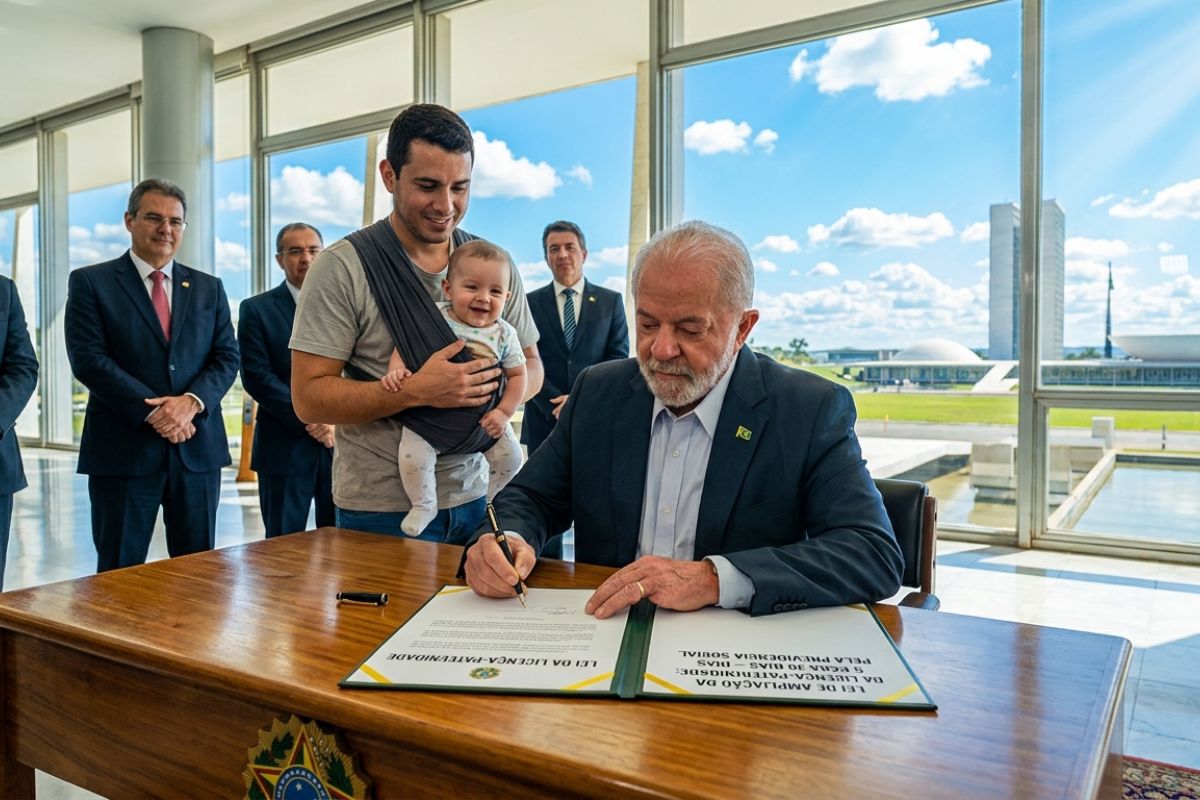
Government enacts new law: paternity leave increases from 5 to 20 days with gradual increases until 2029, and Social Security pays the paternity salary; companies no longer bear the absence cost, estimated at R$ 5.4 billion.
-
End of the 1-hour lunch break in the CLT? Current labor law maintains the break, allows for negotiated reductions, and defines rules for working hours and home office in Brazil.

-
Employee Fired After Accumulating 114 Days of Medical Leave in One Year, Labor Court Upholds Company’s Decision

-
Employee Fired While Treating Depression Wins in Court and Vale Is Required to Rehire Him Following Decision Based on the CLT and INSS Benefits


For the judges, the company’s conduct demonstrated disregard for basic ergonomics and safety standards, putting profit above the health of the worker.
The decision emphasized that “the employer must ensure minimum conditions of comfort and breaks that allow for the physical and mental recovery of the employee,” under penalty of civil liability.
What the Legislation Says About Seating and Ergonomics
The Consolidation of Labor Laws (CLT) and the Regulatory Norms of the Ministry of Labor, especially NR-17 (Ergonomics), state that every company must adapt the work environment to the physiological and psychological conditions of employees.
Item 17.3.5 of the norm is clear:
“Every workstation must allow the worker to alternate between sitting and standing positions.”
This means that even in predominantly standing functions — such as cashiers, cashiers, or attendants — the employer is obliged to provide seats for rest or ensure periodic breaks.
Failure to comply with this rule may constitute violation of the physical and mental integrity of the worker, justifying compensation for moral damages, as recognized by the TRT-3 in this case.
Compensation for Moral Damages: A Message to the Business Sector
The conviction serves as a warning to companies in various sectors, especially commerce, industry, and services, where standing work is more common.
According to the court, the employer’s omission in adopting simple measures — such as providing ergonomic seating and allowing regular breaks — demonstrates negligence, which characterizes the duty to compensate.
The amount of compensation was not disclosed, but the ruling reinforces that moral damage exists regardless of proof of physical illness, with just the violation of comfort and dignity being sufficient.
In other words: the suffering caused by continuous exhaustion and the absence of minimum rest conditions is already enough to characterize moral injury.
Reflections and Precedents in the Judiciary
The understanding of TRT-3 adds to a series of decisions across the country that expand the recognition of ergonomics as a fundamental right in the workplace.
In recent years, regional courts have issued similar rulings against retail chains, supermarkets, and factories for failing to provide adequate seating or breaks.
The Superior Labor Court (TST) has already established jurisprudence in similar cases, stating that exhausting work without breaks generates presumed moral damage, as it violates Article 7, item XXII, of the Federal Constitution, which guarantees “the reduction of inherent risks to work through health, hygiene and safety standards.”
Rest Is Also a Right
The decision of the TRT-3 is not just about a chair — it is about respect, dignity, and balance in labor relations.
The case of the employee who spent 16 years without the ability to sit shows how basic comfort is still neglected in many corporate environments.
More than an individual compensation, the judgment establishes a clear message: rest is not a luxury, it is a right.
Companies that ignore this principle not only violate the law but also put the health of their employees and their own image at risk in the Labor Court.










-

-

3 pessoas reagiram a isso.