





 Portuguese
  English
  Spanish
  4 min of reading
  1 comment


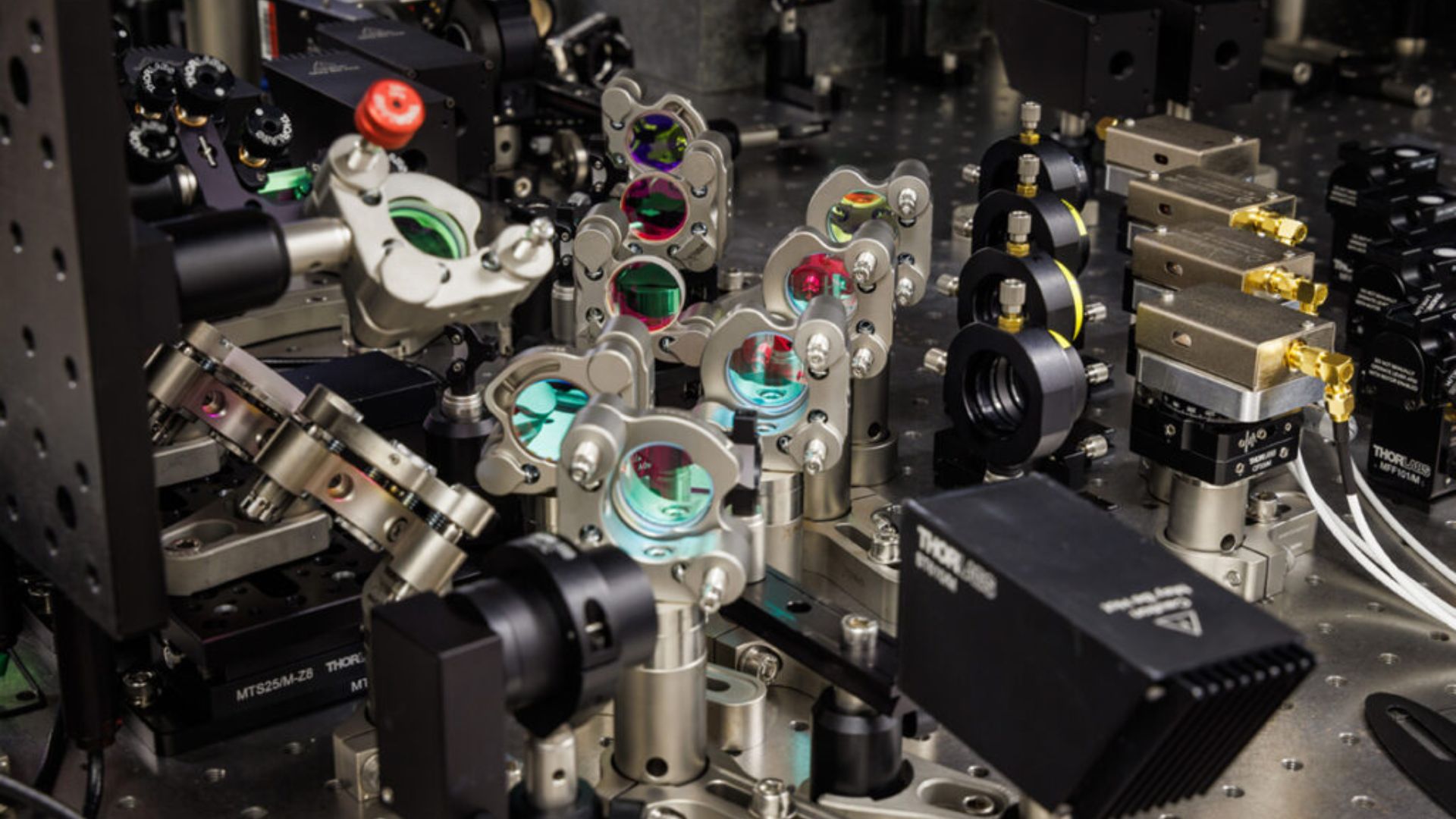


The New Technique Transforms Ordinary Glass Into a Durable, Inexpensive Storage Medium Capable of Preserving Digital Information for Millennia, Surpassing Hard Drives and SSDs in Longevity
The possibility of losing digital data over time has always been a central concern of the information age. However, a new technological advancement promises to radically change this scenario. Thanks to a high-precision laser-based innovation, Microsoft has demonstrated that it is now possible to store large volumes of data in ordinary glass for up to 10,000 years, using accessible materials and improved recording and reading techniques.
The information was disclosed in a scientific article published in the journal Nature, in which researchers detail the latest advances of the so-called Project Silica, an initiative that has been developed since 2019 focusing on long-term digital storage. According to the study, decisive improvements have made the technology cheaper, scalable, and closer to commercial application.
Unlike traditional methods that rely on hard drives or solid-state drives — generally with a lifespan of up to 10 years — the new system is based on recording data directly into the internal structure of the glass, ensuring extreme stability over thousands of years.
-
Motorola launched the Signature with a gold seal from DxOMark, tying with the iPhone 17 Pro in camera performance, Snapdragon 8 Gen 5 that surpassed 3 million in benchmarks, and a zoom that impresses even at night.

-
Satellites reveal beneath the Sahara a giant river buried for thousands of kilometers: study shows that the largest hot desert on the planet was once traversed by a river system comparable to the largest on Earth.

-
Scientists have captured something never seen in space: newly born stars are creating gigantic rings of light a thousand times larger than the distance between the Earth and the Sun, and this changes everything we knew about stellar birth.

-
Geologists find traces of a continent that disappeared 155 million years ago after separating from Australia and reveal that it did not sink, but broke into fragments scattered across Southeast Asia.

How Ordinary Glass Began Storing Terabytes of Information
Until recently, scientists could only record data in pure fused silica, a costly material that is difficult to manufacture and available from few sources in the world. Now, however, the team has demonstrated that the technology also works with borosilicate glass, widely used in household items such as bakeware, oven doors, and laboratory glassware.
This advancement represents a turning point, as it drastically reduces costs and increases the availability of the material. According to Richard Black, a partner research manager at Microsoft and co-author of the study, the progress “removes critical barriers to commercialization, especially cost and access to the storage medium.”
In the experiment, researchers were able to record 4.8 terabytes of data, equivalent to about 200 movies in 4K resolution, distributed across 301 layers within a glass plate measuring only 0.08 by 4.72 inches (approximately 2 by 120 millimeters).
The recording rate reached 3.13 megabytes per second (MB/s). Although this value is significantly lower than the speed of a conventional hard drive (about 160 MB/s) or a modern SSD (up to 7,000 MB/s), the focus of the technology is not on speed, but on the extreme longevity of the data, estimated at over 10,000 years.
The Role of Lasers and “Voxels” in Data Recording

The heart of the innovation lies in the use of an advanced technique called birefringent voxel writing by laser. While pixels represent two-dimensional points in an image, voxels are their three-dimensional equivalents, allowing information to be stored in depth within the glass.
Birefringence, an optical phenomenon of double refraction, is utilized to encode data by altering the polarization of light within the material’s structure. One of the major advances presented in the study was the development of a pseudo-single pulse, which replaces the old method of two separate pulses. In this new system, a single laser pulse divides after polarization, creating two distinct recording points in different voxels.
Furthermore, researchers introduced parallel recording, allowing multiple voxels to be written simultaneously in very close areas, significantly increasing process efficiency and paving the way for future improvements in speed.
Another technological leap was the creation of the so-called “phase voxels”. In this method, data is not encoded by the polarization of the glass, but by the phase change of the material, caused by controlled variations in energy and pressure. This approach requires only a single laser pulse and also led to the development of a new technique specifically for reading this information.
Finally, the team was able to identify signs of aging of the data within the voxels, using this method in conjunction with accelerated degradation tests. The results indicated that the information would remain legible for over 10,000 years, even in extreme conditions.
Storage for the Future: Archives, Culture, and Digital Memory
Due to its exceptional durability, glass storage was not designed to replace everyday devices like HDDs and SSDs. Instead, its use is mainly geared towards long-term archiving, historical, scientific, and cultural preservation.
In this sense, Microsoft had previously presented plans to preserve musical recordings in the Global Music Vault in Norway, utilizing this technology. The idea is to create nearly eternal repositories for data deemed too valuable to be lost over time.
This advancement also arises in a broader context of exploring new storage mediums. Recently, another independent study demonstrated the ability to store 360 terabytes of data in just half a mile (0.8 km) of DNA, reinforcing the global race for durable and compact solutions.
The next step of the Project Silica will be to further enhance the reading and writing systems, including the development of more efficient lasers and testing new glass compositions, in search of the ideal material to maximize stability, data density, and industrial viability.







Incrivel sou fã de avanços tecnologicos e esse é um dos grande imagine daqui 100 ou 200 anos uma base de dados feita desse material