





 Portuguese
  English
  Spanish
 4 min of reading
  12 comments


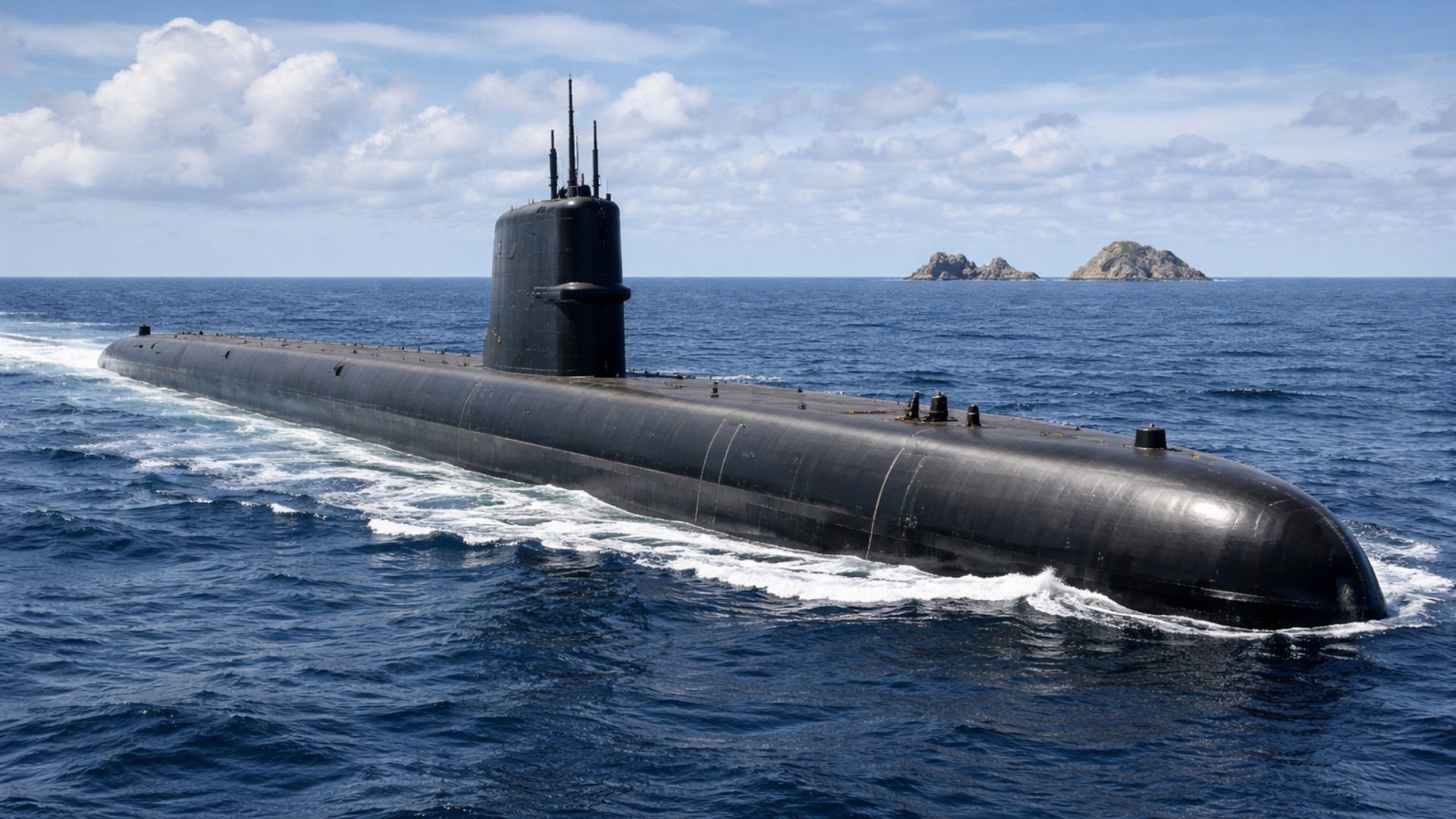


Silent Achievement Amidst the Cold War, with Measured Course in the Equatorial Atlantic and Navigation without Visible Sky, Gathered Human Resistance, Technical Precision, and Strategic Demonstration.
The American nuclear submarine USS Triton completed the first circumnavigation of the planet while submerged for 60 days and 21 hours, during Operation Sandblast, and traveled 26,723 nautical miles at an average speed of 18 knots, according to historical records from the period.
The route started and ended at the Saint Peter and Saint Paul Rocks, in the Equatorial Atlantic, a remote landmark used to precisely mark the departure and arrival of the submerged voyage.
The journey took place between February 24 and April 25, 1960, under the command of Captain Edward L. Beach Jr.
-
Friends have been building a small “town” for 30 years to grow old together, with compact houses, a common area, nature surrounding it, and a collective life project designed for friendship, coexistence, and simplicity.

-
This small town in Germany created its own currency 24 years ago, today it circulates millions per year, is accepted in over 300 stores, and the German government allowed all of this to happen under one condition.

-
Curitiba is shrinking and is expected to lose 97,000 residents by 2050, while inland cities in Paraná such as Sarandi, Araucária, and Toledo are experiencing accelerated growth that is changing the entire state’s map.

-
Tourists were poisoned on Everest in a million-dollar fraud scheme involving helicopters that diverted over $19 million and shocked international authorities.


Operation Sandblast and the Logic of the Inverted Pyramid
The mission’s proposal was simple in statement and harsh in execution: follow a circumnavigation route without relying on ports, refueling, or external ventilation, sustaining navigation and routine within a closed hull.
In this scenario, any need to surface would reduce the central value of the experiment.
Two Nuclear Reactors and Submerged Autonomy
The Triton was designed for long stays at sea and, by the late 1950s, brought together a rare combination of size and power, measuring 447.5 feet in length, equivalent to about 136.4 meters.
The vessel also carried an unusual feature outside the Soviet Union: two nuclear reactors, described in reference materials as a gain in availability and redundancy.
The choice of two reactors was not an engineering detail for collection: it helped maintain speed and autonomy during a crossing that aimed to keep submerged continuity, with room to deal with failures and maintenance without resorting to the surface.

In practice, the mission tested the combination of propulsion, reliability, and habitability.
Why the Submerged Circumnavigation Became a Symbol of the Cold War
Operation Sandblast was executed in a context of technological and strategic competition, where demonstrating submerged range and endurance held political and military weight, as well as scientific interest.
Historical records describe the operation as a showcase of the capabilities of nuclear submarines for long-range missions, independent of external support and, in theory, discreet.
At the same time, the route sought to resonate with the memory of the great navigations, generally following the path associated with the first circumnavigation of the globe attributed to the expedition started by Ferdinand Magellan and completed by Juan Sebastián Elcano.
The difference was that, in 1960, navigation relied on instruments and internal routines, not on open skies.
Inside the hull, the logic was one of discipline: environmental control, energy management, shifts, maintenance, and constant checks, with decisions made to preserve safety and continuity.
In a letter dated March 16, 1960, the commander described that the submarine was proceeding “without complaints” and stated that “only a nuclear-powered submarine” could contemplate a sustained run of this kind.
Medical Transfer and the Moment When the Triton Almost Surfaced
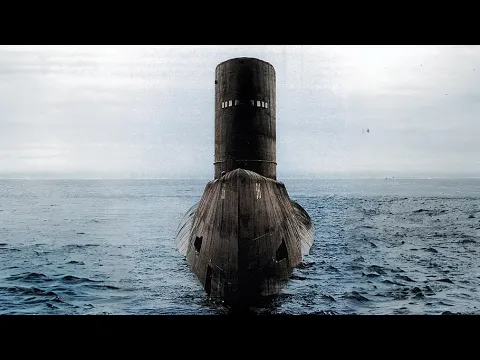

Although the goal was to maintain the submerged voyage, a health issue forced the Triton to make a rendezvous in the South Atlantic to transfer a crew member suffering from a kidney stone crisis.
The submarine “broached,” a maneuver that rises just enough to expose only the sail, keeping the main hull submerged.
The transfer occurred in the early hours of March 5, 1960, off the coast of Montevideo, Uruguay, with support from the heavy cruiser Macon, which was in the area on a goodwill mission to South American ports.
The departure of the crew member was the only loss from the team during the circumnavigation.
This detail became an inseparable part of the account precisely because it was an exception in a mission designed not to “surface” above water, even while not abandoning, in the official accounting, the concept of a global course carried out with submerged continuity among the defined milestones.
The operation concluded on April 25, back at the Atlantic rocks.
Oceanographic Data, Crew, and Official Recognition
In addition to operational demonstration, the journey gathered oceanographic, geophysical, and psychological data along the way, according to historical compilations about the mission and promotional materials related to naval memory.
In practice, the circumnavigation also served as a platform for measurements in open water, at a time when such surveys were rarer.
The crew that participated in the circumnavigation totaled 176 military personnel, accompanied by eight technical and scientific professionals assigned to the mission, according to institutional material produced for Triton’s Sail Park.

The numbers help to gauge the size of the human effort required to maintain systems, routine, and information collection in sequence.
After returning to the United States, the Triton received a Presidential Unit Citation, a collective decoration noted in public records about the operation, with a special globe-shaped insignia associated with the achievement.
The tribute sought to register that it was not just about speed or range, but about continuous execution under demanding conditions.
Even decades later, the episode remains a reference for encompassing two elements that the Cold War valued: the technical ability to remain on mission for long periods without external support and the discipline to operate for weeks on end in a confined environment, with rigid procedures and small margins for error.
The question that remains is how far can, today, what can be done without being seen?









A vida dentro de um submarino, não deve ser uma coisa muito fácil. Se cria uma arma com essa, pra fins pacíficos, o que de pacífico não tem nada. Todas as vezes que se usa as armas que tem em seu interior é pra matar mulheres de pessoas, animais ou qualquer ser vivo que se tem já face da terra. O nosso submarino nuclear já vai sair da linha de montagem e os países do regime comunista já estão de olho e o presidente que já foi vendido por qualquer valor, vai entregar o que é nosso, com a nossa tecnologia para chineses e russos , de mão beijada. Já os americanos não permitem que o Brasil tem armas com propulsão nuclear só quem está no seleto grupo que pode ter esse tipo de armamentos.
Impressionante para a época, e ainda mais Impressionante agora. A capacidade humana é sobre natural, somente Deus poderia criar um ser assim! Pena que toda sabedoria não seja usada para o bem comum. Mas o poder desperta o interesse absoluto por essa busca. Fica aqui meus parabéns pelo feito que não parou desde então!
Deus acima de todos, amém.
Tudo isso com o objetivo de atingir de surpresa pessoas inocentes com armas nucleares brutais que causam todo tipo de mazelas: morte instantânea com sublimação (tipo uma evaporação dos corpos) mortes não instantâneas através de ondas de choque, soterramentos por escombros, queimaduras de todos os graus, casos de câncer que se desencadeiam em décadas após o contato com a radiação, isso tudo quase que exclusivamente sofrido em civis inocentes em sua maioria mulheres e crianças, enquanto os senhores da guerra nada sofrem, isso sem falar que a radiação contamina tudo ao redor deixando um rastro de destruição, matando e destruindo animais e plantas.
Somos mesmo admiráveis.
**** para os semelhantes e para o seu lado, o planeta terra.
Que venham o s ET’s e eliminem essa raça de gafanhotos que somos
Se possível, que seja indolor.
Quem sabe ainda dá tempo de salvar o planeta…..