





 Portuguese
  English
  Spanish
  4 min of reading
  0 comments


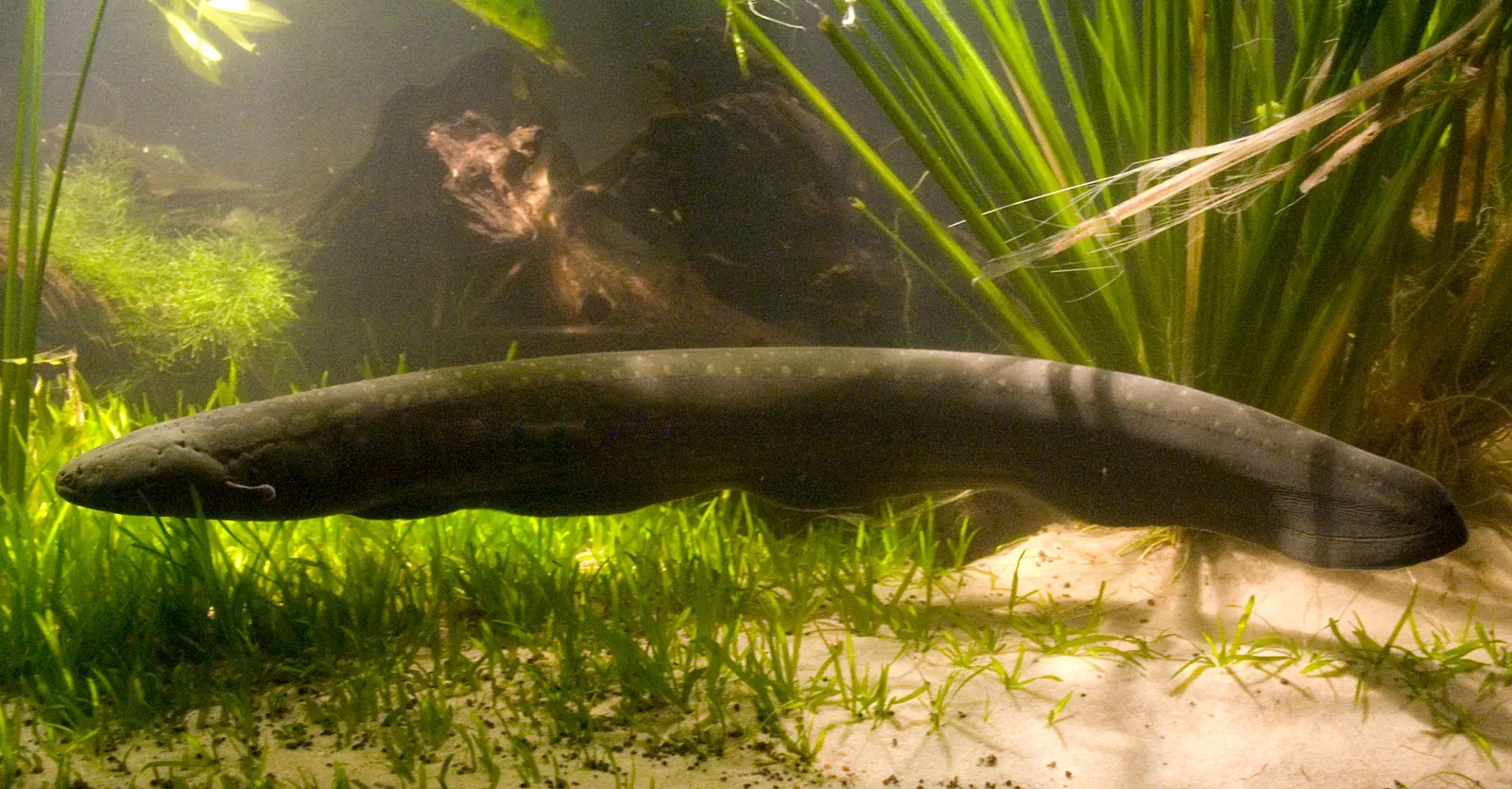
Capable of Producing Over 800 Volts, the Electric Eel Electrophorus Electricus Uses Real Bioelectricity to Hunt, Defend Itself, and Survive in the Rivers of the Amazon.
Electrophorus electricus is not just a curious fish from the Amazon. It represents one of the most extreme examples of biological specialization ever recorded, capable of transforming cellular processes into electrical discharges comparable to those of industrial equipment. In murky water environments, with almost no visibility and an abundance of predators, electricity has ceased to be merely an auxiliary sense and has come to function as a weapon, radar, and communication system.
Electrophorus Electricus and the Evolution of Bioelectricity in the Amazonian Rivers
The electric eel belongs to the order Gymnotiformes and is not a true eel, despite its common name. Its evolution is directly linked to the specific conditions of the Amazonian rivers, where vision is of little use and survival depends on the ability to detect movement, obstacles, and prey without visual contact.
Over millions of years, natural selection has favored individuals capable of generating increasingly sophisticated electric fields, transforming electricity into an extension of the nervous system.
-
No one was able to prove for over 500 years that this medieval city existed, until ground-penetrating radar mapped streets, houses, and entire structures beneath the soil of Norway, and the excavation confirmed a complete preserved city where there was once only legend.

-
In the United States, a valley 86 meters below sea level has reached 56.7°C and remains the place with the highest air temperature ever recorded on Earth, a direct result of a terrain that traps heat between high mountains in the midst of the desert.

-
Goodbye clothes with odors from use: Samsung’s device uses high-temperature steam, eliminating up to 99.9% of bacteria, removing dust mites, and neutralizing odors directly in the wardrobe without the need for washing.

-
Embraer arrives in Mexico with 7 new E190-E2s in 2026, after 5 jets have already been delivered, while Mexicana surpasses 1 million passengers, plans a fleet of 20 aircraft, and expands strategic routes across the country.




This adaptation did not occur through a simple gradual process. Studies show that Electrophorus electricus developed multiple independent electric systems, each optimized for a specific function, something extremely rare in the animal kingdom.
Specialized Electric Organs Turn the Body into a Living Battery
Over 80% of the electric eel’s body is composed of electric organs. These structures are formed by thousands of electrocytes, cells derived from muscle tissue that lost the ability to contract and now function exclusively as generators of electrical charge.
Each electrocyte generates a small potential difference, but organized in series and activated simultaneously, they function like aligned batteries, summing voltage and intensity.

The animal has three distinct electric organs. The main organ and the Hunter’s organ are responsible for high-voltage discharges, while the Sachs organ produces weak and continuous impulses. This division allows the electric eel to choose exactly how and when to use its electricity, without wasting metabolic energy.
Discharges Over 800 Volts and Their Effects on the Human Body
Laboratory measurements confirmed that Electrophorus electricus can generate discharges that exceed 800 volts, with currents sufficient to cause intense involuntary muscle contractions.
In humans, this type of electrical stimulus causes an immediate loss of muscle control, disorientation, and temporary inability to swim or stand.
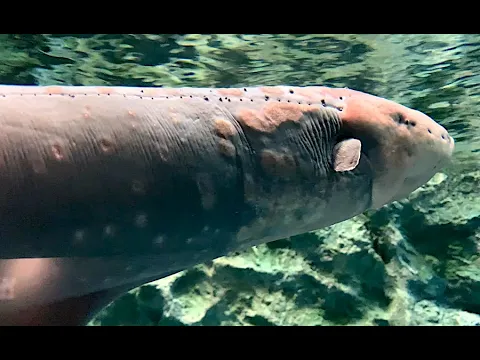
Although isolated shocks are rarely fatal, the real risk lies in the aquatic environment. The discharge can lead to drowning, especially in deep or fast-moving rivers.
There are documented cases of fishermen who temporarily lost consciousness after contact with an electric eel, highlighting that it is a real biological risk, not just a folkloric exaggeration.
Hunting Strategies Based on Neuromuscular Paralysis
During hunting, the electric eel first uses low-intensity electrical impulses to map the surrounding environment.
This “electric radar” allows it to identify the presence of prey even buried at the river bottom or hidden among submerged branches. Upon detecting a target, the animal releases a series of high-voltage discharges that cause simultaneous muscle contractions in the prey.
Research published in Science has demonstrated that these discharges force the victim’s muscles to contract repeatedly, causing extreme fatigue in seconds. In many cases, the prey becomes completely immobilized before even realizing the attack.
Defensive Use of Electricity Against Large Predators
Besides hunting, electricity is a highly effective defensive tool. The electric eel can adjust the pattern of discharges depending on the threat. Against small predators, quick pulses are sufficient. Against larger animals, like caimans or aquatic mammals, it can concentrate the discharge into a single powerful impact.
Recent studies observed an even more impressive behavior: the electric eel can lift part of its body out of the water and touch the aggressor directly, reducing the dispersion of the electric current. This direct contact drastically increases the intensity of the shock received, functioning as a true “biological amplifier” of the discharge.
What Modern Science Learns from the Electric Eel
Electrophorus electricus has become a subject of interest not only for biologists but also for engineers and neuroscientists. The way its electrocytes store, synchronize, and release energy inspires research in biological batteries, medical devices, and neural stimulation systems.
Furthermore, studying the bioelectricity of the electric eel helps to better understand the physiological limits of electrical conduction in living tissues, paving the way for advancements in neural prosthetics, pacemakers, and therapies based on controlled electrical stimulation.
The electric eel is not just a curious animal from the Amazon. It represents an extreme point of evolution, where electricity, biology, and behavior merge into an integrated survival system.
Capable of hunting, defending itself, and navigating using electrical energy produced by its own body, Electrophorus electricus continues to challenge human understanding of how far nature can go when environmental conditions demand radical solutions.







-

-

-

-

-

19 pessoas reagiram a isso.