





 Portuguese
  English
  Spanish
 5 min of reading
  0 comments


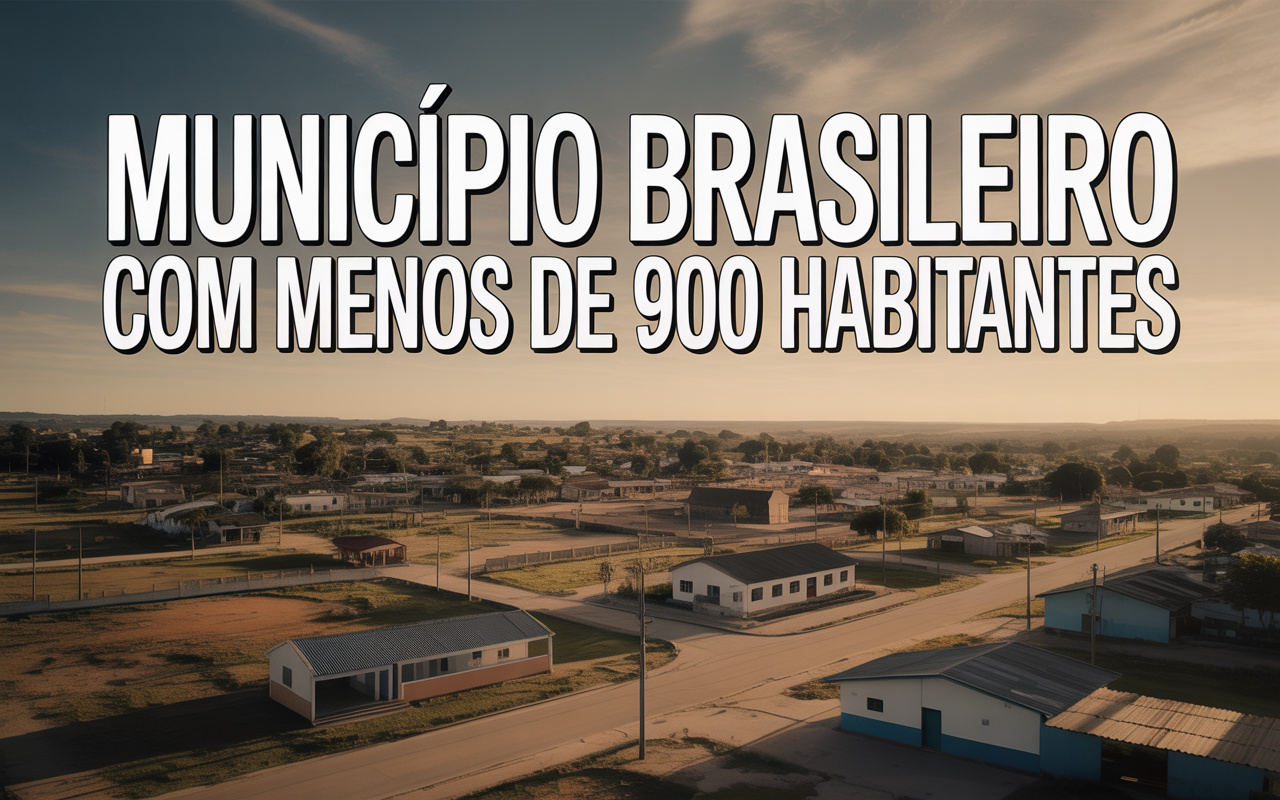
Brazilian Municipality With Less Than 900 Inhabitants Struggles to Maintain Services and Survive Depopulation, Functioning as a City Where Almost No One Lives.
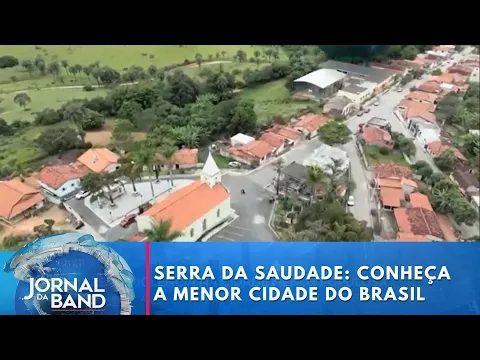
In 2025, Brazil maintains an impressive fact that tends to go viral whenever it resurfaces in public debate: there are officially constituted municipalities, with a mayor, vice, councilors, budget, and complete administrative structures, that house fewer than one thousand residents across the territory. The best-known case is Serra da Saudade, in Minas Gerais, which for decades competed for the title of smallest population in the country with Borá (SP) and, eventually, with Araguainha (MT). These municipalities frequently appear in surveys from IBGE, attracting national curiosity for contradicting urban logic of demographic growth.
The latest numbers released by the institute show that Serra da Saudade had only 833 residents in the last Census, while Borá totaled just over 900, and Araguainha fluctuated between 900 and 1,000 inhabitants. They are entire cities with a population comparable to that of a single middle-class building in capitals like São Paulo, Recife, or Belo Horizonte. Despite their diminutive size, these municipalities operate fully like any other, with administrative responsibilities defined by the Constitution, from maintaining rural roads to operating health clinics, schools, and offices.
The phenomenon has become even more discussed recently because these cities face a growing challenge: depopulation. Many residents, especially young people, move to neighboring municipalities in search of work, high school, or college, leaving behind urban centers that gradually empty.
-
Families have been living for over 30 years under a bridge in Mato Grosso, revealing a housing deficit, irregular occupation in APP, and dependence on fishing as the main source of income.
-
What Changed at Florianópolis Beaches? New Rule Surprises Pet Owners and Restricts Dogs on the Sand at Specific Times

-
Economic Diversification Accelerates in Itatiaiuçu to Reduce Mining Dependence
-
Extreme Rains: Cold Front, Supercell, and Atmospheric Trough Cause Tragedy in MG


Minimal Demography, Giant Challenges: How a Town Hall Works Where Almost No One Lives
The administrative structure of a town with fewer than one thousand inhabitants is, by definition, a paradox. Serra da Saudade, for example, has a town hall, city council, departments, a health clinic, municipal schools, and all the departments required by law. However, the population demand is so low that, at various times during the week, the activity in public offices is less than that of a small office.
The budget of these towns — formed mainly by constitutional transfers such as the Municipal Participation Fund (FPM) — must be distributed across essential areas, even when there are very few users.
The municipal school serves small classes, often with multi-grade classes. The health clinic operates with a minimum team but needs to maintain doctors, nursing staff, and an ambulance available, as legislation requires basic care guaranteed to all residents.
Another challenge is infrastructure. Even with few people, roads need to be maintained, public buildings repaired, and basic services preserved. Small towns rely even more on careful planning because revenue is limited and mandatory expenses.
These localities also face the difficulty of attracting specialized professionals. Teachers, doctors, engineers, and technicians often prefer larger municipalities, where there are more opportunities and services. As a result, it is common for such towns to maintain contracts with professionals from neighboring towns, who travel only on designated days.
Why Do These Towns Exist? Understanding Brazil’s Municipal Structure
The existence of such small municipalities is directly linked to the history of Brazilian federalism. Between the 1980s and 1990s, there was an explosion in the creation of municipalities.
Before the 1988 Constitution, regulation was more flexible, and states could emancipate districts with minimal requirements. As many managers understood that forming a town implied an increase in federal resources, especially the FPM — dozens of small localities were emancipated.
Serra da Saudade was created in 1962; Borá, even earlier, in 1923; Araguainha, in 1953. At that time, Brazil was predominantly rural, and these municipalities had a strong community organization, even though their populations were small.

Over time, accelerated urbanization produced the opposite effect: small villages lost residents to larger centers, but had already been constituted as towns and thus remained in the federal organization.
The 1988 Constitution prohibited the creation of new municipalities without complementary federal law, which froze the process and preserved the existing structure. Today, there is no legal provision for mandatory mergers, something that has happened in European countries such as France and Germany. Therefore, the smallest Brazilian municipalities continue to exist even with extremely low populations.
Life in a Town Where Everyone Knows Each Other — and Silence Dominates the Streets
Anyone visiting Serra da Saudade, Borá, or Araguainha quickly notices a typical characteristic: there is no traffic, queues, or urban noise. The rhythm is that of rural life, with practically empty streets, limited commerce, and a routine marked by the presence of animals, agriculture, and small gatherings in the central square.
Residents report that safety is a strong point. Many leave their doors unlocked, children roam freely, and crime is virtually nonexistent.
On the other hand, the lack of movement and activities can be a challenge for younger people, who rarely find options for study or leisure within their own municipality.
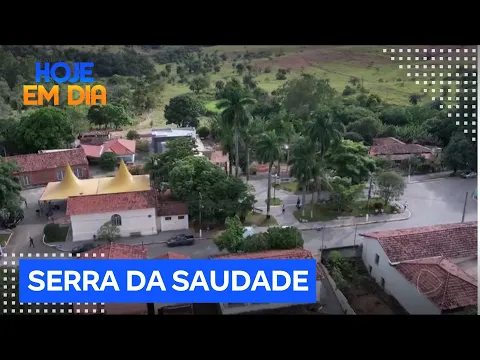
Traditional festivals, such as city anniversaries, sertanejo music festivals, and religious celebrations, become important moments for community gathering. On these occasions, it is common for the population to double or even triple with visitors from the region.
The Risks for the Future: Towns That May Disappear From the Map
Studies from IBGE indicate that the depopulation process may intensify in the coming years, especially in municipalities with fewer than 2,000 inhabitants. The trend is for elderly people to remain while young people migrate. This creates a scenario of potential demographic collapse, with a direct impact on revenue and service availability.
Public administration specialists have discussed, since 2020, the possibility of voluntary mergers between very small municipalities to improve efficiency and reduce costs. However, the idea meets local political and cultural resistance.
Meanwhile, towns like Serra da Saudade continue to exist almost like living relics of rural Brazil: too small to be cities in the traditional sense, but large enough to carry their own history and a population that insists on staying.









-

-

3 pessoas reagiram a isso.