





 Portuguese
  English
  Spanish
  5 min of reading
  0 comments


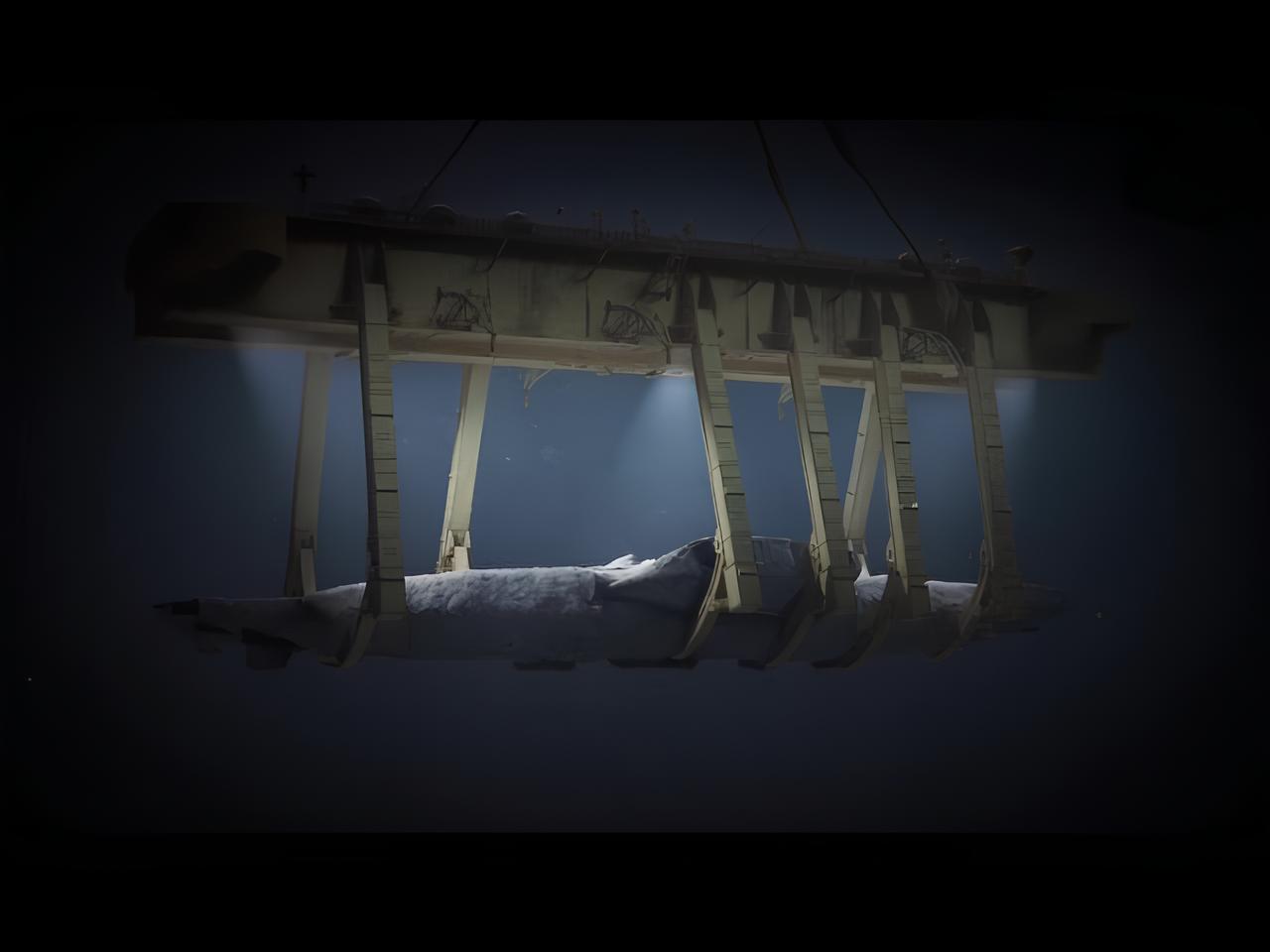
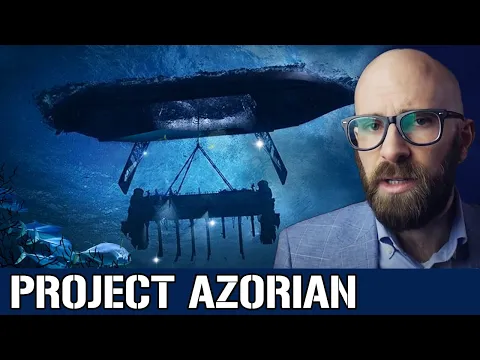
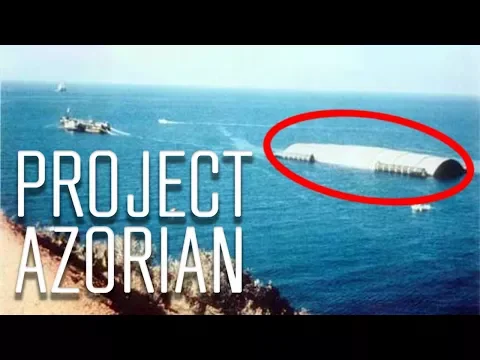
In 1974, in the North Pacific, the CIA attempted to recover the Soviet submarine K-129 at 5,000 meters deep using the Hughes Glomar Explorer, in a secret operation that became part of Cold War history.
On July 4, 1974, while the United States celebrated Independence Day, one of the most ambitious and secret operations in modern intelligence history was underway in the North Pacific Ocean, about 1,800 kilometers northwest of the Hawaiian archipelago. At that remote point, in international waters with an approximate depth of 5,000 meters, the Central Intelligence Agency of the United States (CIA) officially launched Operation Azorian, a mission aimed at recovering parts of the Soviet nuclear submarine K-129, which sank six years earlier, in March 1968.
The operation remained classified for decades and only had its main details confirmed after the release of official documents by the CIA itself, supplemented by analyses from the National Security Archive, the Encyclopaedia Britannica, and historical studies from the U.S. Naval Institute.
The Disappearance of the Submarine K-129 in 1968
The starting point of Operation Azorian dates back to March 8, 1968, when the Soviet submarine K-129, belonging to the Soviet Navy, disappeared during a patrol mission in the Pacific. The vessel was carrying nuclear ballistic missiles, torpedoes, and sensitive cryptographic equipment, according to historical records analyzed by the Britannica.
-
Friends have been building a small “town” for 30 years to grow old together, with compact houses, a common area, nature surrounding it, and a collective life project designed for friendship, coexistence, and simplicity.

-
This small town in Germany created its own currency 24 years ago, today it circulates millions per year, is accepted in over 300 stores, and the German government allowed all of this to happen under one condition.

-
Curitiba is shrinking and is expected to lose 97,000 residents by 2050, while inland cities in Paraná such as Sarandi, Araucária, and Toledo are experiencing accelerated growth that is changing the entire state’s map.

-
Tourists were poisoned on Everest in a million-dollar fraud scheme involving helicopters that diverted over $19 million and shocked international authorities.



The sinking occurred far from Soviet shores, in deep waters and out of shipping routes. Initially, Moscow never officially disclosed the causes of the accident. Subsequent analyses suggest structural failure, internal explosion, or accidental collision, but no version has been definitively confirmed by Soviet authorities.
How the United States Located the Submarine on the Ocean Floor
After the disappearance of K-129, the U.S. Navy began a silent sweep using its network of underwater acoustic sensors known as SOSUS (Sound Surveillance System). These sensors, originally designed to detect enemy submarines, recorded an anomalous event consistent with an underwater implosion.
Based on this data, American analysts were able to estimate the wreckage area. In subsequent missions, deep observation vehicles confirmed the presence of debris at around 5,000 meters deep, in a remote region of the North Pacific. This information is detailed in documents now available in the CIA archive.
The Strategic Objective of Operation Azorian
For U.S. leadership, the sinking of K-129 represented an unprecedented strategic opportunity. For the first time, it would be possible to attempt to obtain:
- components of Soviet nuclear missiles
- navigation and control systems
- cryptographic codes and communication equipment
- direct information about Soviet naval technology
All of this without direct military confrontation, at the height of the Cold War. According to the National Security Archive, the mission was deemed high-risk politically and technically, but its strategic potential justified the billion-dollar investment.
Where Exactly Did Operation Azorian Take Place
The rescue attempt was conducted at a carefully chosen point:
- Ocean: North Pacific
- Geographical Reference: approximately 1,800 km northwest of Hawaii (United States)
- Legal Situation: international waters
- Submarine Depth: about 5,000 meters
This depth places the operation among the most extreme ever attempted by human engineering in the marine environment.
The Hughes Glomar Explorer: A Ship Built for a Single Purpose
To carry out the mission, the CIA sponsored the construction of an unprecedented ship. The Hughes Glomar Explorer was built in the United States between 1971 and 1973, officially presented to the public as an ocean mining vessel in partnership with businessman Howard Hughes.
Technical data confirmed by CIA documents indicate that the ship had:
- Displacement: approximately 63,000 tons
- Length: approximately 189 meters
- Central System: a huge “moon pool”, an internal opening that allowed covert underwater operations
In practice, the ship was designed to raise gigantic objects from the ocean floor, protecting the entire operation from observation by satellites or foreign ships.
The Giant Mechanical Claw and the Challenge of Extreme Depth
The most impressive element of Operation Azorian was the so-called Capture Vehicle, a gigantic mechanical claw specifically designed to envelop the hull of the Soviet submarine.
According to technical reports cited by the CIA:
- the structure needed to withstand pressures exceeding 500 atmospheres
- operated in complete darkness at 5,000 meters depth
- utilized a column of interlinked metal tubes, gradually lowered from the ship
Never before had a lifting operation been attempted at this depth, making the mission an absolute milestone in deep ocean engineering.
The Critical Moment of the Rescue in 1974
Between July and August 1974, the Hughes Glomar Explorer began the most delicate phase of the mission. The mechanical claw managed to grasp part of the K-129 submarine and slowly began the ascent.
During the process, however, the hull of the submarine — already weakened by years on the ocean floor — broke apart. Declassified documents confirm that only a front section of the K-129 was effectively recovered, while the remainder returned to the seabed.
Even with the partial failure, the operation was able to recover equipment, structural fragments, and remains of crew members, which were subsequently buried at sea with military honors, as shown in a video officially released by the CIA decades later.
The Absolute Secrecy and the Leak to the Press
Operation Azorian remained officially secret until 1975, when journalist Jack Anderson published information about the mission. From then on, the U.S. government was pressured to comment on the case.
The CIA’s response became historic:
“The Agency neither confirms nor denies the existence of the operation.”
This formulation gave rise to the legal term known as “Glomar response”, now used in requests for information access in the United States.
Institutional Sources Confirming the Operation
The central information of Operation Azorian is now confirmed by official and academic sources, including:
- CIA – Central Intelligence Agency (declassified documents and public disclosures)
- National Security Archive (George Washington University)
- Encyclopaedia Britannica
- U.S. Naval Institute
These institutions confirm date, location, strategic objective, and partial execution of the mission.
The Historical Legacy of Operation Azorian
Although it did not achieve all of its technical objectives, Operation Azorian has entered history as:
- the deepest rescue attempt ever made
- one of the largest secret projects of the CIA
- a watershed in ocean engineering and naval espionage
Carried out in 1974, in the North Pacific Ocean, the mission remains one of the most extraordinary episodes of the Cold War, combining extreme technology, absolute secrecy, and strategic ambition on an unprecedented scale.










-

-

-

4 pessoas reagiram a isso.