





 Portuguese
  English
  Spanish
  5 min of reading
  0 comments


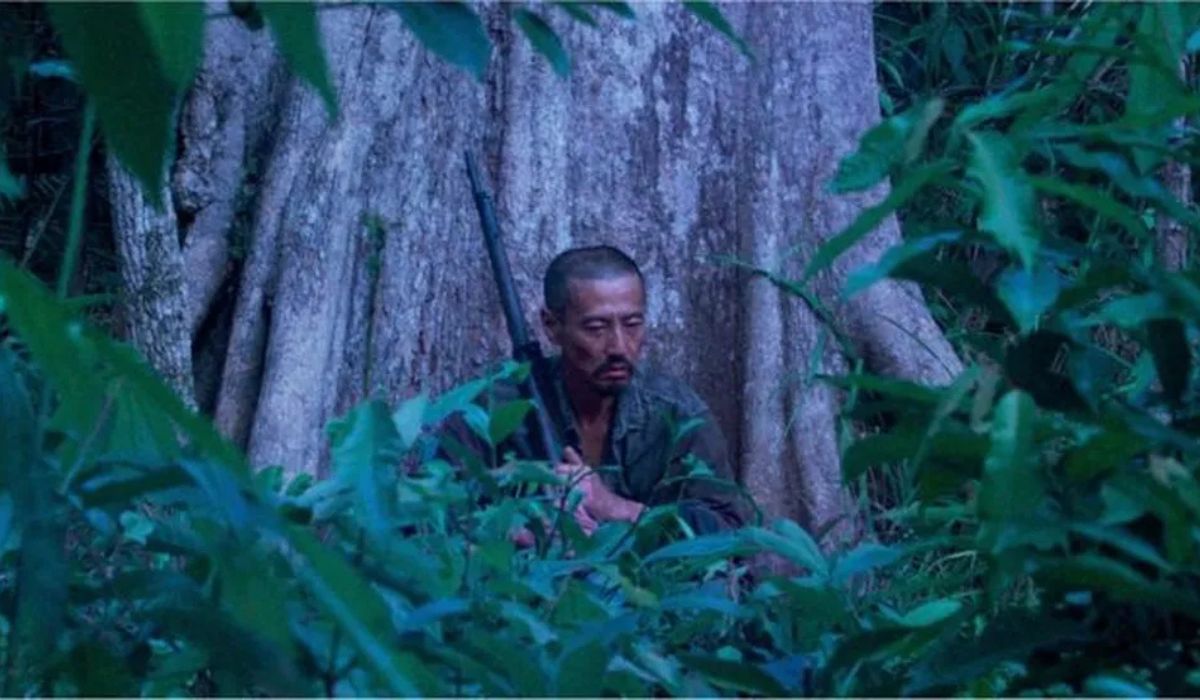
Sent to the Philippines in the Last Months of World War II, a Japanese Lieutenant Remained Hidden in the Jungle for Almost Three Decades, Convinced That the Conflict Continued. The Case Involves Historical Memory, Violence, Political Controversy, and Narrative Disputes That Are Still Current.
In December 1944, then-lieutenant Hiroo Onoda of the Imperial Japanese Army landed on the small island of Lubang in the Philippines, with the mission of carrying out guerrilla actions and preventing the advance of Allied forces.
Months later, with enemy troops occupying the island, he took refuge in the jungle with other soldiers.
Onoda only laid down his arms in March 1974, nearly 29 years after Japan’s official surrender, when he received a direct order from his commander to end the mission.
-
Friends have been building a small “town” for 30 years to grow old together, with compact houses, a common area, nature surrounding it, and a collective life project designed for friendship, coexistence, and simplicity.

-
This small town in Germany created its own currency 24 years ago, today it circulates millions per year, is accepted in over 300 stores, and the German government allowed all of this to happen under one condition.

-
Curitiba is shrinking and is expected to lose 97,000 residents by 2050, while inland cities in Paraná such as Sarandi, Araucária, and Toledo are experiencing accelerated growth that is changing the entire state’s map.

-
Tourists were poisoned on Everest in a million-dollar fraud scheme involving helicopters that diverted over $19 million and shocked international authorities.


The episode spanned decades and remains a subject of distinct interpretations.
Upon returning to Japan in 1974, Onoda was welcomed by part of the population as a symbol of discipline and military loyalty.
In Lubang, however, his prolonged stay is associated with the fear experienced by local residents during the years the group carried out attacks, convinced that the war was still ongoing.
Military Order and Isolation in Lubang
Onoda arrived in Lubang on December 26, 1944, assigned to lead sabotage operations and gather intelligence.
Among the orders received were the destruction of strategic structures, such as the airstrip and port facilities.
In his memoirs, he reports being instructed to not surrender and not take his own life, and to resist until the return of the Japanese army.
With the loss of control of the island by Japanese forces, Onoda and three other soldiers began to move through the forest.
The war officially ended in August 1945, but the group rejected the leaflets dropped to inform them of Japan’s surrender, considering them an enemy deception attempt.

Over the years, distrust grew.
Letters and photographs sent by family members were also interpreted as forgeries, and external signals, such as international news, were seen as part of a psychological warfare strategy.
Their routine included constant vigilance and foraging for food from local farms to ensure survival.
In the memoirs published decades later, Onoda described that over time, he and his companions began to interpret events only through the convictions they already held, which made it difficult to accept divergent information.
The group gradually dissolved.
One of the soldiers surrendered in 1950.
Another was killed in a confrontation in 1954.
In October 1972, Kinshichi Kozuka, Onoda’s last companion, was shot dead by local police.
After this incident, the lieutenant remained alone on the island for about a year and a half.
Late Surrender and International Repercussions
The situation changed with the arrival of the Japanese Norio Suzuki, who went to Lubang with the declared goal of finding Onoda.
After talking, it was agreed that he would only surrender if he received direct orders from a superior.
Major Yoshimi Taniguchi, his former commander, was then brought to the island and, in March 1974, officially communicated the end of the mission.
At that time, Onoda surrendered his weapons and equipment to the Philippine authorities.
The episode received international repercussions and was concluded with a political decision that also sparked debates.
The then-president of the Philippines, Ferdinand Marcos, granted Onoda clemency for the actions taken during his time in hiding, considering that he believed he was following wartime orders.
Violence Attributed to the Group and Local Memory
In Japan, Onoda has often been described as the “last soldier” of World War II to surrender.
This narrative, however, coexists with accounts from Lubang residents and journalistic records that attribute to the group attacks on civilians over the decades they remained active.
There are recurring references to up to 30 deaths of island residents during this period, a number cited in various reports and documentaries.
These accounts help explain why Onoda’s story is often revisited in discussions about war memory and historical responsibility.
For researchers and filmmakers addressing the topic, the soldier’s stay on the island cannot be analyzed solely from the perspective of military resistance, but also from the impact on the local population.
Film, Books, and Narrative Disputes
Onoda’s trajectory returned to the center of recent cultural debate with the film “Onoda: 10,000 Nights in the Jungle”, directed by French Arthur Harari, shown at the Cannes Film Festival in 2021.


The production received important awards in France, including the César for Best Original Screenplay, and began circulating internationally in the following years.
In Brazil, the film reached theaters in August 2022.
Besides the film, the story inspired other works.
The German filmmaker Werner Herzog published the novel “The Twilight of the World”, based on conversations and research about the case.
There are also documentary projects in development that seek to examine the episode from different perspectives, including that of the Filipino residents affected by the conflicts.
Criticisms of the Point of View and Filipino Absence
Part of the repercussions surrounding Harari’s film involve the choice to follow Onoda’s experience from his own perspective.
In interviews, the director stated that he sought to understand how a soldier could remain isolated for so long, convinced he was still at war.
Critics, on the other hand, argue that this focus may reduce the space dedicated to the experiences of the local population.
Published analyses in specialized journals point out that in contexts of debate about nationalism and historical memory, the way characters linked to Japanese expansionism are represented requires caution.
According to these critics, the absence or reduction of the Filipino perspective may lead to an incomplete reading of events.
Similar Cases After World War II
Onoda was not the only Japanese soldier to remain hidden for decades after the end of World War II.
There are records of other soldiers who surrendered only in the 1950s, 1960s, or 1970s, on Pacific islands.
In many of these cases, however, the holdouts established some form of coexistence with the local population or avoided prolonged confrontations.
Researchers studying the topic point out that the case of Lubang is distinguished by the duration of isolation and the persistence of armed actions.
For these scholars, the combination of military indoctrination, specific orders, and personal characteristics helps explain why Onoda maintained the mission for so long.
Decades after his return to Japan, the lieutenant’s story continues to be revisited in books, films, and reports.









-

-

-

6 pessoas reagiram a isso.