





 Portuguese
  English
  Spanish
  6 min of reading
  0 comments


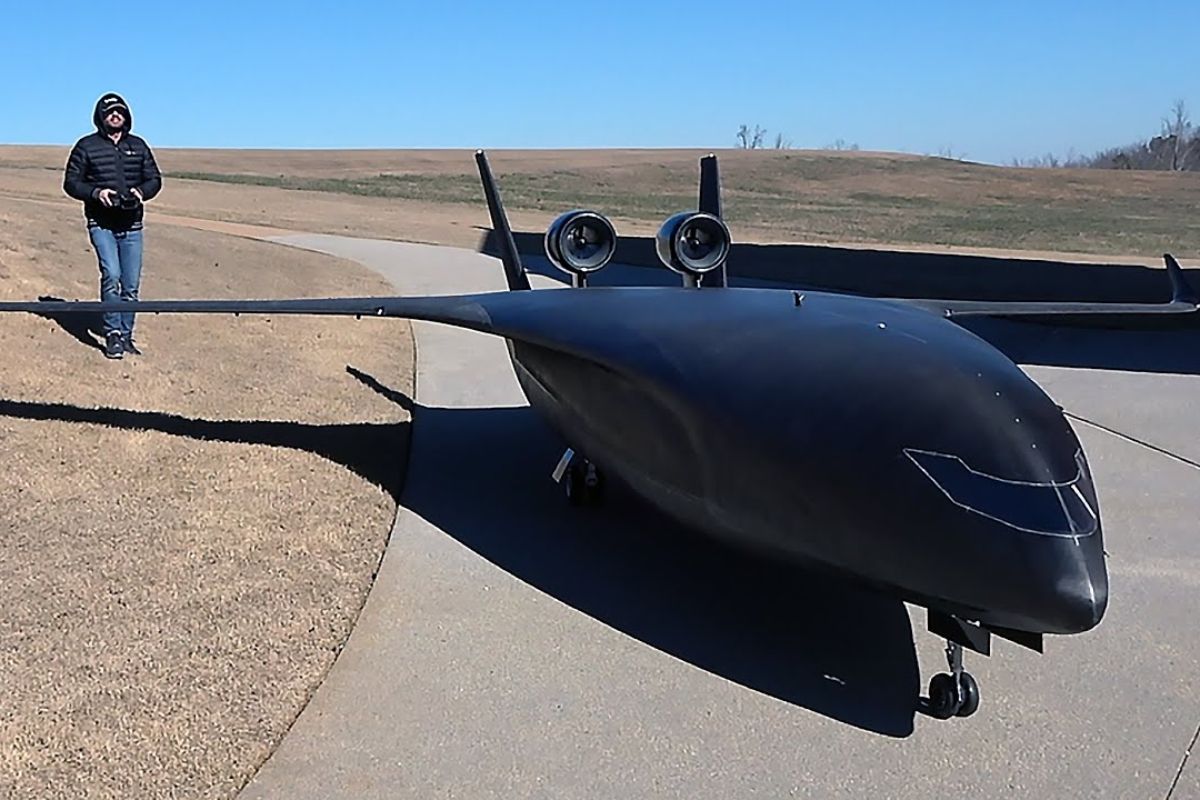
Integrated Wing Aircraft Natilus Horizon Gains Complete Electronic Systems, Lighting, Functional Landing Gear, and Accessible Cockpit While Engineers Validate Structure, Control Surfaces, Cooling, Energy Management, and Performance on Runway to Ensure That the First Flight Takes Place Safely, Efficiently, and with Reliable Data for the Next Phase of Flight Testing
The integrated wing aircraft Natilus Horizon reaches a critical point in the project. The prototype transitions from being just an assembled structure to operating as a complex system, with active control surfaces, retractable landing gear, redundant electronic controls, and functional lighting ready for low-visibility operations. The goal now is simple and critical: to prove in flight whether the integrated wing concept behaves as expected in wind tunnel tests, simulations, and ground tests.
In the latest phase, the responsible team installed servos, a gyroscope, motor controllers, lighting modules, and all internal wiring in an organized architecture over a main command plate. The integrated wing aircraft was then taken to the runway for acceleration tests, directional control, and surface response at high speeds, reaching around 88 kilometers per hour in crosswinds and confirming that the structural and aerodynamic assembly is ready to advance to the flight testing phase.
From Model to Functional Prototype of Integrated Wing Aircraft

The integrated wing aircraft Natilus Horizon project is based on a wide wing configuration with an incorporated fuselage, a solution that seeks to combine internal cargo volume with superior aerodynamic efficiency.
-
Motorola launched the Signature with a gold seal from DxOMark, tying with the iPhone 17 Pro in camera performance, Snapdragon 8 Gen 5 that surpassed 3 million in benchmarks, and a zoom that impresses even at night.

-
Satellites reveal beneath the Sahara a giant river buried for thousands of kilometers: study shows that the largest hot desert on the planet was once traversed by a river system comparable to the largest on Earth.

-
Scientists have captured something never seen in space: newly born stars are creating gigantic rings of light a thousand times larger than the distance between the Earth and the Sun, and this changes everything we knew about stellar birth.

-
Geologists find traces of a continent that disappeared 155 million years ago after separating from Australia and reveal that it did not sink, but broke into fragments scattered across Southeast Asia.

The prototype features a wing shape close to a delta, with distributed control surfaces and rear vertical stabilizers that take on part of the function of the rudder and directional stability. Each movable edge was precisely cut and coupled to servos mounted on internal wooden supports, reinforced before the closure of the external structure.
The Kevlar hinges were chosen to reduce gaps, distribute forces, and virtually disappear beneath the skin of the integrated wing aircraft.
This detail is not only aesthetic. Clean and continuous folds help reduce drag, minimize turbulence points, and enhance the efficiency of controls at low and high speeds.
The very logic of the design reflects a pursuit of structural rigidity with minimal weight and discontinuity of airflow.
Structure, Hatches, and Cockpit: Engineering the Skin Inward

One of the most labor-intensive stages was the opening and finishing of the main hatch, the large upper access point where controllers, batteries, and power distribution modules are concentrated.
While cutting this section, the team had to seal all exposed foam surfaces, eliminating any risk of chemical attack during painting while also increasing local rigidity.
The result is a spacious maintenance area, yet well-integrated into the external form of the integrated wing aircraft.
Under this hatch, a main plate was installed that acts as the “physical brain” of the prototype.
On it, the motor controllers configured to operate in 14s and 28s arrangements, the signal distribution center, the retractable landing gear controller with brakes and doors, the dedicated lighting module, and the stabilization gyroscope were mounted.
All this electronics were designed to withstand the environment of vibration, temperature variations, and load and discharge cycles characteristic of an integrated wing aircraft in intensive testing.
Landing Gear, Machined Aluminum, and Runway Behavior
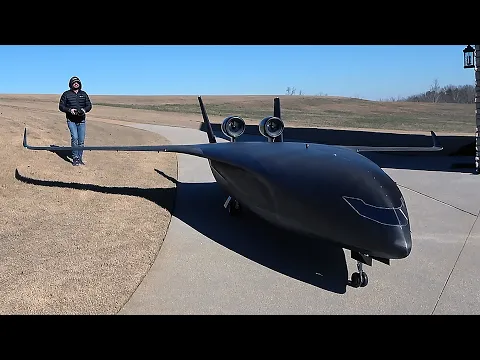

The landing gear of the Natilus Horizon is one area where the engineering of the prototype closely resembles that of a larger aircraft.
The legs of the main assembly and the support were machined from aluminum, with high-quality finishing and tight tolerances, ensuring mechanical strength and repeatability in retraction and extension operations.
The landing gear doors were integrated into the fuselage design, with fine cutouts and careful alignment to reduce aerodynamic steps.
In runway tests, the integrated wing aircraft accelerated on a paved surface with crosswinds of around 24 kilometers per hour.
The team observed that, below approximately 30 miles per hour, the direction still heavily depends on ground control input, but above this threshold, the vertical stabilizers and the gyroscope system take on the role of stabilizing the yaw axis.
In one of the runs, the prototype reached 88 kilometers per hour, demonstrating that the available acceleration will be sufficient to reach the estimated rotation speed in the range of 58 knots at a safe runway distance.
Controls, Electronics, and Redundancy in an Integrated Wing Aircraft
From a control perspective, the integrated wing aircraft Natilus Horizon operates with multiple surfaces individually controlled. The wing features control sections that combine functions of ailerons and elevators, coordinated by a high-performance gyroscope.
This module makes real-time micro-corrections, smooths gusts, and aids in maintaining trajectory during acceleration or deceleration on the runway and during future flight maneuvers.
The power distribution is done from four batteries dedicated to the propulsion system, configured in 14s groups connected in series to power the main controllers.
A central module manages the connections, protecting sensitive electronics from overloads and abrupt drops in voltage.
The result is an architecture that seeks a balance between performance, safety, and maintenance simplicity, something fundamental in a prototype that will still undergo fine adjustments as more data is collected.
Lighting, Visibility, and Operation Details
Another aspect that brings the prototype closer to an operational integrated wing aircraft is the external lighting system. The wingtips were fitted with light sets in specially printed fairings, with transparencies protected by UV-resistant coating.
These side lights are extremely bright, allowing for clear visual identification in low-light operations and facilitating attitude and position readings by observers on the ground.
In the front section, high-intensity landing lights were installed in the nose, connected to a specific mode synchronized with the position of the landing gear. When the assembly is lowered, the lights automatically turn on, replicating the typical logic of certified aircraft.
The tail received navigation lights configured to flash after the activation of the wingtip strobes. The attention to this type of detail indicates that the project is not limited to proving an aerodynamic idea but also tests realistic operational procedures in an integrated wing aircraft.
Initial Tests and Challenges That Still Need to Be Overcome
The initial taxi tests revealed promising behavior but also some necessary adjustments. At lower speeds, the directional response required more control effort than ideal, prompting the team to consider increasing the gyroscope actuation on the directional axis and implementing additional deflections on the rudder.
This calibration is typical in integrated wing aircraft prototypes, where each software change directly impacts the stability perceived on the ground and, in the future, in flight.
In addition to the controls, there is still the final painting stage, which will be applied after the validation of the structural assembly and electronics in their final condition. The coating will require special care to avoid any direct contact of the paint with unsealed foam areas, which could compromise the integrity of the structure.
The expectation is that, with the finishing completed, the integrated wing aircraft Natilus Horizon will proceed to a complete cycle of flight testing in milder temperature and wind conditions, maximizing the quality of the data collected.
What the First Flight of the Natilus Horizon Can Say About the Future
The initial takeoff of the integrated wing aircraft Natilus Horizon will be more than a project milestone. It will be a real test of a concept that seeks to enhance usable volume, aerodynamic efficiency, and cargo potential in a single integrated wing format.
The behavior during rotation, the transition from the takeoff roll to stable flight, and the response of the control system will be analyzed frame by frame to confirm whether the model holds up under operational conditions closer to reality.
If the results confirm what ground tests suggest, the Natilus Horizon could consolidate the integrated wing aircraft as a real candidate for cargo applications, advanced logistics, and special missions where autonomy and fuel efficiency are decisive.
Every run on the runway, every servo adjustment, and every structural reinforcement contribute to a set of evidence which, in the end, will indicate whether this type of platform is ready to move out of the experimental field and gain scale.
Do you see the integrated wing aircraft as the next logical step in cargo and logistics aviation, or do you still think the conventional format of separate fuselage and wing will continue to dominate the skies for decades to come?







-

-

2 pessoas reagiram a isso.