





 Portuguese
  English
  Spanish
  3 min of reading
  1 comment


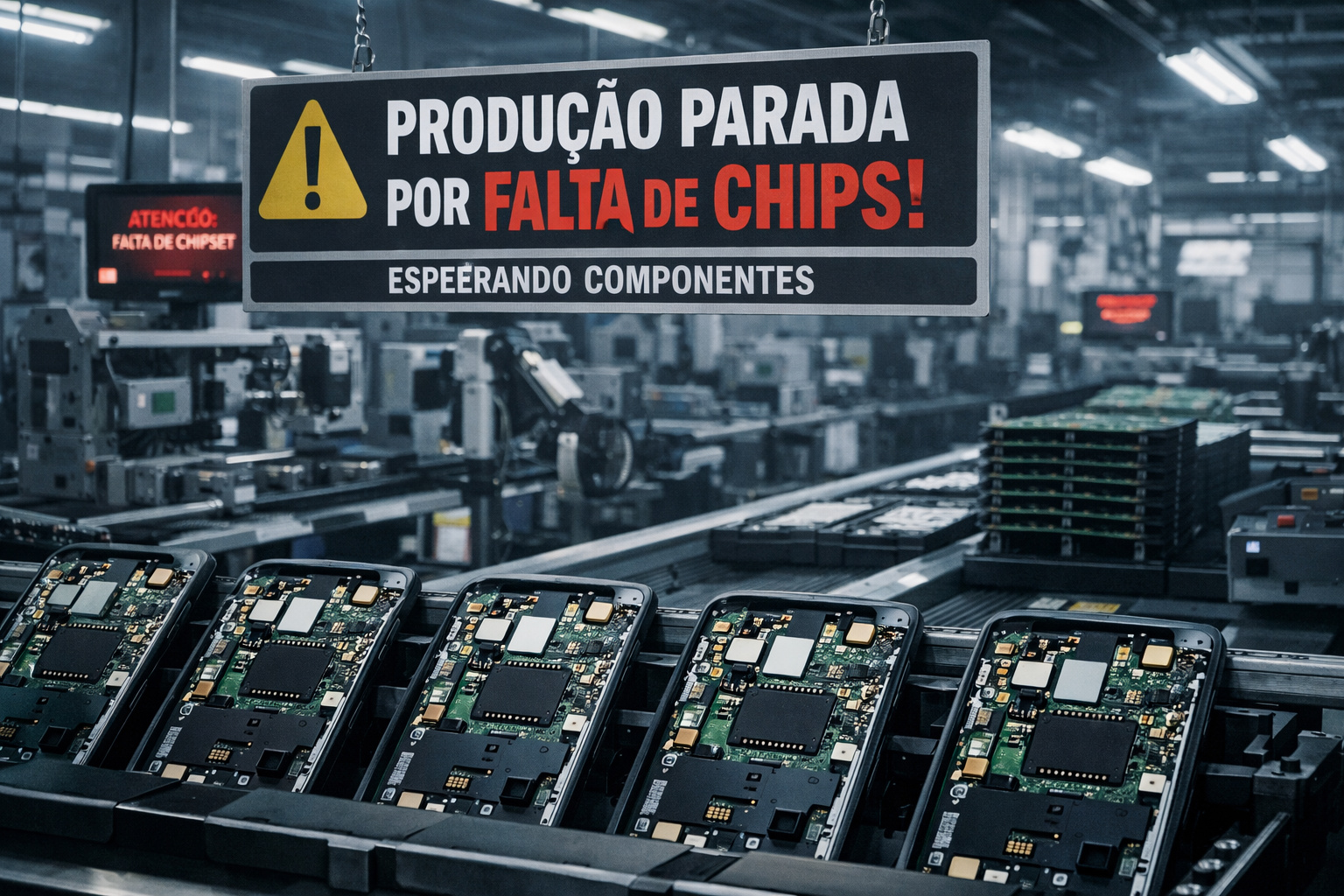


Memory Chip Shortage Pressures Manufacturers, Raises Prices by 14% and May Redesign the Smartphone Market by 2028, According to IDC Projection
The Global Market for smartphones is facing unprecedented turbulence. The so-called “memory crisis,” marked by a shortage of RAM chips, is expected to trigger the largest decline in smartphone sales in history. According to a projection released by consulting firm IDC, manufacturers will sell 1.1 billion smartphones worldwide in 2026, representing a reduction of 12.9% compared to 2025.
This information was released by “Reuters,” based on a report from IDC published this Thursday (26). According to the survey, the RAM memory crisis is not a one-time impact. On the contrary, the situation may extend until mid-2027, during which time the market is expected to show only a modest recovery.
Furthermore, IDC projects that next year, sales will grow by only 2%, indicating a slow recovery pace. Only in 2028, according to the consultancy, will the sector register more robust growth, estimated at 5.2%.
-
Motorola launched the Signature with a gold seal from DxOMark, tying with the iPhone 17 Pro in camera performance, Snapdragon 8 Gen 5 that surpassed 3 million in benchmarks, and a zoom that impresses even at night.

-
Satellites reveal beneath the Sahara a giant river buried for thousands of kilometers: study shows that the largest hot desert on the planet was once traversed by a river system comparable to the largest on Earth.

-
Scientists have captured something never seen in space: newly born stars are creating gigantic rings of light a thousand times larger than the distance between the Earth and the Sun, and this changes everything we knew about stellar birth.

-
Geologists find traces of a continent that disappeared 155 million years ago after separating from Australia and reveal that it did not sink, but broke into fragments scattered across Southeast Asia.

RAM Memory Crisis Hits Mainly Low-Cost Android Phones
The RAM memory chip crisis directly impacts smartphone production, especially entry-level Android models. According to the report, the shortage will primarily affect low-cost phones, as these devices operate on tighter margins and rely heavily on affordable components.
On the other hand, Apple and Samsung are not expected to feel the impact as intensely. This is because the two manufacturers maintain a strong position in the high-end device segment, which features higher profit margins and greater ability to pass costs onto consumers.
RAM, which stands for “Random Access Memory”, plays a fundamental role in the functioning of devices. When an application is opened on the phone, it is the RAM that temporarily stores the necessary data for the program to function correctly. Therefore, without sufficient chips, smartphone production is directly impacted.
In addition to phones and computers, memory chips are also found in smart TVs, tablets, gaming consoles, smartwatches, robot vacuums, cars, printers, and various other connected devices. Thus, the RAM memory crisis has the potential to affect multiple segments of the technology industry.
Prices Rise by 14% and Market May Undergo a Seismic Shift
With the reduced supply of processing and storage chips, prices have risen significantly. As a direct consequence, manufacturers’ profit margins have come under pressure.
In light of this situation, IDC stated that the average price of smartphones is expected to rise by 14% in 2026. This increase reflects a strategic shift by manufacturers, who will prioritize devices with higher profit margins to offset increased component costs.
Nabila Popal, senior director of research at IDC, warned that the crisis will not only result in a temporary drop in sales. According to her, the market may undergo a deep restructuring. “The tariffs and the pandemic crisis seem like a joke compared to this,” Popal told Bloomberg. “The smartphone market will witness a seismic shift by the end of this crisis.”
Therefore, the RAM memory crisis is not limited to negative sales numbers. It signals a structural transformation in the global smartphone market, which may redefine strategies, portfolios, and prices at least until 2028.
Do you believe that consumers will accept a 14% increase in smartphone prices, or could the market shrink even further?








Acredito que as vendas de smartphones tenha uma pequena queda nas vendas entre 2 a 3 por % em relação a novas vendas diretas pois com aumento de preços as pessoas devam segurar a compra de novos smartphones por um período de 2 a 3 anos. Apple e Samsung devem sentir essa pequena variação no curto tempo mais não afetará tanto suas vendas pois tem margens de lucro maiores que as rivais menores.