





 Portuguese
  English
  Spanish
  6 min of reading
  0 comments


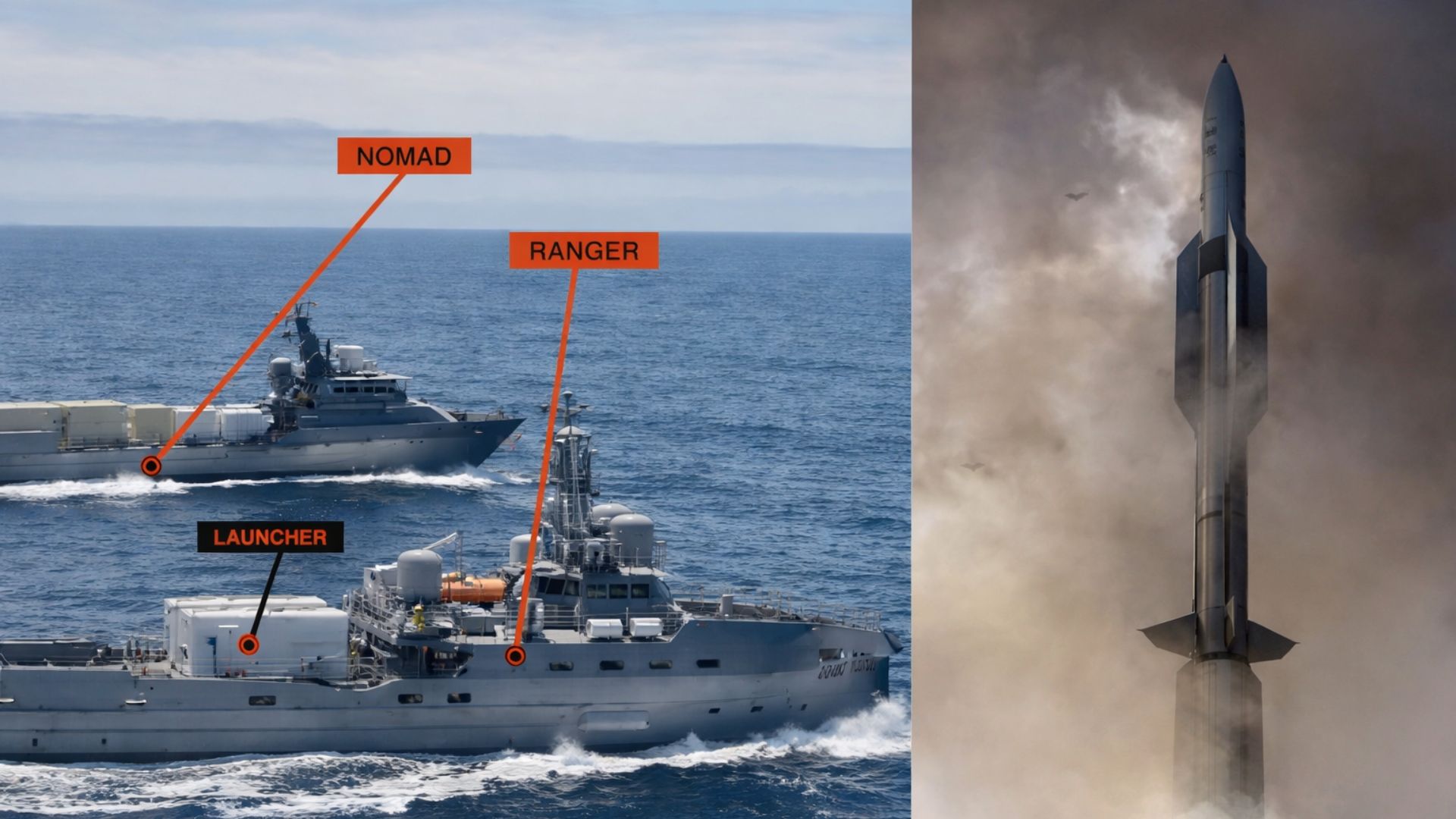
Standard Container Used in Global Logistics Has Already Been Adapted to Launch Missiles in Naval Tests by the United States, Including a Crewed Ship and an Uncrewed Vessel, with Vertical Launch Modules Installed on the Deck as Cargo. Concept Increases Attention to Modularization and Rapid Integration of Weapons.
A standard container, of the type used daily in global logistics, has already been adapted by the United States to function as a missile launcher in naval tests with an uncrewed vessel.
The demonstration involves a containerized system with vertical launch cells, installed as cargo on the deck, without requiring the platform to have been designed from the outset as a warship with embedded launchers.
Mk 70 PDS and the Concept of Container Launcher
The highlighted equipment is the Mk 70 Mod 1 Payload Delivery System (PDS), presented by Lockheed Martin as a “containerized” 40-foot launcher, with four vertical launch cells of the “strike-length” type related to the Mk 41 family, a standard disseminated in various navies.
-
He started running at 66 years old, broke records at 82, and is now a subject of study for having a metabolic age comparable to that of a 20-year-old, in a case that is intriguing scientists and inspiring the world.

-
Oldest tree on the planet reappears after 130 years of searches: Wattieza, 385 million years old, was 10 meters tall and had no leaves or seeds; Gilboa fossils in New York solved the mystery in 2007.

-
A 48-square-meter house assembled in hours with 4,000 bricks made of recycled plastic that does not absorb moisture, has natural thermal insulation, and costs less than 90,000 reais in a complete kit.

-
Luciano Hang revealed that Havan’s air fleet has already accumulated more than 20,000 landings, 10,000 flight hours, and 6 million kilometers traveled, and he says that without the planes, the company would never have grown so quickly.


In practice, the concept combines the shape of an ISO container with a launch and integration set to employ missiles compatible with this type of cell, allowing offensive capability to be taken to platforms that would not normally carry a fixed vertical launcher.
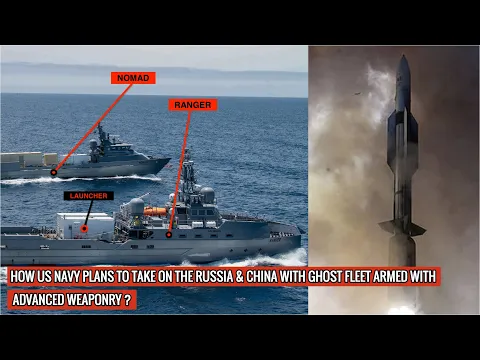

USS Savannah and the Firing of the SM-6 from the Deck
One of the most cited public demonstrations occurred on the littoral combat ship USS Savannah (LCS 28) of the U.S. Navy.
The ship conducted a firing of the Standard Missile-6 (SM-6) from a Mk 70 installed on the deck, in a configuration that positions the launcher as a module over the operational area, rather than integrated into the hull as on destroyers and cruisers equipped with VLS.
The occurrence was reported by specialized vehicles based on statements and records from the exercise, drawing attention to the fact that a vessel designed for littoral missions executed a launch from an external modular launcher.
USV Ranger and the Launching from an Uncrewed Vessel
Previously, the same principle had already been displayed on an even more unusual platform: the USV Ranger, an uncrewed surface vessel linked to the Ghost Fleet Overlord program.
In 2021, the U.S. Department of Defense released material from a test in which a SM-6 missile was launched from a modular set placed on the Ranger’s deck, described in reports and analyses as a containerized launcher with four cells.
The episode came to be cited as a milestone because it placed a large weapon on an uncrewed vessel, opening up space for integration tests between autonomy, sensors, and a transportable offensive module.
What is the SM-6 and Why Does the Launch Method Draw Attention
The SM-6, in turn, is a missile from the Standard family associated with Raytheon (RTX) and known for its employment versatility, with variants and modes of use aimed at aerial and surface targets, as well as applications related to defense against threats in certain engagement profiles.
In the cited tests, the relevance lies not only in the missile but in the launch method: the firing occurred from a module that can be transported, installed, and removed as cargo, instead of remaining as a permanent part of an onboard combat system since construction.
Why a Common Container Became a Global Military Issue
The logic of the “container with missiles” has immediate appeal because it subverts an expectation.
At ports, railways, and highways, containers are synonymous with standardization and logistical efficiency.
At sea, standardization paves the way for combat capability to be distributed differently than traditionally.
In the case of the Mk 70, the product description emphasizes the idea of delivering firepower to “non-traditional platforms” and to locations where an embedded launcher is not available.
This helps explain why the tests draw attention outside the strictly military circle: the shape of a container suggests industrial scale and ease of movement, even when the content is a weapons system.
Integrated VLS vs. Module on the Deck
On warships with integrated vertical launchers, the VLS is part of the ship’s architecture: it involves internal space, energy, fire protection, shielding, and deep integration with radars, communications, and command and control.
A module placed on the deck follows a different logic.
It still needs to be integrated to operate safely and effectively, but the physical “block” of the launcher ceases to be an inseparable component of the hull.
Practically speaking, this allows for rapid testing of configurations and, at least in a demonstration environment, to add offensive capability without undergoing as extensive a structural reconstruction project as installing a fixed VLS.
What the Tests Indicate About Modularization in Crewed and Uncrewed Platforms
The case of the USS Savannah illustrates this approach by using an already existing ship, with a history of debates about its role and lethality, to execute a firing from a modular launcher.
The demonstration is also relevant for associating the module with a regularly employed crewed ship, rather than just experimental platforms.
Meanwhile, the test with the USV Ranger expands the scope by showing that the same principle can be applied to vessels operated without crew on board, which introduces new layers of engineering, procedures, and operational control.
ISO Standardization and Logistics Infrastructure as an Advantage
Another feature that makes the topic “global” is that the container is an international standard.
An ISO-format system benefits from already established infrastructure for handling and transport, with cranes, locks, and known procedures.
This standardization is one of the reasons the concept often appears in public discussions about modularity: in theory, mission modules in containers allow for switching loads and capabilities as needed, provided that integration and security and operational requirements are met.
In the materials and reports about the Mk 70, the emphasis is on the speed of delivering a launcher to different platforms and theaters, leveraging packaging that “fits” within the existing logistics chain.
Public Debates on Identification and Use of Modules with Cargo-Like Appearance
The tests were also accompanied by public debates about implications of employment and law of armed conflict when weapons are placed in modules that resemble cargo.
Although, in the cases cited, the launcher was visibly shown in a military context, the very aesthetics of the container fuels discussions around identification, transparency, and rules of engagement at sea.
The factual point is that, by adopting a format associated with commerce, the system attracts attention not only for the missile’s range but for the symbolic effect of transforming an everyday object into a launch platform.
Testing and the Search for Interchangeable Loads
The development and demonstrations of the Mk 70 and modular launchers in general connect to a documented trend of exploring interchangeable “payloads” on crewed and uncrewed vessels, aimed at increasing flexibility and accelerating testing.
In the case of the Ghost Fleet Overlord, the Ranger was presented as part of efforts to experiment with larger USVs and learn about autonomy and integration of loads, including the evaluation of offensive modules.
In the case of the LCS, the demonstration of the Savannah was treated as evidence that modular systems can add attack capability to platforms already in service, using a transportable launcher instead of a permanent installation.
Test Firing is Not the Same as Permanent Operational Capability
At the same time, the topic remains surrounded by an inevitable caution: firing a missile is not the same as maintaining a mature operational capability.
The public records describing the tests show the feasibility of integration and firing in specific exercises, and this alone is a relevant data point for understanding how modern navies are experimenting with modularity.
The most tangible change, verified in the reported events, is that the “vertical launcher” is no longer exclusive to ships designed around it and has begun to appear, in demonstrations, as a module that can be brought to the deck of distinct, crewed or uncrewed, platforms.
If a containerized launcher can be installed as “cargo” and still place missiles in operation in real tests, what other platforms — civilian or military, crewed or uncrewed — might end up entering the debate about what truly constitutes a combat ship?








-

Uma pessoa reagiu a isso.