





 Português
  Inglês
  Espanhol
  5 min de leitura
  0 comentários


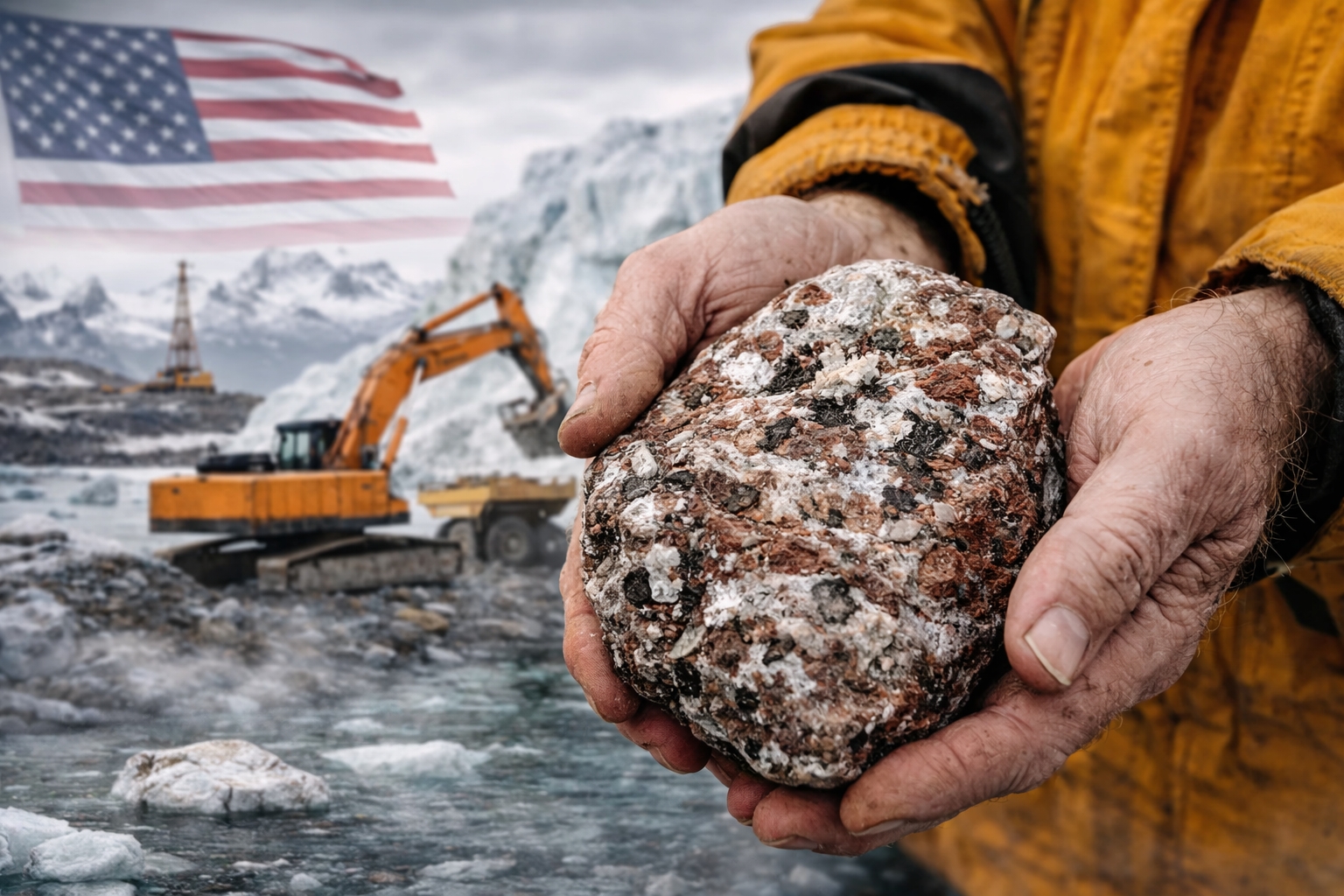
Trump Put “Critical Minerals” at the Center of Conversations About Greenland, but Experts Warn: Extracting and Bringing These Riches to Market May Be Expensive, Take Years, and Face Environmental Risks That Only Increase With the Accelerated Warming of the Arctic.
The U.S. wants to secure critical minerals for turbines, panels, batteries, electric motors, powerful magnets, and even modern military systems. And that’s where Greenland comes in as that tempting promise: a huge, little-explored territory with known reserves of rare earths, zinc, lead, copper, and other metals that have now become “currency” in geopolitics. On the surface, it seems like a clean solution: just go where the metal is and that’s it.
In practice, the story changes tone once you step on the ice.
Greenland does have significant resources. The territory’s rare earth reserves are estimated at 1.5 million tons, placing the island among the largest in the world, with deposits like Kvanefjeld and Tanbreez mentioned as some of the most substantial.
-
Russia spent $5 billion and 28 years modernizing a nuclear warship that had been inactive since 1997. The Admiral Nakhimov returned to the sea in August 2025 as the heaviest surface combat ship in the world, with 176 missile launchers, including hypersonic Zircon missiles.

-
James Webb finds 300 galaxies with mysterious scars, and this discovery may show that the universe was born much more violently than astronomers had imagined.

-
Haiti’s capital is experiencing an energy and construction crisis, facing blackouts, a blocked port, and buildings at risk after years of instability and a significant earthquake.
-
Government unlocks R$ 554 million for a highway that has been requested for decades and accelerates the duplication of BR.
The catch is that having rock in the ground doesn’t mean having a viable mining project. And what’s holding this back isn’t just bureaucracy or “lack of will.” It’s physics, logistics, and climate.

What Exists Underground Doesn’t Solve What Is Missing on the Surface
To start, the basics are lacking there: infrastructure. Greenland is nearly three times the size of Texas and has less than 160 km of roads, of which only about 90 km are paved.
The workforce is small. The port network is limited. Energy generation is unstable and restricted. And in the north, during polar nights, the sun simply does not rise for about 100 days. This isn’t just a geographical curiosity. It translates into cost.
Now, throw into this scenario an operation that requires heavy machinery, fuel, parts, maintenance, constant transportation, housing, communication, security, and a reliable supply chain.
In temperatures that can reach nearly 40 degrees Fahrenheit below zero, equipment suffers, hydraulic fluid thickens, helicopters stop flying, airports close, ships struggle to dock, and everything becomes delayed.
That’s why experts cite a hard reality: extracting minerals in Greenland can cost five to ten times more than in temperate regions.
And high costs, at the end of the day, kill projects. Especially when the metals market is cyclical and investors seek predictability.
Arctic Warming Doesn’t “Help” Mining; It Scrambles the Board
There’s a cruel irony here. Many people think: “if it’s melting, it will be easier to access.” But melting also destabilizes the ground.
With more rainfall over the snow and warmer air, the so-called mudslides increase, which are hard to predict and can sweep away roads, equipment, and people.
The thawing of permafrost destabilizes slopes and favors rockslides. In 2017, a landslide in Karrat Fjord generated a tsunami that destroyed dozens of structures in a village and killed people.
And to top it off, tundra fires, once rare, have become more frequent since 2008, blackening ice with soot and accelerating further melting.
In other words: the climate does not just impose cold and wind. It begins to affect the stability of the ground, the cost of insurance, the design of roads, the durability of installations, and even the reliability of landing strips and critical structures.
In the middle of this discussion, the main source that organizes these risks and details well is the report from Yale E360, which describes how the accelerated warming of the Arctic becomes a direct threat factor to coastal operations, infrastructure, and logistics.
The “Yes” from Greenland Comes with Conditions and Memories of the Past
Another point that tends to be underestimated is local politics. Greenland has already banned oil and gas drilling and carries examples of old environmental liabilities. There have been mines that dumped waste believing that heavy metals would be “trapped” forever, and later, the problem appeared in water, soil, and surrounding organisms. This creates resistance and increases regulatory rigor.
The territory’s government shows signs of openness to mining, but with two clear requirements: real benefits for Greenlanders and adherence to strict environmental standards. This is the type of condition that does not align with urgency. And rare earth mining, in itself, is already a technological saga.
In Greenland, part of the rare earths appears in silicates, rather than in the more “traditional” minerals of other major global reserves.
Separating this may require different, expensive, and time-consuming processes. And there are deposits that come mixed with undesirable materials, such as uranium, complicating licensing, operation, and public image.
So Why Are the U.S. Insisting?
Because it’s not just about metal. It’s about chess.
Even though opening mines in Greenland seems economically challenging today, the issue enters the package of Arctic security and competition for influence.
There are proposals to restrict mining rights to countries outside certain agreements and alliances. Meanwhile, the European Union and the United Kingdom are also making moves to tighten cooperation with Greenland on critical minerals.
And the U.S. government, at the same time, is accelerating more “down-to-earth” alternatives: agreements with allies, participation in projects in Canada, and critical minerals stockpile programs with billions in funding.
This reveals the backdrop: no one wants to depend on a single supplier, but no one wants to bet all their chips on a place where every screw costs a saga.
What May Change This Scenario in the Coming Years
The future may become less constrained for three very objective reasons.
- More open and predictable maritime routes with changing sea ice, reducing transportation bottlenecks in certain windows of the year.
- Technological improvements in extraction and refining, especially to handle silicates and undesirable mixtures, decreasing cost per ton.
- More robust energy in the territory, such as new hydropower plants, helping to reduce the absurd price of operating far from everything.
Still, the central point remains: Greenland is not a “shortcut” for critical minerals. It is an expensive, slow, and risky project, in a place where nature does not negotiate and local politics do not buy promises without guarantees.







Seja o primeiro a reagir!