





 Portuguese
  English
  Spanish
  5 min of reading
  0 comments


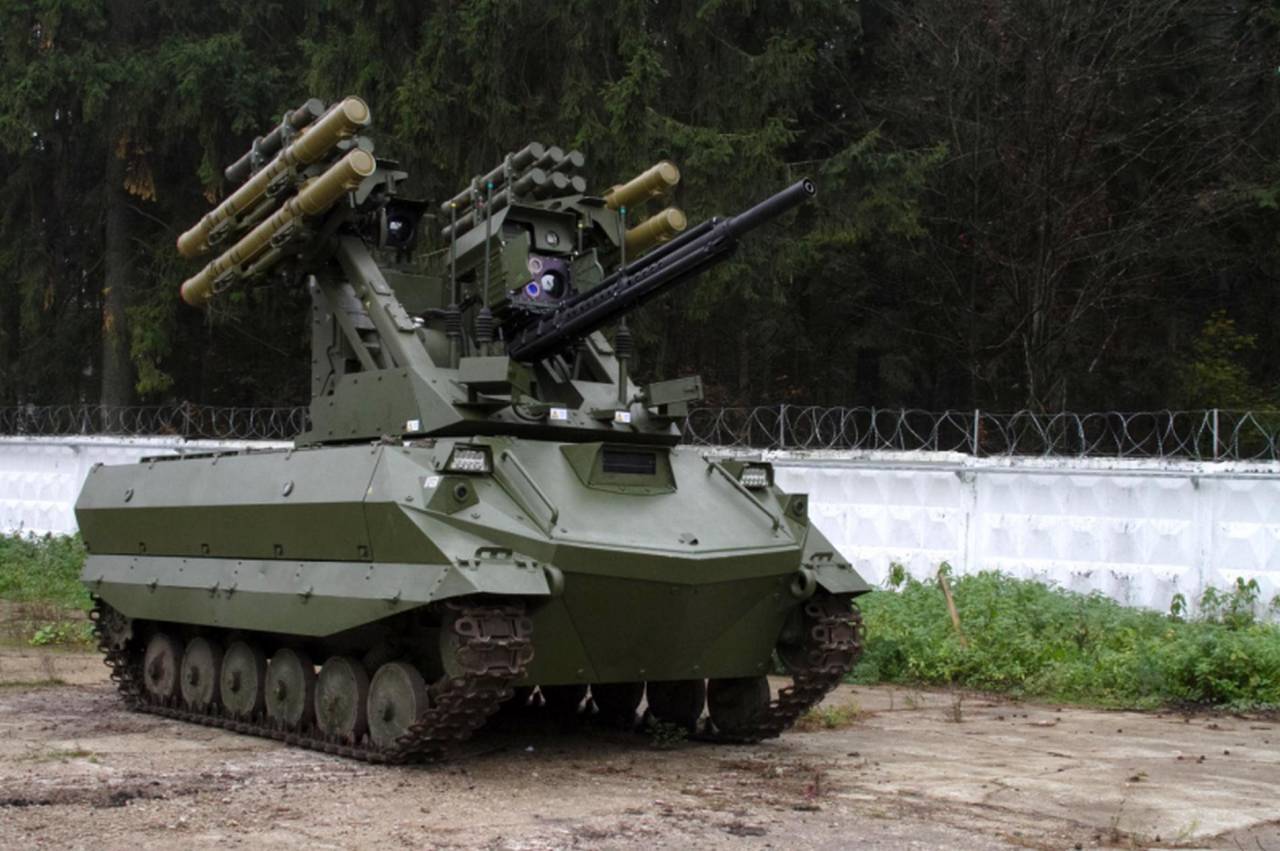
With More Than 45 Tons, 30 mm Cannon, and Anti-Tank Missiles, the Uran-9 Is the Russian Robotic Combat Vehicle Trying to Bring Autonomous Warfare to the Real Field.
Few people realize how much ground warfare is being pushed out of the human cockpit. The Uran-9 is born precisely from this impulse: to remove the soldier from the direct line of fire and transfer exposure to sensors, data links, and algorithms. Developed to operate at a distance, the system was presented as a game changer in Russian urban combat and infantry support doctrine, promising heavy firepower without immediate risk to crews.
However, ambition comes with technical and operational challenges that have turned the Uran-9 into an open-air laboratory about what works and what still does not work in the automation of armored vehicles.
What Is the Uran-9 and Why Did It Gather So Much Attention
The Uran-9 Is an Unmanned Ground Vehicle (UGV) armed, designed to accompany mechanized troops in urban and high-threat scenarios. Unlike aerial drones, it must deal with obstacles, debris, electromagnetic interference, and limited lines of sight, all while maintaining stable communication with human operators.
-
Motorola launched the Signature with a gold seal from DxOMark, tying with the iPhone 17 Pro in camera performance, Snapdragon 8 Gen 5 that surpassed 3 million in benchmarks, and a zoom that impresses even at night.

-
Satellites reveal beneath the Sahara a giant river buried for thousands of kilometers: study shows that the largest hot desert on the planet was once traversed by a river system comparable to the largest on Earth.

-
Scientists have captured something never seen in space: newly born stars are creating gigantic rings of light a thousand times larger than the distance between the Earth and the Sun, and this changes everything we knew about stellar birth.

-
Geologists find traces of a continent that disappeared 155 million years ago after separating from Australia and reveal that it did not sink, but broke into fragments scattered across Southeast Asia.

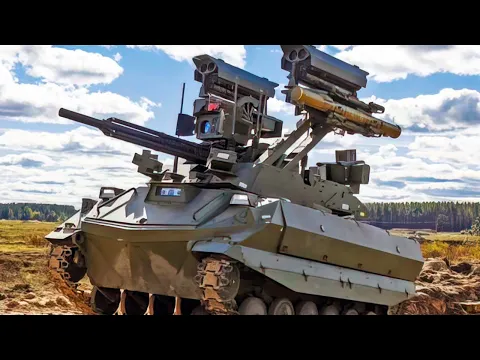

Its design resembles a light tank without a crewed turret. The absence of a crew allows for a reduction in internal volume and redistribution of weight to armor and weapon systems. In practice, this creates space for an offensive package comparable to that of crewed vehicles, but with a completely different risk concept.
Heavy Weaponry Concentrated in an Unmanned Vehicle
The heart of the Uran-9 is its remotely operated turret. The 30 mm automatic cannon provides capacity against infantry, fortified positions, and light vehicles. The rate of fire and the variety of ammunition allow for quick switching between suppression and precise engagement.
Additionally, the system integrates guided anti-tank missiles, capable of hitting heavy armored vehicles kilometers away. This detail changes the role of the vehicle: it is no longer just close support but represents a real threat to enemy battle tanks without exposing human crews.
Coaxial machine guns complete the set, ensuring a quick response against short-range targets. All of this is operated remotely, with the operator receiving images from optical and thermal cameras.
Sensors, Remote Vision, and the War for Data
To operate without a pilot, the Uran-9 relies on a robust sensor package. Daytime cameras, infrared systems, and navigation sensors provide situational awareness to the operator. In theory, this would allow operation 24 hours a day, even in smoke, dust, or low visibility.
The central problem lies in the invisible link: the communication link. In urban environments, buildings, electronic interference, and physical obstacles can degrade the signal. Without stable communication, the vehicle loses efficiency and can even become inoperable.
This point would become crucial when the Uran-9 was tested outside controlled environments.
Test in Real Combat and the Exposed Limits
The operational debut of the Uran-9 in a real scenario revealed a clear gap between concept and execution. Subsequent reports indicated communication difficulties, delays in remote control, and limitations in target detection in complex environments.
These issues do not invalidate the project but highlight something fundamental: armed autonomous vehicles are not just weapon platforms; they are systems of systems. Each link—sensors, software, communication, and doctrine—needs to function together.
The episode turned the Uran-9 into a valuable case study for military engineers around the world, showing that ground autonomy is more complex than aerial autonomy.
Mobility, Armor, and Survival in the Battlefield
With more than 45 tons, the Uran-9 is not a lightweight robot. Its weight reflects the attempt to balance protection and firepower. The armor has been designed to withstand light weapons, shrapnel, and common threats in urban combat.
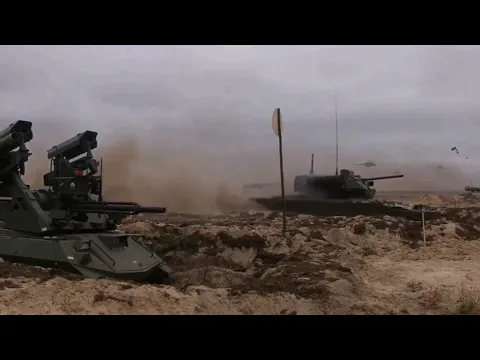
The mobility, based on tracks, allows crossing rough terrain and keeping up with mechanized vehicles. However, the high weight imposes logistical challenges, especially in transport and maintenance, which is critical for any modern military system.
Despite being often associated with “autonomous warfare”, the Uran-9 does not make lethal decisions on its own. It operates under human control, with limited levels of automation for navigation and weapon stabilization.
This reveals a sensitive point in current military debate: total autonomy is still viewed with caution. The Uran-9 represents an intermediate stage, in which machines enhance human capabilities but do not completely replace the operator’s judgment.
Strategic Impact and the Future of Robotic Armored Vehicles
Even with initial flaws, the Uran-9 fulfilled an important strategic role: it showed that Russia is willing to test heavy robotic combat concepts in real conditions. This pressures other powers to accelerate their own programs for unmanned ground vehicles.
The trend is clear. Rather than immediately replacing traditional tanks, systems like the Uran-9 should work alongside crewed forces, taking on high-risk missions, armed reconnaissance, and initial support in heavily defended areas.
The big question that remains is whether technology will be able to solve the bottleneck of communications and reliable autonomy in hostile environments in the short term.
What the Uran-9 Really Represents
More than a “robot tank,” the Uran-9 symbolizes a transition. It marks the point at which ground warfare begins to test, in concrete terms, the withdrawal of the human from the direct line of heavy fire.
The problems encountered do not diminish its relevance. On the contrary: they make it clear that the next military revolution will not be instantaneous but built from attempts, failures, and continuous adjustments.
If the future of battlefields will be dominated by machines, the Uran-9 is one of the first visible signs of how this future is gradually being put to the test.








-

-

-

-

-

-

106 pessoas reagiram a isso.