





 Portuguese
  English
  Spanish
  3 min of reading
  0 comments


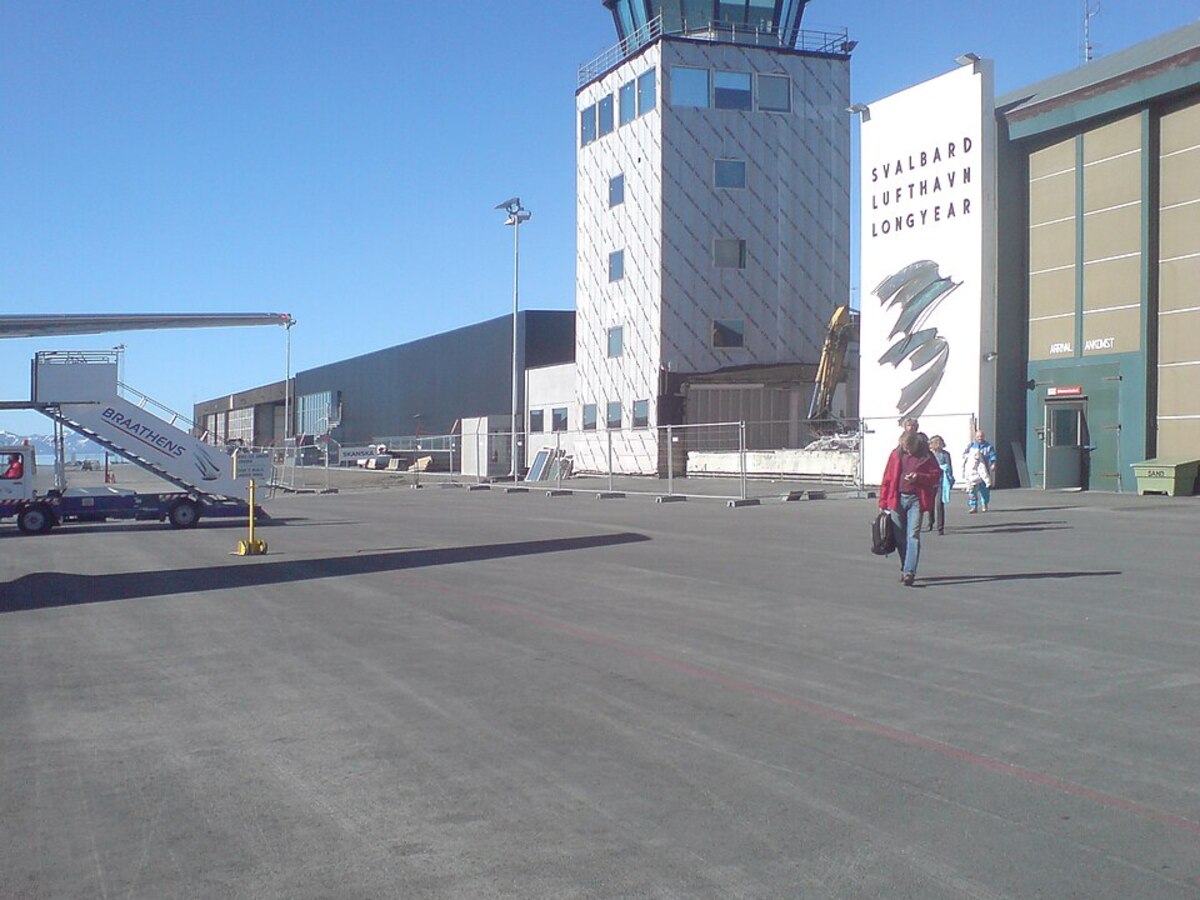
Svalbard Airport, The Northernmost Airport With Regular Flights On The Planet, Faces The Collapse Of Its Runway Built On Frozen Soil, Threatened By The Advance Of Global Warming
Svalbard Airport, one of the most extreme in the world and the northernmost with regular commercial flights, is at risk of disappearing. Located in the Svalbard archipelago in Norway, it faces a growing problem: the melting of permafrost — permanently frozen soil that supports its structure.
Airport Built On Solid Ice
The runway at Longyearbyen Airport, with a length of 2,300 meters, was built in the early 1970s on a thick layer of permafrost.
At the time, the solid base was considered reliable. No one imagined that one day it would begin to melt. But that is exactly what is happening now, as reported by CNN.
-
Friends have been building a small “town” for 30 years to grow old together, with compact houses, a common area, nature surrounding it, and a collective life project designed for friendship, coexistence, and simplicity.

-
This small town in Germany created its own currency 24 years ago, today it circulates millions per year, is accepted in over 300 stores, and the German government allowed all of this to happen under one condition.

-
Curitiba is shrinking and is expected to lose 97,000 residents by 2050, while inland cities in Paraná such as Sarandi, Araucária, and Toledo are experiencing accelerated growth that is changing the entire state’s map.

-
Tourists were poisoned on Everest in a million-dollar fraud scheme involving helicopters that diverted over $19 million and shocked international authorities.


Svalbard has attracted a growing number of tourists in recent years. People visit the region to see the Northern Lights and explore the Arctic landscapes. Some tours include trained guides who keep visitors at a safe distance from possible encounters with polar bears.
Airlines And Dependency Of The Population
Currently, two airlines, SAS and Norwegian Airlines, operate regular commercial flights connecting Svalbard to the Norwegian mainland, about 800 kilometers to the south.
For the approximately 2,500 local residents, the airport is essential. They depend on air transport to receive basic supplies and connect with other regions. The alternative by ship can take up to two days, depending on the weather.
Permafrost In Collapse
The situation of the frozen soil in Svalbard is critical. Permafrost, by definition, is any soil that remains frozen for at least two years. In the archipelago, this layer is melting with increasing frequency and intensity.
Historically, settlers relied on permafrost to support buildings and infrastructure. With melting, these foundations are disintegrating. Additionally, the region faces rising risks of landslides and avalanches.
Ragnhild Kommisrud, the airport manager, told CNN: “During the summer, we need to meticulously check the runway every day, as the ground can give way at any moment. This is a challenge we only expect to worsen over time.”
Changes In The Local Energy Matrix
Despite the direct impact of climate change, Svalbard still hosts old coal mining structures. The archipelago was initially inhabited by workers seeking large deposits of the ore.
Over time, however, this dependence on coal has decreased. In 2020, one of the largest mines in the region, Sveagruva, was decommissioned and the area was restored.
In 2023, the main coal-fired power plant in Longyearbyen was closed. It was replaced by a diesel-powered plant, which reduced the region’s carbon emissions by nearly half.
Clean Energy Towards The Future
For the future, there are plans to install a biogas plant in Svalbard by 2026. It is expected to provide energy exclusively to the airport. This step is seen as essential, as airport infrastructure represents a significant portion of Norway’s aviation fleet.
The biogas plant will also serve as backup in case of failures in the diesel plant in Longyearbyen. Additionally, the archipelago has a solar power plant.
Although it faces four months of total darkness each year, the facility also receives four months of continuous light during the summer, favoring its operation.
A Transition Forced By Reality
As tourism becomes the main economic activity of the islands, the residents of Svalbard are adapting. With the abandonment of coal and the pursuit of clean energy, many locals are now more concerned about protecting the foundations of their homes than about mineral exploitation.
Svalbard Airport, which was once a symbol of development in a remote region, has now become a portrait of a modern challenge: maintaining critical infrastructure on melting ground.
With information from Interesting Engineering.









Seja o primeiro a reagir!