





 Portuguese
  English
  Spanish
  6 min of reading
  0 comments


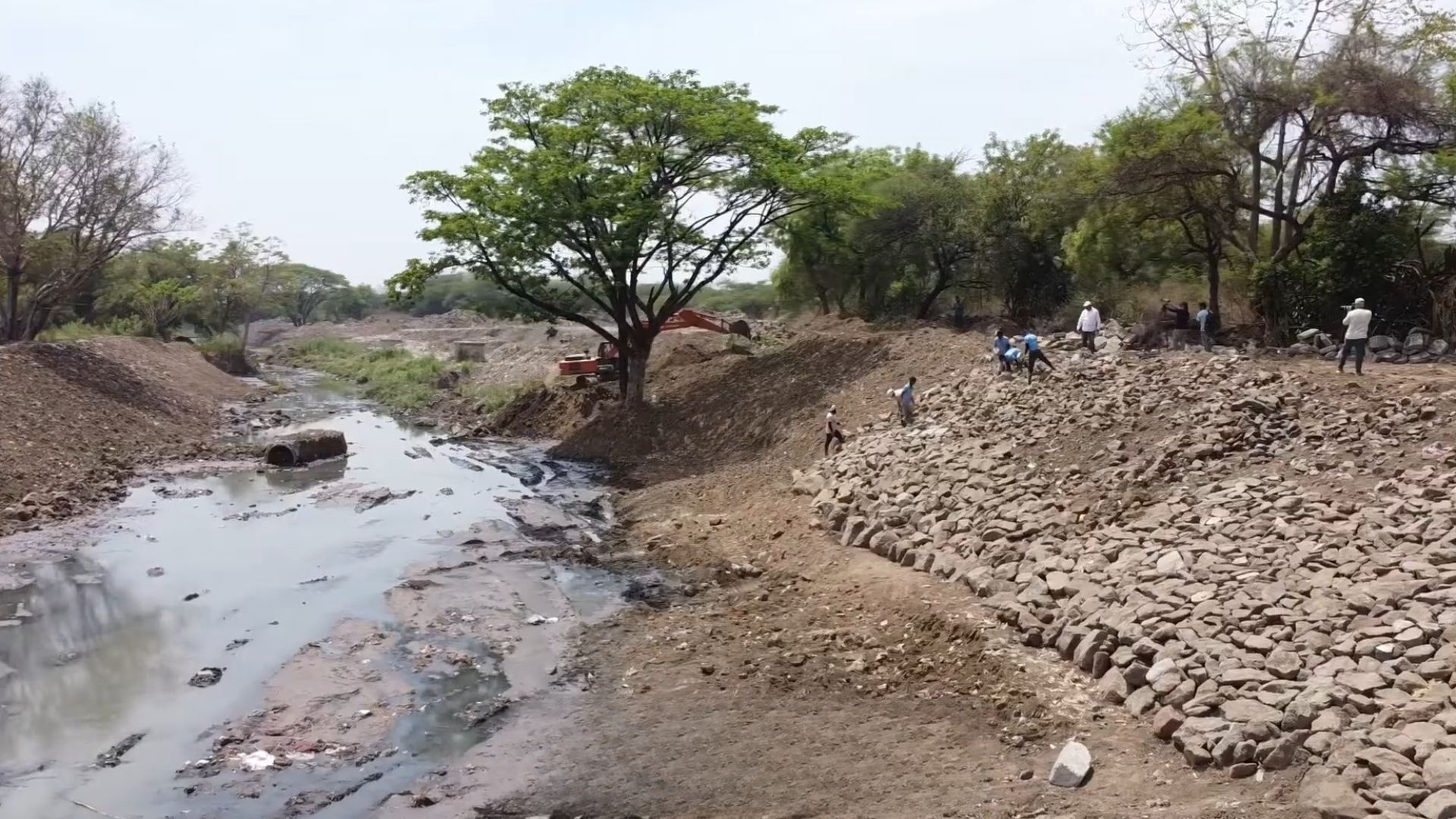
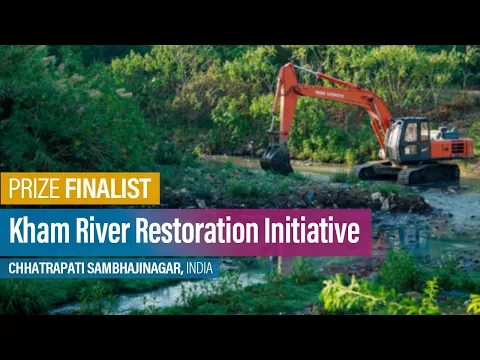
Urban Operation in Indian City Reverses Degradation of Kham River with Extensive Dredging, Blocking of Trash Points, and Daily Diversion of Millions of Liters of Sewage, Initiative That Gained International Recognition and Placed the Watercourse at the Center of Environmental and Social Requalification.
An urban task force in Chhatrapati Sambhajinagar, in the Indian state of Maharashtra, claims to have turned the tide in the recovery of the Kham River by combining dredging, continuous cleaning, and blocking sources of pollution, with a portion of the sewage being diverted for treatment.
Data released by organizations linked to the project indicate the dredging and cleaning of 11 kilometers of the watercourse, the elimination of 171 recurrent trash dumping points, and the diversion of more than five million liters of effluents daily.
The work gained international prominence by winning the 2024 St Andrews Prize for the Environment, associated with the University of St Andrews in the United Kingdom, an award that includes a grant of US$ 100,000 to expand the actions.
-
Friends have been building a small “town” for 30 years to grow old together, with compact houses, a common area, nature surrounding it, and a collective life project designed for friendship, coexistence, and simplicity.

-
This small town in Germany created its own currency 24 years ago, today it circulates millions per year, is accepted in over 300 stores, and the German government allowed all of this to happen under one condition.

-
Curitiba is shrinking and is expected to lose 97,000 residents by 2050, while inland cities in Paraná such as Sarandi, Araucária, and Toledo are experiencing accelerated growth that is changing the entire state’s map.

-
Tourists were poisoned on Everest in a million-dollar fraud scheme involving helicopters that diverted over $19 million and shocked international authorities.


Formerly known as Aurangabad, the city has densely populated areas cut by the Kham, a seasonal river that, for years, was viewed by some residents as “nallah,” a local term associated with sewage drains.
Kham River and Urban Degradation Over the Years
Over time, the Kham began to concentrate mutually reinforcing problems in urban centers: accumulated trash on the riverbed, irregular sewage connections, collection failures, and a maintenance routine unable to prevent the dumping from returning to the same place.

With darkened water and foul odors, entire sections became avoided areas, and the shore, instead of being an environmental corridor, turned into a space of abandonment, impacting environmental health and how the city relates to the river itself.
Public reports about the initiative describe an attempt to break this cycle with two simultaneous fronts, targeting visible dirt and the mechanisms that maintain constant pollution, so that cleaning does not depend solely on sporadic actions.
Restoration Mission and Public-Private Partnership
Instead of treating the issue as a one-time campaign, the restoration was presented as a field mission, with coordination between public authorities and private partners, including the local municipal administration and EcoSattva Environmental Solutions, indicated as the technical responsible for conducting the project.
The operation began where the problem was most evident, with waste removal and dredging in sections where the riverbed accumulated solid material, reducing blockages that worsen flooding and facilitating drainage during rainy periods.
This stage is also described as a condition for pollution control measures to have a more lasting effect since a less blocked riverbed tends to reduce stagnation points, where organic matter concentrates and amplifies odors and vector proliferation.

Dredging of 11 Kilometers and Elimination of Critical Trash Points
The intervention claims to have achieved 11 kilometers of cleaning and dredging, a significant number for an urban river that traverses consolidated areas, where machines, access, and logistics tend to be more complex, especially when there is close occupation along the banks.
Another axis of the work was to tackle what the organizers call “vulnerable points to trash,” locations where dumping repeats due to convenience, absence of physical barriers, enforcement failures, or gaps in collection, until it becomes routine.
By mapping and intervening in 171 of these points, the mission claims to have sought to interrupt the constant replenishment of the riverbed, reducing the need for successive removals and preventing part of the trash from being dragged downstream on rainy days.
Diversion of 5 Million Liters of Sewage Per Day for Treatment

While the removal of waste changes the river’s appearance, the diversion of effluents is what alters the pollution load in a more structural way, because it reduces the volume of organic and microbiological material entering the water, according to the project description.
The mission claims to have demonstrated the diversion of more than five million liters per day to treatment stations, a measure that tends to relieve the oxygen demand of the watercourse and reduce conditions associated with persistent foul odors.
Still, materials regarding the case indicate that sustaining the gain depends on routine, as urban rivers can quickly revert to their previous state when the city continues to treat the river as an easier destination for what it cannot manage.
Requalification of the Banks and Reconnection of the Population with the River
Besides the cleaning engineering, the initiative was promoted as an urban requalification strategy, with the recovery of sections and the creation of small public spaces along the banks, as a way to bring residents back to areas previously marked by degradation.
The argument presented is that social use helps reduce hidden dumping because it enhances circulation and daily vigilance, while also restoring the river’s role in the landscape and collective memory, which had been lost.

The rationale supporting this type of intervention is pragmatic: without the presence of people, the cost of “throwing away” in the river decreases, while constant presence tends to increase the risk of being caught and the demand for regular cleaning and collection services.
International Award Increases Visibility of Environmental Recovery
The University of St Andrews announced the Kham mission as the winner of the 2024 St Andrews Prize for the Environment and noted that the award was presented in a ceremony held on October 31, 2024, with a grant of US$ 100,000.
In the institutional presentation of the award, the mission appears as an effort to restore a seasonal river in a historic city in India, with a combination of cleaning, local organization, and coordination among different partners as a hallmark of the project.
The recognition increased the visibility of the case in a context of growing pressure on sanitation, waste, and drainage in cities subjected to extreme rainfall events, when trash on the riverbed and untreated sewage exacerbate flooding and health risks.
Permanent Challenges to Avoid New Degradation
Public texts about the restoration indicate that the phase following the initial cleaning is the most delicate, as it involves constant oversight, regularity of services, and the expansion of formal sanitation solutions to areas where infrastructure does not fully reach.
Without closing those spigots, the river can start receiving effluents and waste again at the same rate as teams remove material, turning recovery into a permanent and costly race, with fleeting visual gains and little environmental effect.
With the Kham, the publicized promise is to maintain the operation as a municipal and community routine, reinforcing the idea that change does not depend solely on major works, but on daily management that prevents the return of the “sewage drain.”
If the combination of blocking trash points, diverting effluents, and reoccupying the banks has repositioned the Kham on the urban map, which river in your city could take the first step simply by interrupting untreated sewage and recurrent dumping?









-

-

-

-

-

-

271 pessoas reagiram a isso.