





 Portuguese
  English
  Spanish
  5 min of reading
  0 comments


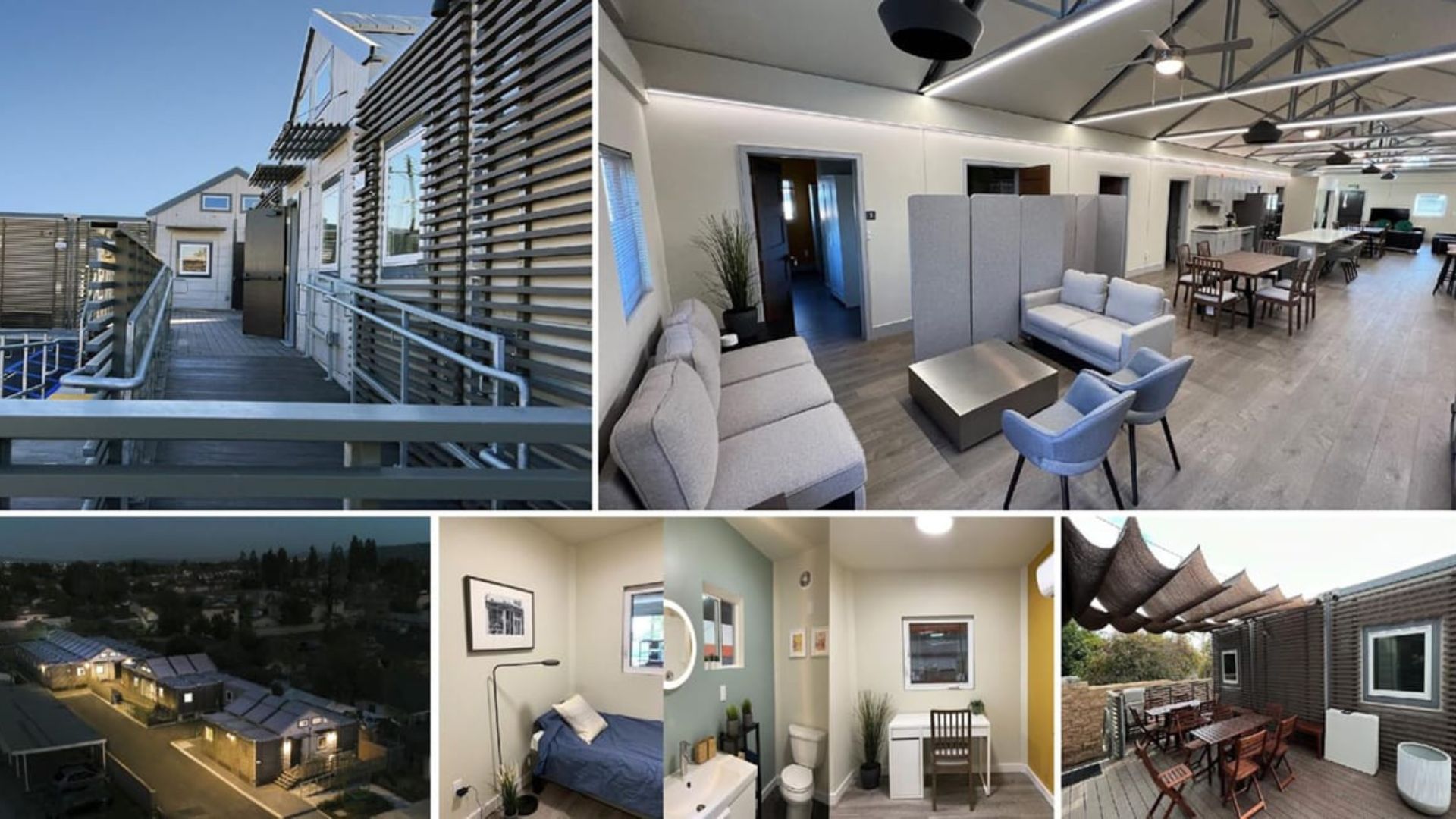
Modular Plastic Structure Promises to Revolutionize Disaster Response with Quick Assembly, Thermal Insulation, and Large-Scale Industrial Production.
A proposal for a modular housing made of high-density plastic, designed for quick disaster response with interlocking assembly, has been gaining attention for promising to industrially solve some of the issues that often hinder reconstruction after floods, fires, and earthquakes: time, logistics, and basic shelter performance.
The system is presented by LifeArk as a housing platform that can be transported by standard shipping methods and assembled with common tools, largely using unskilled labor.
Construction with HDPE and Rotational Molding Technology
The solution is based on a material not typically associated with “home” in popular imagination: high-density polyethylene (HDPE), used as a molded structural shell.
-
Friends have been building a small “town” for 30 years to grow old together, with compact houses, a common area, nature surrounding it, and a collective life project designed for friendship, coexistence, and simplicity.

-
This small town in Germany created its own currency 24 years ago, today it circulates millions per year, is accepted in over 300 stores, and the German government allowed all of this to happen under one condition.

-
Curitiba is shrinking and is expected to lose 97,000 residents by 2050, while inland cities in Paraná such as Sarandi, Araucária, and Toledo are experiencing accelerated growth that is changing the entire state’s map.

-
Tourists were poisoned on Everest in a million-dollar fraud scheme involving helicopters that diverted over $19 million and shocked international authorities.



Rather than relying on masonry, complex foundations, and weeks of on-site construction, the components are produced in a factory and shipped for assembly, aiming to reduce exposure to weather and lack of infrastructure that often follow large emergencies.
The manufacturing process reported by the company uses rotational molding, an industrial technology widely disseminated globally for producing hollow, durable plastic parts.
LifeArk describes this method as a way to create strong, buoyant parts with costs and speeds compatible with mass production, while allowing for standardization.
The same industrial base is cited by modular industry publications as a central element of the project, which seeks to transform a traditional plastic technique into a pathway for more resilient housing.
Thermal Insulation and Resistance for Extreme Scenarios
The idea of “cooler type” appears associated with how the module combines a rigid shell with insulating material.
In public materials about the project, the system is described as consisting of an HDPE structure associated with polyurethane foam, a combination used to achieve structural integrity and thermal insulation.
Insulation, in this context, is not just comfort: in post-disaster situations, maintaining a more stable internal temperature and reducing humidity can directly affect the health, sleep, and recovery capacity of displaced families.
In modular construction industry texts, the design is presented with specific attributes that engage with extreme scenarios.
There are mentions of fire resistance, buoyancy in water, good insulation performance, and designed capacity to withstand seismic shocks.
These points often emerge as requirements in areas where the risk of flooding and fire increases with more intense climate events, while the demand for rapid shelter pressures governments and humanitarian organizations to seek alternatives beyond tents and temporary structures.

Simplified Logistics and Assembly with Common Tools
The LifeArk proposal is also anchored in logistics.
The project describes modules designed for delivery by standard transportation methods, which includes the idea of components packaged and moved similarly to other industrial loads.
This type of strategy attempts to circumvent a recurring problem in emergencies: damaged roads, closed bridges, lack of heavy equipment, and difficulty in bringing traditional construction materials to isolated areas.
By reducing reliance on a typical construction supply chain, a modular system promises to arrive sooner. Assembly is another point emphasized in public descriptions.
In an overview of the design, the company claims that the modules can be assembled with standard tools and predominantly unskilled labor, citing a level of 80% in this type of workforce.
Speed is also mentioned comparatively: an engineering and construction publication describes the system as capable of requiring a fraction of the time of traditional construction, associating this gain with the snap-together and pre-fabrication model.
Applications in Flood Areas and Permanent Housing
Beyond immediate response after a disaster, the project presents itself as a pathway to durable housing in vulnerable communities, rooted in observations of families facing months of flooding in riverside areas.
In institutional reports, the initial motivation is connected to regions where recurring flooding makes housing unstable and imposes frequent losses.
From this reality, the system attempts to offer an amphibious alternative, in which the house does not necessarily need to “overcome” the water, but rather deal with it in a less destructive manner.
The modular form allows for variations in layout and use.
A business press report describes the proposal as “Lego-type houses” designed to rise with floodwaters, suggesting that the concept can be applied both to housing in flood risk areas and in support housing projects.

Design and architecture materials already address the reference size of a module, citing around 60 square meters and describing the possibility of integrating items such as kitchenette and off-grid elements, like solar panels, depending on the arrangement and destination of the project.
Sustainability, Recycling, and Certification
The presence of off-grid resources, when mentioned, usually connects to the same problem appearing in emergency shelters worldwide: power outages and absence of basic services shortly after disasters.
Although each deployment depends on budget and specification, the idea of pre-installing components before shipping is presented as part of the strategy to reduce on-site time.
In situations where the electrical grid and running water take time to return, integrated solutions tend to gain operational relevance.
The use of plastic in housing raises questions about durability, maintenance, and sustainability.
The company claims that parts can be disassembled, ground, and reused in non-structural elements, in addition to stating certification for using up to 30% post-consumer recycled plastic in the resin formulation.
This type of information is often explored by housing projects seeking to reduce cost while simultaneously responding to environmental pressures, although the participation of recycled material and end-of-life destination depend on local recycling chains and regulations.
In the regulatory field, the adoption of industrialized systems for housing varies by country and state, with different certification and inspection requirements.
A specialized publication on off-site construction reports that the company underwent certification and permitting processes in California to operate under a factory-built housing program, citing the rigor of this type of jurisdiction.
For the sector, this element is relevant as it indicates an effort for formal framing, a necessary step for modular solutions to move from being mere prototypes to being purchased and used by governments, organizations, and entrepreneurs at scale.
Still, the main appeal that makes this type of modular plastic house circulate on social media and Google Discover tends to be simple and visual: the idea of a “house that looks like a cooler,” made of a material associated with everyday objects, but designed to withstand disasters and be assembled quickly.
When this is combined with objective attributes — insulation, buoyancy, industrial production method, and assembly with common tools — the topic tends to interest readers outside the local context, as it fits into the same set of practical curiosities: what changes when a house stops being “construction” and becomes a “product”?









Seja o primeiro a reagir!