





 Portuguese
  English
  Spanish
  4 min of reading
  2 comments


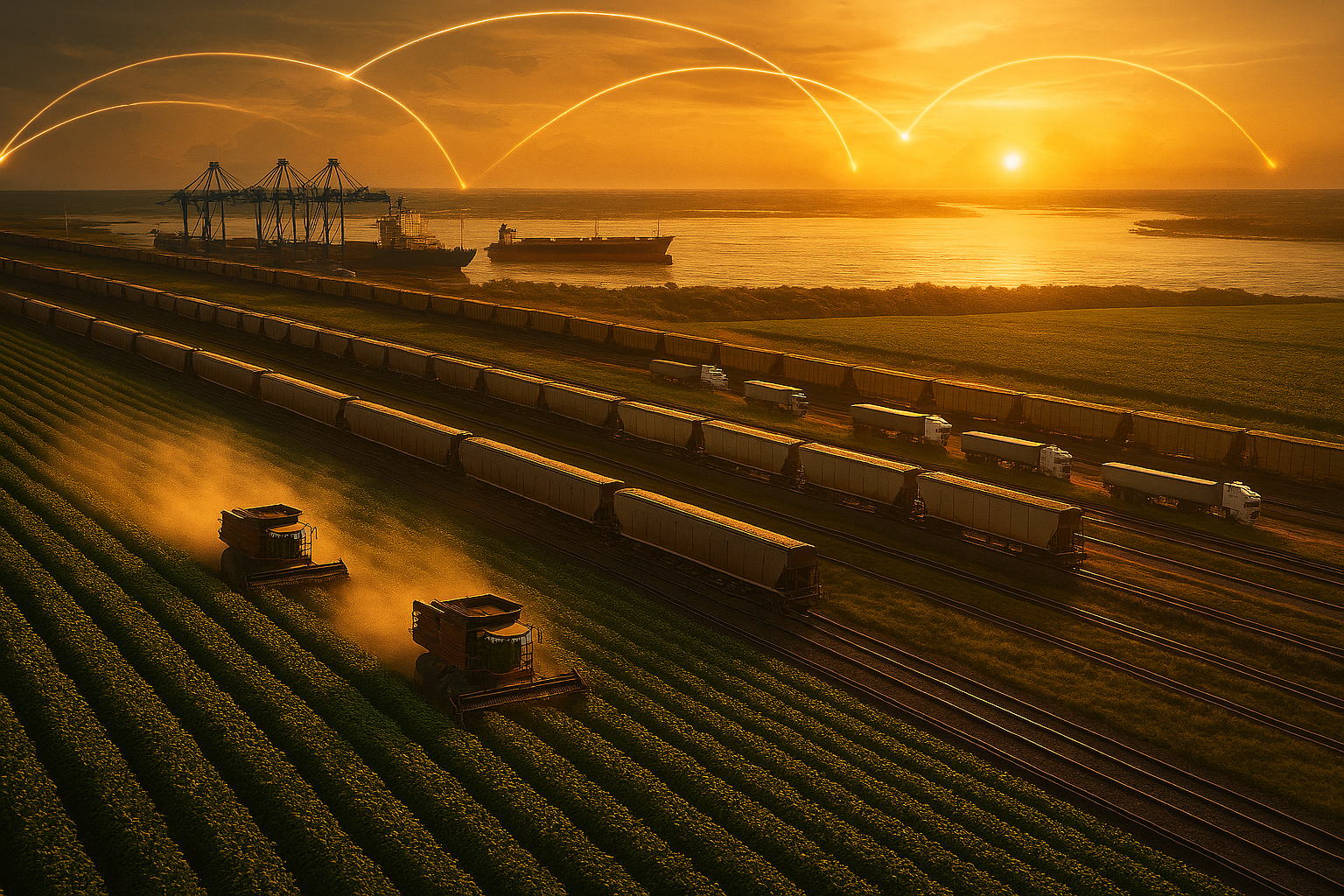


Brazil Dominates The Global Soy Market, Exports More Than 100 Million Tons Per Year And Operates Logistical Corridors That Supply China, Europe, And The Middle East.
Few agricultural products have as much weight in the global economy as soybeans. Present in human food, animal feed, the production of oils, biofuels, and even in industrial inputs, the grain has become strategic for dozens of countries. In this scenario, Brazil has assumed absolute leadership of the global market, becoming the largest exporter on the planet and a key player in global food security.
Today, the country exports more than 100 million tons of soybeans per year, a volume that easily surpasses that of any other producer and places Brazilian agribusiness at the center of global food and protein supply chains. According to data from the Northeast Bank, Brazil is considered the largest global exporter of soybeans.
How Brazil Became The Largest Soy Exporter In The World
The Brazilian rise did not happen by chance. It is the result of a rare combination of factors: land availability, technological advancement, tropical agricultural research, and a rapid expansion of the productive frontier starting in the 1990s.
-
The water that almost everyone throws away after cooking potatoes carries nutrients released during the preparation and can be reused to help in the development of plants when used correctly at the base of gardens and pots, at no additional cost and without changing the routine.

-
The sea water temperature rose from 28 to 34 degrees in Santa Catarina and killed up to 90% of the oysters: producers who planted over 1 million seeds lost practically everything and say that if it happens again, production is doomed to end.

-
An Indian tree that grows in the Brazilian Northeast produces an oil capable of acting against more than 200 species of pests and interrupting the insect cycle, gaining ground as a natural alternative in soybean, cotton, and vegetable crops.

-
The rise in oil prices in the Middle East is already affecting Brazilian sugar: mills in the Central-South are seeing their margins shrink just as ethanol gains strength.


States such as Mato Grosso, Paraná, Rio Grande do Sul, Goiás, and Mato Grosso do Sul today form a soybean belt that produces tens of millions of tons per harvest. Only Mato Grosso alone harvests volumes comparable to the total production of many countries.
Furthermore, Brazil has managed to adapt soybeans to the tropical climate, something that seemed unlikely decades ago. The development of specific varieties for low latitudes was crucial for this productive leap.
Production On A Continental Scale And Impressive Numbers
Currently, Brazil harvests more than 150 million tons of soybeans per harvest, with most of this volume destined for the external market. Domestic consumption exists, but the main driving force of the sector is exportation.
Brazilian soybeans primarily go to:
- China, the largest individual buyer in the world
- European Union, especially for animal feed
- Middle East and Southeast Asia, growing markets
In some years, more than 70% of all soybeans exported by Brazil are destined for China, demonstrating the level of interdependence between the two countries.
Logistical Corridors That Cross The Country From North To South
To transport such massive volumes, Brazil had to create continental-scale logistical corridors. Soybeans produced in the Midwest travel thousands of kilometers to reach the ports, utilizing a combination of highways, railways, and waterways.

In recent years, the so-called North Arc has gained prominence, involving ports like Itaqui (MA), Barcarena (PA), and Santarém (PA). These corridors have reduced distances to the ports of the Southeast and made logistics more efficient for markets in Europe and Asia.
At the same time, traditional ports like Santos (SP) and Paranaguá (PR) continue to operate colossal volumes, effectively functioning as “export valves” for Brazilian soybeans.
Soybeans As The Base Of Global Animal Protein
A large portion of the exported soybeans does not go directly to people’s plates. It is transformed into meal, used as the base for the feed of chickens, pigs, cattle, and fish in dozens of countries. This means that Brazil, indirectly, feeds billions of people around the planet.
This strategic role explains why any crop failure, logistical issue, or regulatory change in Brazil immediately impacts global food prices.
Comparison With Other Market Giants
The United States remains a major producer and exporter, but in recent years has fallen behind Brazil in shipped volume.
Argentina, for its part, has lost ground due to climatic problems and economic instability, focusing more on the export of derivatives such as oil and meal.
This scenario has consolidated Brazil as the absolute leader in soybean exports, a position likely to remain in the medium term.
Soybeans account for tens of billions of dollars in annual exports, being one of the main items in the Brazilian trade balance. More than that, it has become a significant geopolitical tool.
Importing countries closely monitor Brazilian production, while decisions on infrastructure, the environment, and foreign trade in Brazil have a direct impact on global markets.
The Challenges Behind The Leadership
Despite the dominance, the sector faces significant challenges. Dependence on road infrastructure, international pressure for environmental criteria, price volatility, and transportation costs remain sensitive issues.
At the same time, investments in railways, waterways, storage, and agricultural technology continue to be crucial for maintaining competitiveness.
By exporting more than 100 million tons of soybeans per year, Brazil not only leads a market. It sustains entire food chains, influences global prices, and occupies a central position in the geopolitics of food.
In an increasingly dependent world on plant and animal protein, Brazilian soybeans have ceased to be merely an agricultural commodity and have become a global strategic asset.









É impressionante o Brasil ser uma potencia nesse setor, mas se o Brasil realmente quiser ser uma potencia ele deve buscar ser o número 1 do mundo em pesquisa científica e inovação tecnologica. Nada contra o Agro.
Devemos investir nele e continuar tendo ele como uma das nossas potencias, mas temos de buscar nos tornar o número 1 em áreas como computação quantica, robotica, inteligência artificial, realidade virtual, neuro tecnologia, nanotecnologia, tecnologia aeroespacial, impressoras 3D, sensores e detectores, data centers e fusão nuclear.
Devemos querer ser não uma grande fazenda e sim um grande laboratorio. Um polo de inovação. Um lugar onde o futuro chega primeiro
Perfeito o comentário, parabéns