





 Portuguese
  English
  Spanish
  4 min of reading
  10 comments


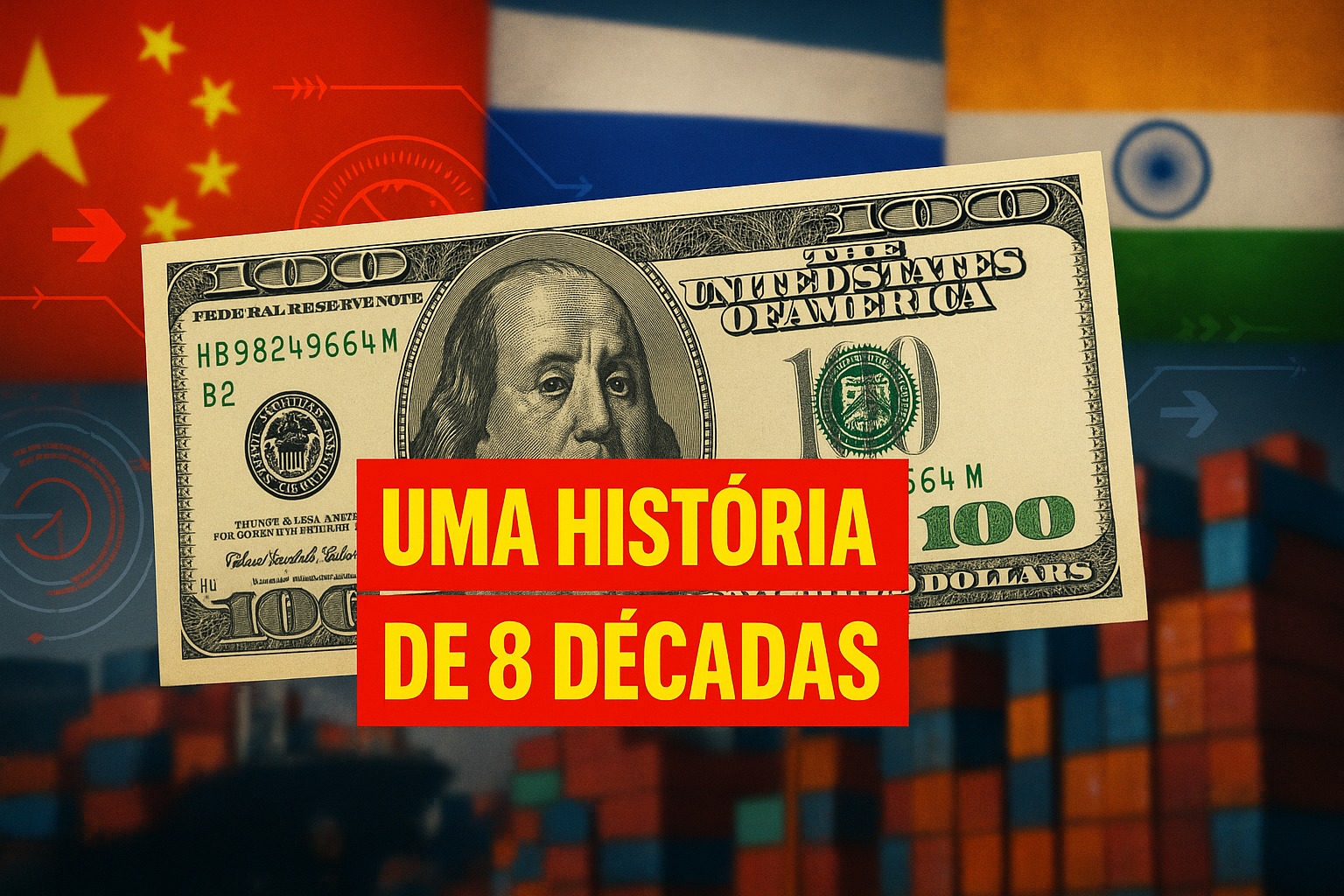


Dollar Remains the World’s Leading Currency After 80 Years, But Recent Declines and Brics Pressures Raise Debate on Global Alternatives
The U.S. dollar has secured a central position in trade and international reserves. This prominence, however, was the result of a long historical process, which began eight decades ago and involved economic and geopolitical decisions.
According to economist and FGV professor Carla Beni, the United States’ currency gained prominence primarily after World War II. During this period, the country consolidated its economic and military power, becoming a global reference.
Bretton Woods and the Historical Turning Point
The decisive milestone came in 1944 during the Bretton Woods Conference. More than 40 nations agreed to establish a new global financial system, in which the dollar would be the central currency, pegged to gold.
-
The government requests the Federal Revenue Service for a new system to automate the income tax declaration, reducing errors, time, and bureaucracy for millions of Brazilians.

-
Pix in installments, international Pix, and contactless payment without internet: the Central Bank revealed the new features coming to the tool that is already used by almost every adult in Brazil.

-
Mercado Livre has just started selling medications with delivery in up to three hours to your door, and this move could completely change the way Brazilians buy medicines on a daily basis.

-
In Dubai, rising tensions from the war in the Middle East are causing super-rich individuals to leave the Gulf and direct their fortunes to a new financial refuge in Asia.


This agreement gave the dollar unprecedented credibility. Many countries began to hold reserves in dollars as a way to stabilize their own currencies and facilitate international trade. It was the transformation that shaped the modern financial system.
End of the Gold Standard and Strengthening of the Currency
In 1971, then-president Richard Nixon ended the direct link between the dollar and gold. Despite this, the U.S. currency maintained its central role.
This happened because the country had already established stable institutions and a financial market with high liquidity.
In addition, the same Bretton Woods Agreements created fundamental institutions such as the International Monetary Fund (IMF) and the International Bank for Reconstruction and Development (IBRD). This structure further enhanced U.S. economic power.
Carla recalls that since then, practically all nations have begun to accumulate reserves in dollars. This movement has ensured strength and stability for the dollar on the international stage to this day.
Recent Challenges and Questioning
In recent months, the dollar has been losing value. The DXY index, which measures its performance against a basket of currencies, recorded a decline of about 10% this year.
At the same time, the trade policies adopted by President Donald Trump, such as tariffs, have stimulated rapprochements between countries outside the U.S. sphere.
The Brics bloc, for example, has begun to discuss alternatives to using the dollar in their transactions.
The Currency Remains Dominant
Even with these signs of fragility, the dollar continues to be the primary currency of central banks’ foreign reserves.
It also dominates international payments and serves as a safe haven during times of instability.
Carla emphasizes that despite the devaluations, the weight accumulated over 80 years of consolidation does not disappear immediately. Therefore, changes in this scenario are likely to occur slowly and gradually.
“The dollar is still the global reserve currency. Changes in its value directly impact other countries. Therefore, any replacement will not be immediate,” states the economist.
What Would Be Necessary to Overcome It
For a new currency to replace the dollar, some factors are indispensable. Among them, widespread confidence in the economic and political stability of the issuer, whether it is a country or a bloc.
A robust financial market with ample liquidity, as well as global acceptance in trade operations, would also be necessary.
Another essential point is integration with existing payment infrastructures, which requires adaptations on a global scale.
Carla stresses that this process would take time. While it does not need to repeat the 80 years the dollar took to consolidate, the replacement would require a considerable period of adjustments and trust.
A Future in Transformation
The hegemony of the dollar remains one of the pillars of the global financial system. But the current scenario shows signs of transition.
The decline in value and the search for alternatives by blocs like Brics indicate that the U.S. currency may lose some of its strength.
This does not mean that the dollar will stop being used. On the contrary, it should remain a reference for many years. However, there is a growing movement that may gradually reduce its centrality.
According to Carla Beni, there is indeed a chance for another currency to take on a significant role. However, the path to this involves trust, structure, and time.
With information from Bora Investir.








A próxima moeda global será o bitcoin
Mas e quem é que está tentando substituir o dólar?
A ideia, por enquanto, é só deixar de depender exclusivamente dele, porque não existe monopólio bom.
Exatamente a mídia ocidental é que faz essa propaganda de substituição quando o que realmente está sendo feito é criar alternativas para uso dando possibilidades para todos os países escolher com quais moedas eles podem negociar entre si sem depender exclusivamente do dólar o que já é realidade até mesmo a China que é detentora da maior quantidade de títulos da dívida dos EUA não quer que o dólar perca sua relevância e valor abruptamente pois isso impactaria ela e muitos outros países o que está ocorrendo é uma mudança gradual se hoje a dependência dos países está em 70% do dólar daqui a uns 20 ou 30 anos isso deve cair para uns 30 ou 40 % o que ainda é um valor muito bom para os EUA o que como economia, já como arma de guerra para sancionar países aí sim isso é como perder uma guerra e isso é inevitável pra eles e muito bom para o resto do mundo principalmente o sul global
Os EUA podem imprimir dinheiro o quanto puder diferente de outros países. Mas o dólar vai se desvalorizar com o tempo.