





 Portuguese
  English
  Spanish
  3 min of reading
  7 comments


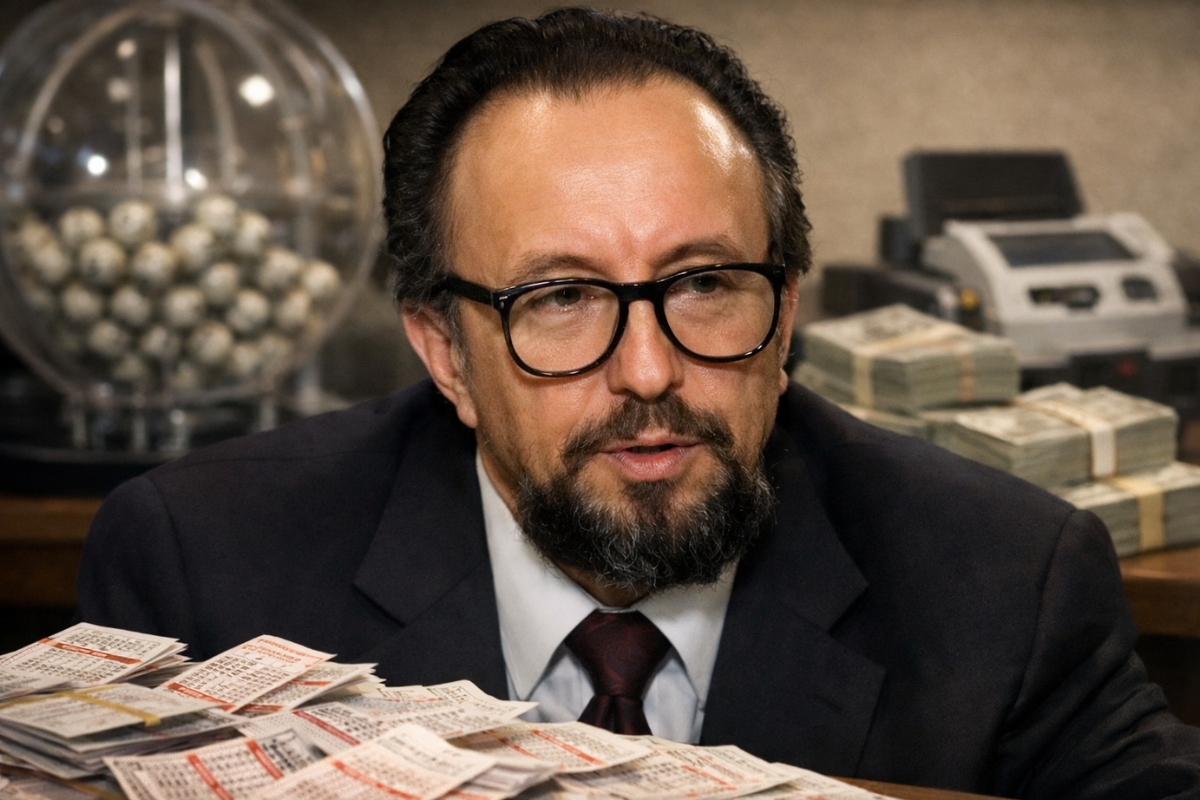


The Strategy Turned The Lottery Into A Calculated Risk Account, And The Main Turning Point Came When The Printing Of Chosen Combinations Was Blocked
The story of Stefan Mandel shows that the lottery is not always just about luck. He found a way to act when the odds and costs opened up opportunities for advantage.
In the mid-1990s, the Australian-Romanian economist applied a simple system in theory and enormous in execution, with mathematics, organization, and bulk purchasing.
The result was unusual: he managed to win 16 times without fraud, until rule changes closed the loophole that made the plan possible.
-
While Brazil wants to end the 6×1 work shift, the president of Argentina wants 12 hours for his workers, increasing political tension in the country.

-
The village where two rivers run side by side without mixing in Santarém and Alter do Chão reveals some of the most beautiful freshwater beaches on the planet.
-
Mars is accelerating, and scientists have discovered that the planet’s day is getting shorter, revealing surprising signs of internal activity.

-
Artemis 2 is set to launch on April 1 at 7:24 PM to orbit the Moon with four astronauts, but a class X solar flare and coronal mass ejection could interfere with communications and threaten the launch.


What Happened And Why It Caught Attention
The central idea was straightforward: to map draws where the prize value was much higher than the total cost to buy all possible combinations.
When this difference was large enough, the lottery ceased to seem like a blind bet and became an operation with a statistically positive return.
To achieve this, more than just calculation was needed. It also required logistics, a team, and the capacity to print and purchase a massive volume of tickets.
How Mathematics Became A Total Purchasing Operation
The formula was based on one principle: to cover as many combinations as possible, reducing the chance of missing the winning number.
Mandel and his team created algorithms to generate and print millions of valid combinations for specific lotteries.
The plan only made sense when there was a practical condition to execute the bulk purchase, with enough time, coordination, and money to sustain the operation.
The Action In The United States That Pushed The Method To The Limit
The most striking moment came when he focused on the United States and observed the Virginia lottery with 44 numbers.
This format generated 7,059,052 possible combinations, a high volume, but still feasible for a group prepared to buy almost everything.
With the prize reaching US$ 15.5 million, he set up a network with investors, printers, and points of sale to implement the plan.
What Happened When Purchasing 6.4 Million Tickets
In two intense days, the team purchased 6.4 million tickets. The goal was to get closer to the total, but it was not possible to complete everything.
Even so, amid the enormous amount of paper, there was the winning ticket, securing the victory in the main prize.
The case caught attention and led to investigations by the FBI and the CIA, but no legal violations were found in the rules at that time.
Why The Trick Was Prohibited And Became Unfeasible To Repeat Today

The method did not depend on a secret number but rather recognized when the game offered a structural advantage.
It worked when the prize reached three times the cost of acquiring all combinations and when the system allowed printing tickets with chosen combinations.
This possibility was prohibited in many countries, precisely because it opened the way for bulk purchases that undermined the purpose of the game.
With stricter regulations, purchase limits, and automated systems, the repetition of the model began to be considered unfeasible.
What May Happen From Now On And The Legacy Of Stefan Mandel
Even with victories, profit was not immediate. He shared gains with dozens of investors and still faced significant operational and legal costs.
After the last big win, Mandel retired to the Vanuatu Islands, away from public exposure.
His journey became an example of how human ingenuity, applied mathematics, and discipline can exploit loopholes, as well as how rules change to close design flaws.
In the end, the main consequence was clear: when the structure allowed it, the lottery ceased to be pure luck, but changes made the path closed for repetition.










Na última mega da virada compensaria porque as 50 milhões de combinações custam 300 milhões de reais pra serem jogadas e o prêmio era de mais de 1 bi. Como as apostas devem ser feitas em jogos de 20 dezenas, usando a tecnica, a pessoa ganha várias vezes, o que, mesmo em caso de outros ganhadores , ainda mantém, muito provavelmente, uma premiação acima do valor investido.
Errado! Acerta apena 1 sena. Teria pego 11000 quinas. Ia tomar um prejuizo imenso
OLHEM QUE INTERESSANTE, Aqui no Brasil isto também existe e acontece com a Lotofacil rarisimas pessoas sabem disso porem so com os primeiros funcionou!
No início grupos incluindo matemáticos e ate hoje, jogam 238 bilhetes do mais caro, cada uma com 20 números isso fecha todas combinações ao custo de aproximadamente alguns milhões $ de reais.
Porém so vale a pena nas lotofacil especiais que paga muito.
Podem ver que da muitos ganhadores nestas, quase sempre estes grupos secretos.
No início funcionava. Hoje virou mecanismo para golpes pois com vários grupos fazendo se torna inviável!
Engraçado é que continuam fazendo i ficando no prejuízo pois caem no golpe!
E hoje o chatgpt faz as cartelas certas fechando nao precisa de algoritmo e a coisa toda complexa.
Lavagem de dinheiro ilicito para torna licito.fuga do enriquecimeto sem causa♧◇♡♤
Compensa o prejuizo$$$$
Gostaria de fazer, mas não sei mexer no chatgbt
Gostaria de fazer, mas não tenho $$$ sobrando…