





 Portuguese
  English
  Spanish
  5 min of reading
  8 comments





Project in Congress Proposes National Standardization for Radars with Warning Lights, Speed Display, and Signage 500 Meters Ahead, Changing Enforcement Rules in Brazil.
The debate about transparency and traffic enforcement in Brazil has taken a new chapter with the processing of the Bill 4,751/2024 in the House of Representatives. The proposal determines that electronic enforcement equipment be installed with full visibility, warning lights, displays showing the speed recorded at the time of passage, and signage indicating the speed limit positioned up to 500 meters from the radar, creating a new national standard for speed control actions. The text modifies sections of the Brazilian Traffic Code and seeks, according to lawmakers, to enhance clarity for drivers and reduce conflicts over signage and the use of radars on highways and urban roads in the country.
The initiative arises in a context where part of society and legislative representatives use the term “ticket industry” to describe practices considered opaque regarding the application of traffic penalties. Although electronic enforcement is recognized by mobility authorities as one of the most effective tools for reducing accidents and fatalities, the legislative proposal aims to set objective criteria to avoid doubts about the purpose of the equipment and ensure national standardization in signage and positioning.
The text establishes that enforcement will remain, but with clear rules on how drivers should be informed.
-
The new Civil Code could revolutionize marriages in Brazil with “express divorce” and changes that could exclude spouses from inheritance.

-
Banco do Brasil sues famous influencer for million-dollar debt and intensifies debate on delinquency, risks of seizure, and direct impact on Gkay’s credibility.

-
The Senate approves a bill that criminalizes misogyny, hatred, or aversion towards women, and includes the crime in the Racism Law with a penalty of up to 5 years.

-
Chamber Approves Bill That Allows Pepper Spray for Women Over 16 and Imposes Strict Rules for Purchase, Possession, and Use as Self-Defense


National Standardization and Impact on Driver Communication
The proposal for national standardization arises at a time when Brazil faces significant regional disparities in traffic policies.
In large urban centers, advanced digital enforcement systems already operate with a high level of automation, while in smaller municipalities there is limited infrastructure and variations in the positioning and identification of radars.
The project creates uniform rules for the entire national territory, reducing discrepancies and strengthening predictability in enforcement.
With the new model, the driver should have immediate clarity about the presence of the equipment and the speed limit. The requirement that the radar be fully visible and accompanied by standardized signage aims to avoid situations where the driver only notices the equipment after passing it, a situation often pointed out as a cause for administrative appeals.
The presence of a display showing the vehicle’s speed reinforces the transparency of the process, showing the driver exactly how the equipment recorded their passage.
The current legislation already provides for the need for indicative signage before radars, but the rules are scattered across administrative resolutions and technical guidelines. The project currently in Congress seeks to convert these rules into federal law, increasing the level of detail.
By requiring warning lights, speed panels, and maximum distance for informative signage, the proposal modifies how drivers are alerted about enforcement, expanding the duty of communication from public authorities. The update, if approved, will require states and municipalities to adapt already installed equipment.
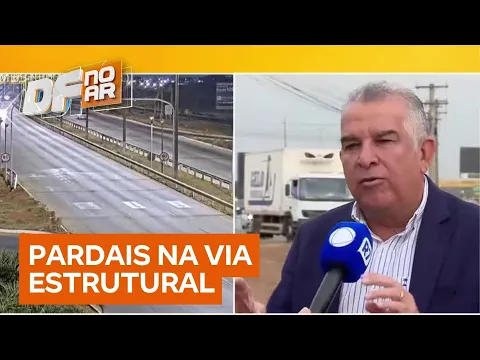

Agencies responsible for traffic management state that speeding remains one of the leading causes of fatal accidents in the country. Official data corroborate this assessment, indicating that electronic speed control contributes to the reduction of serious incidents.
At the same time, the legislative proposal aims to ensure that electronic monitoring is implemented with predictability and clear communication, a practice adopted in international reference models, where the focus is on inducing safe driving through prior information, rather than by surprise.
Adaptation of Equipment and Operational Impact
Should the project be approved, it would require technical adjustments over thousands of kilometers of monitored roads in the country. It will be necessary to install digital panels near radars, review signage, position signs at regulated distances, and in some cases, relocate equipment.
Municipalities with existing contracts for radar operation will need to establish adaptation schedules in conjunction with concessionaires and companies responsible for infrastructure.
The text does not foresee the immediate suspension of equipment but establishes that the requirements will become mandatory after regulation, indicating a transition period.
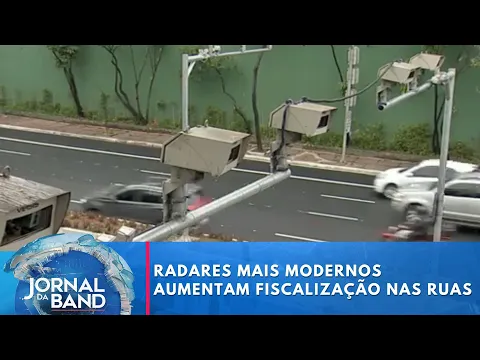
The national implementation will depend on complementary regulation that will detail deadlines, technological standards, and enforcement criteria as established by the Traffic Code.
Public management specialists assess that the change may require financial and operational planning, especially in municipalities with limited mobility structures. Nevertheless, proponents of the measure argue that clear rules tend to reduce challenges and ensure greater legal security in the application of fines.
Legislative Scenario and Next Steps
Bill 4,751/2024 is currently under analysis in the permanent committees of the House of Representatives, including the Committee on Transportation and Communications and the Committee on Constitution, Justice and Citizenship.
After deliberation in the committees, the text will proceed to a vote in the House plenary and, if approved, will be sent to the Federal Senate. The processing follows the regular procedure for legislative changes that impact the Traffic Code.
The final approval depends on political agreement and technical analysis by the higher legislative bodies before potential presidential sanction.
The debate in Parliament involves consultations with federal, state, and municipal traffic agencies, as well as associations related to urban mobility, which are monitoring the possible developments of the proposal.
Road safety representatives emphasize the importance of ensuring that regulatory changes are accompanied by impact studies, considering that adequate speed control is a pillar of national strategies for reducing fatalities, aligned with internationally adopted road safety goals.
Change in the Paradigm of Signage and Electronic Enforcement
If approved, the bill could represent a change in the presentation and operation standard of electronic enforcement in Brazil, reinforcing the obligation of visual communication and creating uniform criteria for the entire country.
The proposal does not eliminate radars nor alter speed limit legislation, but reformulates the dynamics of alert and monitoring, focusing on predictability for the driver.
The clarity of the rules is likely to influence societal perceptions of the use of the equipment and may strengthen adherence to safe behaviors in traffic.
Authorities and public managers point out that the central goal is to ensure balance between transparency and road safety, ensuring that the driver has clear conditions to comply with the rules. The change brings Brazil closer to international models that use intense and visible signage to induce respect for speed limits while keeping the radar as a complement to continuous guidance.
The deliberation process and potential implementation will be monitored by technical sectors and institutions involved in the formulation of traffic policies.










Fui diagnosticada com doença de Parkinson há quatro anos. Por mais de dois anos, dependi da levodopa e de vários outros medicamentos, mas, infelizmente, os sintomas continuaram piorando. Os tremores se tornaram mais perceptíveis e meu equilíbrio e mobilidade começaram a declinar rapidamente. No ano passado, por desespero e esperança, decidi experimentar um programa de tratamento à base de ervas da NaturePath Herbal Clinic.
Sinceramente, eu estava cética no início, mas, poucos meses após o início do tratamento, comecei a notar mudanças reais. Meus movimentos ficaram mais suaves, os tremores diminuíram e me senti mais firme ao caminhar. Incrivelmente, também recuperei grande parte da minha energia e confiança. Tem sido uma experiência transformadora. Me sinto mais eu mesma novamente, melhor do que me sentia há anos. Se você ou um ente querido está lutando contra a doença de Parkinson, recomendo muito que você considere a abordagem natural deles. Você pode visitar o site deles em www. naturepathherbalclinic .com
Isso é passado de hora. Já não chega o tanto de impostos e pedágios que pagamos nas rodovias? E onde estão sendo aplicados esses recursos e o montante arrecadado com as multas? Fala-se em segurança, porém, a qualidade do asfalto e da sinalização não ajudam. Há rodovias gerenciadas por empresas que deixam buracos na praça do pedágio. Qual é o sentido de pagar por um serviço que não oferece o mínimo de dirigibilidade?
Recebi uma multa feita em Goiás, Setembro de 2024, nunca estive lá, recorri da multa, até agora nada, estes senhores tem até dois anos e meio para resolver, se pago a multa, de 840 reais, nunca vou receber de volta. Tenho ligado ao departamento de multas de Goias, a encarregada me diz que tenho uma multa, pedi a foto, me diz que tem uma foto, pero que não dá para ver a placa, agora? Vou poder dirigir até final de mês. E depois? Dois anos e meio para resolver? Isso também tem que mudar, espero que os senhores políticos tenham pensado nisso.