





 Portuguese
  English
  Spanish
 3 min of reading
  0 comments


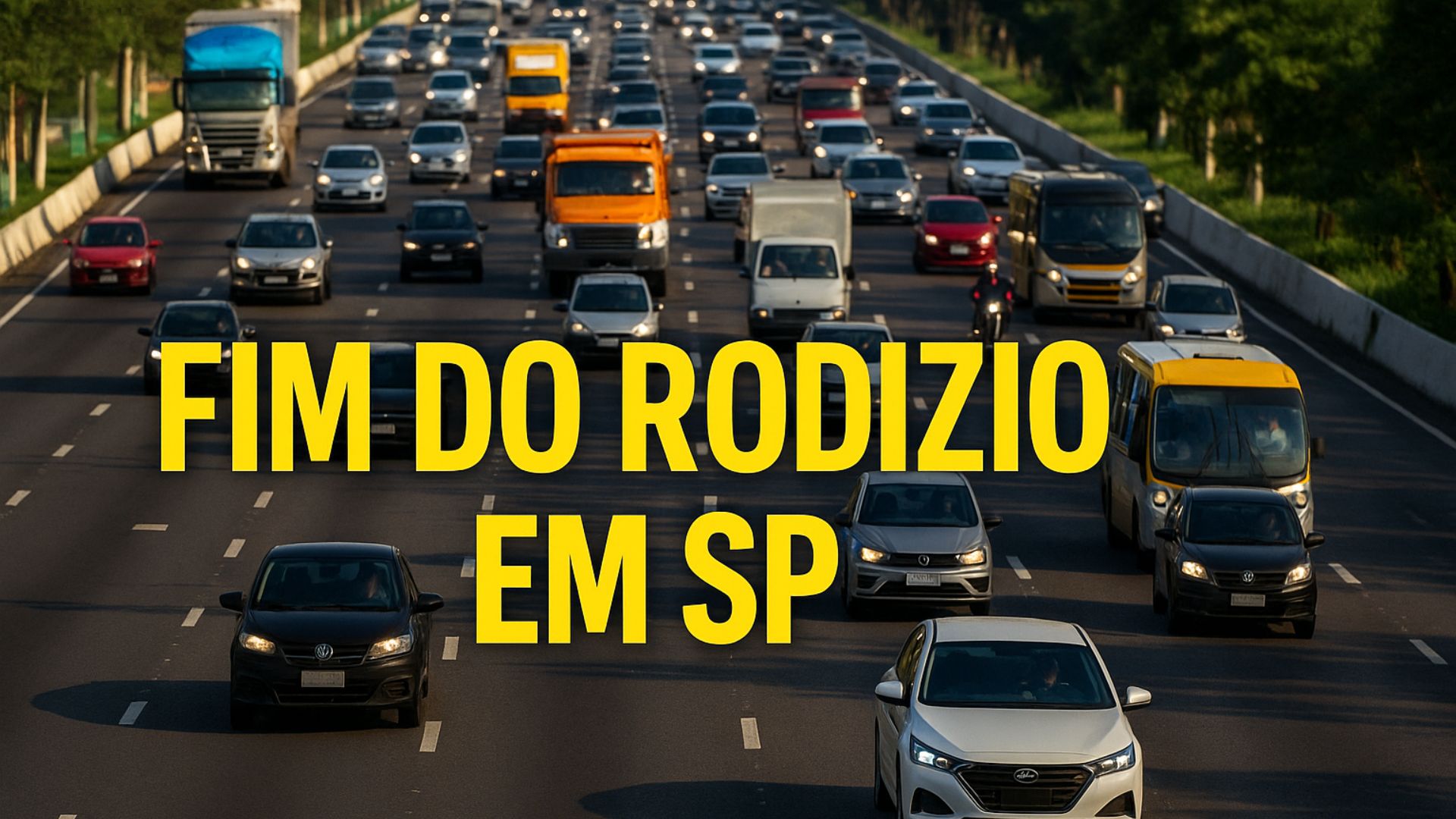
The Advancement of Hybrid Cars Pressures the Paulistano Rotation and Threatens to Increase Congestion in the Largest City in the Country.
São Paulo is moving toward a scenario where the municipal rotation tends to lose effectiveness, while the flow of vehicles may grow during peak hours.
The assessment was made by columnist Paula Gama, in a video published on the UOL channel on YouTube, explaining why the rule that has organized part of the circulation in the capital for decades has been weakened by the rapid expansion of hybrid and electric cars, all exempt from the restriction.
Growth of the Electrified Fleet in São Paulo
According to Paula Gama, the city has already surpassed the mark of 200 thousand electrified vehicles exempt from the rotation, a number that is expected to increase rapidly in the coming years.
-
The induction stove you know may be numbered: a new invisible technology hides the stove under the stone countertop, heats only the pot, and promises to cook up to 50% faster while using less energy.

-
Garlic with pure honey undergoes a natural fermentation that transforms the two ingredients into a versatile condiment for marinades, sauces, and roasted vegetables, and it can also be used as a natural treatment in your garden.

-
A woman in the United States hired six immigrants for a $10,000 job on her house, and when the work was almost done, she allegedly called ICE to avoid paying and to have the workers deported.

-
iPhone in 2026: the technological innovations that go beyond cameras and processors


This advancement occurs because, according to her, most of the newly launched models in the country already offer at least one hybrid version.
There is also the impact of stricter environmental regulations outlined in Proconve L8, which will come into effect starting in 2027 and are expected to accelerate the electrification of automakers.
As the columnist explained, many consumers have acquired hybrid models not for energy efficiency, but for the advantage of being able to drive any day of the week.
She highlighted that this process ends up increasing the fleet on the streets during the busiest times.
In her words, “the rotation is heading toward being a policy that exists only on paper, because practically all new vehicles will be exempt”.
Inequality and Impact on Mobility
This structural change also raises the debate about inequality.
According to the journalist, the rotation has always received criticism for affecting more intensely those who own only one car and cannot invest in exempt models.
As she noted in the UOL video, people with higher incomes can buy two vehicles or switch to hybrid cars, bypassing the restriction that still applies to the lower-income population.
“Those who have less are the ones who end up truly penalized”, she commented.
Even though many people associate the rotation with traffic control, Paula Gama reminded that the rule was created in 1997 with a focus exclusively on reducing polluting emissions.
However, over time, the legislation was modified.
As the columnist recalled, changes made in 2018 officially included the goal of reducing flow during peak times, also transforming the rotation into a traffic policy.
She emphasized that, as it loses effectiveness due to mass electrification, the system risks failing to fulfill any of the purposes for which it was designed.

Light Hybrids and the Disconnection from Environmental Proposals
In the UOL video, the journalist also pointed out a point that intensifies the controversy: the growing presence of so-called light hybrids.
Unlike traditional hybrids, these models do not use the electric motor to drive the car, acting only as support to the combustion engine.
“These vehicles do not significantly reduce emissions, but they remain exempt”, she stated.
For her, this imbalance increases the distance between the environmental purpose of the rotation and its practical application.
Public Debate and Absence of Clear Alternatives
Meanwhile, the debate about potential alternatives remains stalled.
According to the columnist, discussions about urban tolls or a complete review of the rules frequently appear, but no municipal administration has shown the political will to tackle the issue.
She pointed out that any change involves wear and tear, as it affects millions of drivers daily.
The ease with which the population coexists with the measure also influences the scenario.
As Paula Gama recalled, many residents imagine that the end of the rotation would be good news, until they realize that traffic could worsen if the number of cars on the road increases even more.
The journalist emphasized that São Paulo already has the largest fleet in the country and that the current trend, driven by the automotive market, points to continuous growth.






-

-

-

4 pessoas reagiram a isso.