





 Portuguese
  English
  Spanish
  7 min of reading
  0 comments


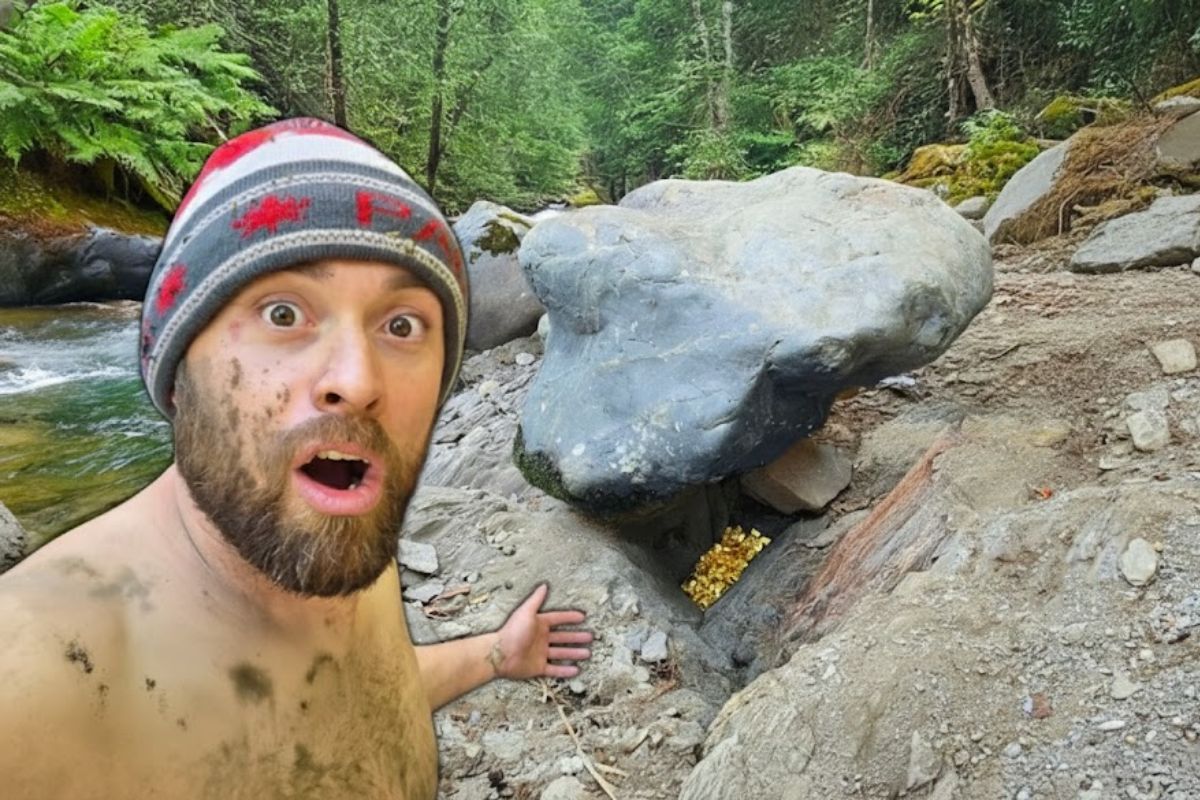
In The Modern Gold Rush, Two Gold Miners Revisit A Previously Explored Section, Remove Debris And Collect The Gravel Hidden Beneath An Ancient Rock. Upon Reaching Bedrock And Compacted Cracks, The Highbanker Reveals Coarse Flakes, Selectives And A Lesson On Gravity, Environmental Rules And Persistence On A Hot But Productive Day.
In The Gold Rush, The Most Recurrent Scene Is Not Always The Nugget Shining In The Pan, But Rather The Physical Labor That Precedes Any Find. A Miner And Kyle, Bored And Attentive To The High Price Of The Metal, Return To Their Usual Sector To Test A New Spot Along The Same Line, Within A Gold Claim Already Known For “Delivering” Gold.
The Detail That Changes The Story Is On The Ground, Not On The Horizon. By Choosing To Dig Under An Ancient Stone And Insisting Until They Reach Bedrock, The Pair Transforms An Apparently Common Place Into A Didactic Lesson On How Gold Behaves, Why Nuggets Get Trapped In Cracks, And What Previous Mining May Have Left Behind When Logistics Become An Excuse.
The Forgotten Stone And The Blind Spot In The Gold Rush

The Gold Rush Creates A Predictable Impulse: To Seek “New” In Order To Find More. In The Narrative, The Logic Is Reversed When The Duo Concludes That It Makes No Sense To Abandon An Area That Frequently Yields Gold.
-
Friends have been building a small “town” for 30 years to grow old together, with compact houses, a common area, nature surrounding it, and a collective life project designed for friendship, coexistence, and simplicity.

-
This small town in Germany created its own currency 24 years ago, today it circulates millions per year, is accepted in over 300 stores, and the German government allowed all of this to happen under one condition.

-
Curitiba is shrinking and is expected to lose 97,000 residents by 2050, while inland cities in Paraná such as Sarandi, Araucária, and Toledo are experiencing accelerated growth that is changing the entire state’s map.

-
Tourists were poisoned on Everest in a million-dollar fraud scheme involving helicopters that diverted over $19 million and shocked international authorities.


The Ground Becomes A Map Of Probabilities, Where Each Meter Of Displacement Requires Energy, Water, Fuel And Time, And Each Digging Choice Decides What Will Be Processed.
The Giant Stone Concentrates This Blind Spot. The Previous Owner Would Have Said That The Biggest Gold Had Already Come From There, But Also Admits A Practical Limit: Boulders Too Large To Move.
When The Rock Remains In Place For Years, It Acts As A Lid And As Protection, Keeping Compact Material, Little Disturbed And Potentially Rich Just Below, Especially Where The Gravel Fits Into Cracks.
Moving The Rock, However, Is Not A Cinematic Gesture: It’s A Slow Process, Of Lever And Wedge, Until The Mass “Turns” Without Collapsing Into The Hole.
The Difficulty Itself Becomes Evidence Of Why So Many Sections Were Worked Only “As Far As It Goes”, Leaving The Best Material Close To The Bedrock For The Next Curious One.
Why Bedrock Concentrates Nuggets And Coarse Gold

Gold Is A Dense Metal And, In A Gravel And Water Environment, Tends To Migrate Downward, Seeking Areas Of Lower Energy And Greater Trapping.
Therefore, Bedrock Appears As “Good And Bad” In The Narrative: Good Because It Indicates That Heavy Material May Have Settled There; Bad Because The Layer Of Sediment Available For Processing May Be Thinner, Reducing Volume And Requiring Selection.
This Behavior Manifests Itself On Two Scales. On One Level, Fine Flakes Get Retained In The Equipment Riffles And On The Mats. On Another Level, Nuggets And “Selectives” Prefer The Cracks And Irregularities, Where The Compacted Gravel Acts As A Wedge.
It’s Basic Physics Applied To The Chaos Of The Terrain: What Is Light Goes Up And Leaves; What Is Heavy Goes Down And Hides At The First Real Obstacle.
When The Narrative Describes The Presence Of Compacted Rock Within A Crack, The Reading Is Clear: There May Be An “Archive” Of Deposition, Less Disturbed And More Concentrated.
The Insistence On Cleaning The Solid Base Stops Being A Fancy And Becomes A Strategy, Because It’s Where The Bedrock “Holds” The Heavy Metal And Prevents It From Moving Further Down.
What The Highbanker Shows When The Pile Seems Like A Little Thing

The Highbanker Is The Piece That Transforms Effort Into Evidence. The Machine Is Described As Hungry And Simple In Principle: Separating The Heavy From The Light, Trapping The Gold In The Riffles.
The First Cleanup Is Frugal And Yet Serves As A Test For Presence, With “Tiny Faces” Appearing On The Upper Mat Indicating That The Area Still Has Metal, Even After Years Of Work.
The Technical Point Is That The Highbanker Not Only Delivers “How Much,” But Also “Where.” If The Gold Appears On Top, It Indicates Early Retention; If It Disappears, It May Have Migrated To Other Mats Or Passed By.
The Reading Of The Equipment Becomes A Diagnosis, Especially When The Duo Mentions That It Would Be Possible To Test Each Mat Individually, But They Prefer To Proceed With The Comparison Method.
As The Day Advances, The Highbanker Stops Being Just A Tool And Becomes A Protocol. One Round Processes Material Collected More Broadly, Under Smaller Stones And Loose Sediments; Another Prioritizes The “Better Material,” Removed Directly From The Bedrock.
The Conclusion Is Empirical: When The Pile Is Smaller But More Selected, The Chance Of Coarse Gold And Nuggets Emerging Increases, Even If The Total Quantity Doesn’t Explode.
Metal Detector, Compacted Cracks And The Dispute Between Surface And Bottom
The Metal Detector Acts As A Guarantee Against Self-Deception. In The End, The Miner Claims To Have Passed The Metal Detector Over The Already Cleaned Area And Heard No Signal, Suggesting That The Extraction Prioritized What Seemed Most Promising And That The Rest, At Least At That Moment, Did Not Show A Clear Target.
Even So, The Metal Detector Does Not Replace The Reading Of The Terrain Nor Resolves The Most Expensive Part Of The Gold Rush: Deciding Where To Insist.
The Narrative Presents A Classic Dilemma Of Prospecting: There Is Gold On The Surface And Gold That Only Appears When The Crack Is Opened, Forcing A Choice Between Volume And Precision.
When The Compacted Rock Emerges, It Is Interpreted As A Sign That The Section “Has Never Been Worked Before,” Raising The Stakes. The Result Supports This Reading By Bringing Coarser Pieces Just When The Focus Goes To The Base.
The Avoided Place Becomes The Decisive Place, And The Combination Of Bedrock, Highbanker And Metal Detector Begins To Operate As A Validation Triangle.
Environmental Rules In British Columbia And The Cost Of Letting It Go
The Cited Scenario Is British Columbia, Where The Use Of The Highbanker Appears Conditioned To Specific Rules.
In The Narrative, An Operational Requirement Emerges: Not To Run Directly In The River, Keeping The Tailings In A Distant Area, In A Settling Tank, So That The Water Settles And Does Not Carry Sediment Into The Water Course.
This Detail Matters Because It Reveals “Where” And “Why” The Operation Changes From Country To Country. Even When The Team Doesn’t Fully Understand The Logic, The Rule Is Treated As Mandatory, With A Real Impact On The Routine: Choosing A Settlement Point, Monitoring The Mud, Keeping Distance From The River And Accepting That Some Of The Time Will Be Consumed By Logistics, Not By Direct Search.
There Is Also An Implied Safety Point: Heavy Stones, Water, Engine And Unstable Terrain Make The Gold Rush A Physically Risky Activity, Where A Wrong Decision Costs Dearly. This Background Helps To Understand Why The “Right Place” Often Becomes The “Avoided Place,” And Why So Much Bedrock Remains Untouched.
The Narrative Does Not Advance In Legal Details Beyond This, But Leaves A Useful Piece Of Information For Public Reading. Recreational And Concession Mining Coexist With Environmental Restrictions That, In Practice, Condition Even The Choice Of The Digging Point.
On A Hot And Slow Day, This Type Of Rule May Be What Separates Persistence From Desistance, And Explains Why Areas With Potential Remain Partially Untouched.
Weighing, Units And What The Day Really Delivered
In The End, The Day’s Balance Does Not Come Only From Shine, It Comes From The Scale. The Narrative Records A Moment Of Guesses And A Concrete Number: A Reading Of 1.64 G For The Final Set, After Three Runs, With Mention Of Preferred Pieces And A Comparison Between The First Two Runs And The Round Closest To The Bedrock.
However, There Is A Noise That Deserves Technical Attention. Amidst The Conversation, Disconnects Between Grams, Ounces And Expressions Of “Almost There” Appear, Reinforcing How Field Records Mix Units And Impressions Under Fatigue.
The Measure That Holds Is The One That Was Stated As Reading, And It Is Enough For An Operational Conclusion: The Best Gold Emerged When The Duo Prioritized The Material From The Bedrock.
The Most Relevant Piece Of Data, Therefore, Is Not Just “How Much,” But “How.” Nuggets And Selectives Appear When The Team Accepts The Part That Nobody Likes, Digging Where The Rock Holds, Cleaning The Crack, Separating The Compacted From The Loose And Insisting.
In The Gold Rush, This Insistence Is Often The Difference Between Seeing Only Flakes And Finding Something You Can Pick Up.
The Gold Rush, When Viewed Up Close, Is Less Romanticized Than The Legend Suggests: It Is Repetition, Testing, Failure And Adjustment, Until The Bedrock Appears And The Terrain Reveals What Was Protected.
The Episode Highlights A Simple And Uncomfortable Paradox: Nuggets Tend To Stay Where Logistics Discourage, Whether Under A Stone That Nobody Moves, Or Inside A Compacted Crack That Requires Patience And Method With The Highbanker.
If You’ve Ever Lived Something Similar In The Gold Rush, What Was The Most Improbable Place That Really Delivered Gold For You, And What Made You Insist? When It Comes To Field Decision Making, Do You Trust The Metal Detector More Or The Reading Of The Bedrock, And Why?









-

-

-

-

-

19 pessoas reagiram a isso.