





 Portuguese
  English
  Spanish
  3 min of reading
  0 comments


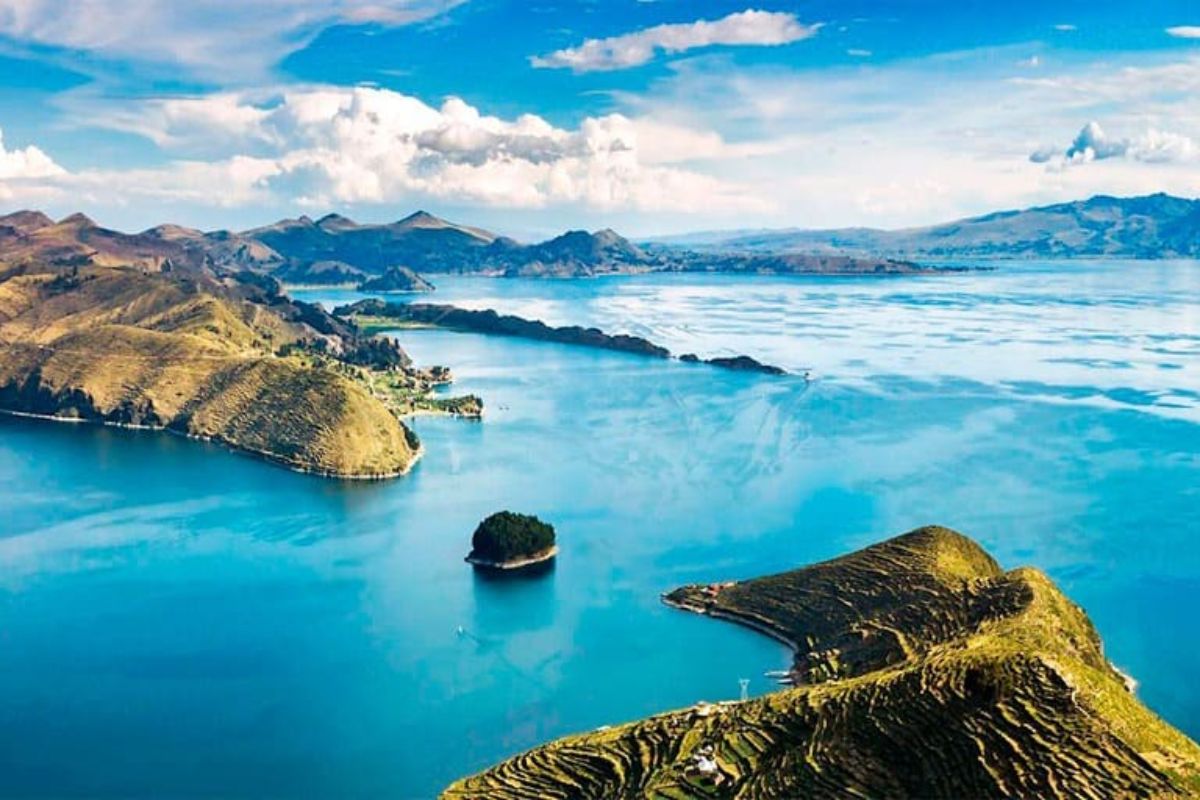
Explore Lake Titicaca, The Highest Navigable Lake in The World, Its Stunning Geography, Rich Cultural History, Unique Biodiversity, and Efforts for Its Preservation Between Peru and Bolivia.
Nestled in the heights of the Andes Mountains, between Peru and Bolivia, Lake Titicaca is more than just a body of water. It is the highest navigable lake in the world and one of the largest in South America. Its waters hold a rich history, vibrant culture, and a unique ecosystem, now facing significant challenges.
This article dives into the depths of Lake Titicaca. We will explore its unique geography, the life it harbors, the legacy of Andean civilizations, and the tourist attractions. We will also address the challenges for its conservation and the efforts to secure the future of this natural and cultural heritage.
Lake Titicaca: An Andean Giant Between Peru and Bolivia
Lake Titicaca is a socioecological system of continental importance. Its altitude is consistently reported to be between 3,810 and 3,812 meters above sea level. This characteristic establishes it as the highest navigable lake in the world, allowing for the navigation of commercial and tourist vessels.
-
Friends have been building a small “town” for 30 years to grow old together, with compact houses, a common area, nature surrounding it, and a collective life project designed for friendship, coexistence, and simplicity.

-
This small town in Germany created its own currency 24 years ago, today it circulates millions per year, is accepted in over 300 stores, and the German government allowed all of this to happen under one condition.

-
Curitiba is shrinking and is expected to lose 97,000 residents by 2050, while inland cities in Paraná such as Sarandi, Araucária, and Toledo are experiencing accelerated growth that is changing the entire state’s map.

-
Tourists were poisoned on Everest in a million-dollar fraud scheme involving helicopters that diverted over $19 million and shocked international authorities.


Its dimensions are impressive: a surface area of 8,372 km² and a water volume of 893 km³. The maximum depth reaches 281 meters, with an average of 107 meters. This vastness and altitude shape its climate, ecology, and the lives of the populations around it.
The Vibrant Life at The Heights of The Highest Navigable Lake in The World
The formation of Lake Titicaca dates back to the Quaternary Period. A tectonic depression in the Andes was filled with meltwater from glaciers and rain. It occupies the northern part of the Andean Altiplano. Its watershed is extensive, fed by more than 25 rivers and streams, but it has only one surface outlet: the Desaguadero River. Evaporation is the main pathway for water loss in the system.
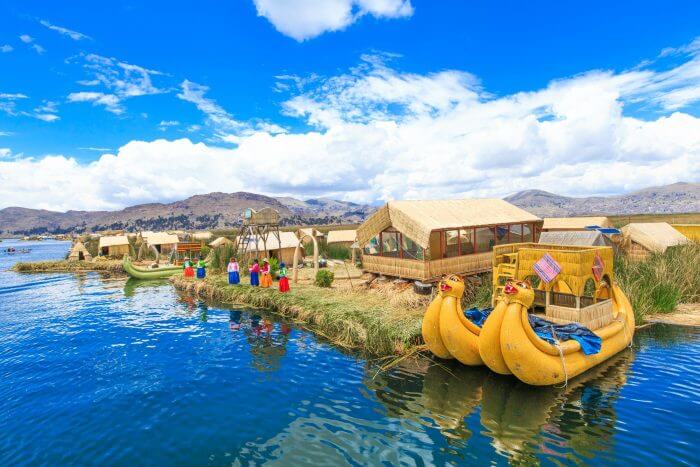
The water of Titicaca is fresh and slightly basic (pH ~8.5). The average surface temperature ranges from 10 to 14°C. The lake harbors a biodiversity with a high degree of endemism. Notable are the totora reeds, used by the Uros to build floating islands. The fauna includes native fish of the genus Orestias (many of which are endangered), the giant Titicaca frog (critically endangered), and birds such as the Titicaca grebe and three species of flamingos.
The Deep Historical and Cultural Heritage of Lake Titicaca
Lake Titicaca is recognized as the cradle of important Andean civilizations. The Pukara culture (peak between 500-380 A.D.) developed advanced agriculture on the shores of the lake. Later, the Tiwanaku culture (founded c. 110 A.D.) flourished, considering the lake sacred and the birthplace of Viracocha, their creator deity.
For the Inca Empire, Titicaca was the origin point of their civilization. Myths narrate that Manco Cápac and Mama Ocllo emerged from its waters. Isla del Sol and Isla de la Luna housed important Inca sanctuaries. Today, the Uro, Aimara, and Quechua peoples keep this heritage alive. The Uros live on floating islands made of totora. The Quechua, on islands like Taquile and Amantani, are famous for their textiles and experiential tourism.










-

-

2 pessoas reagiram a isso.