





 Portuguese
  English
  Spanish
  7 min of reading
  1 comment


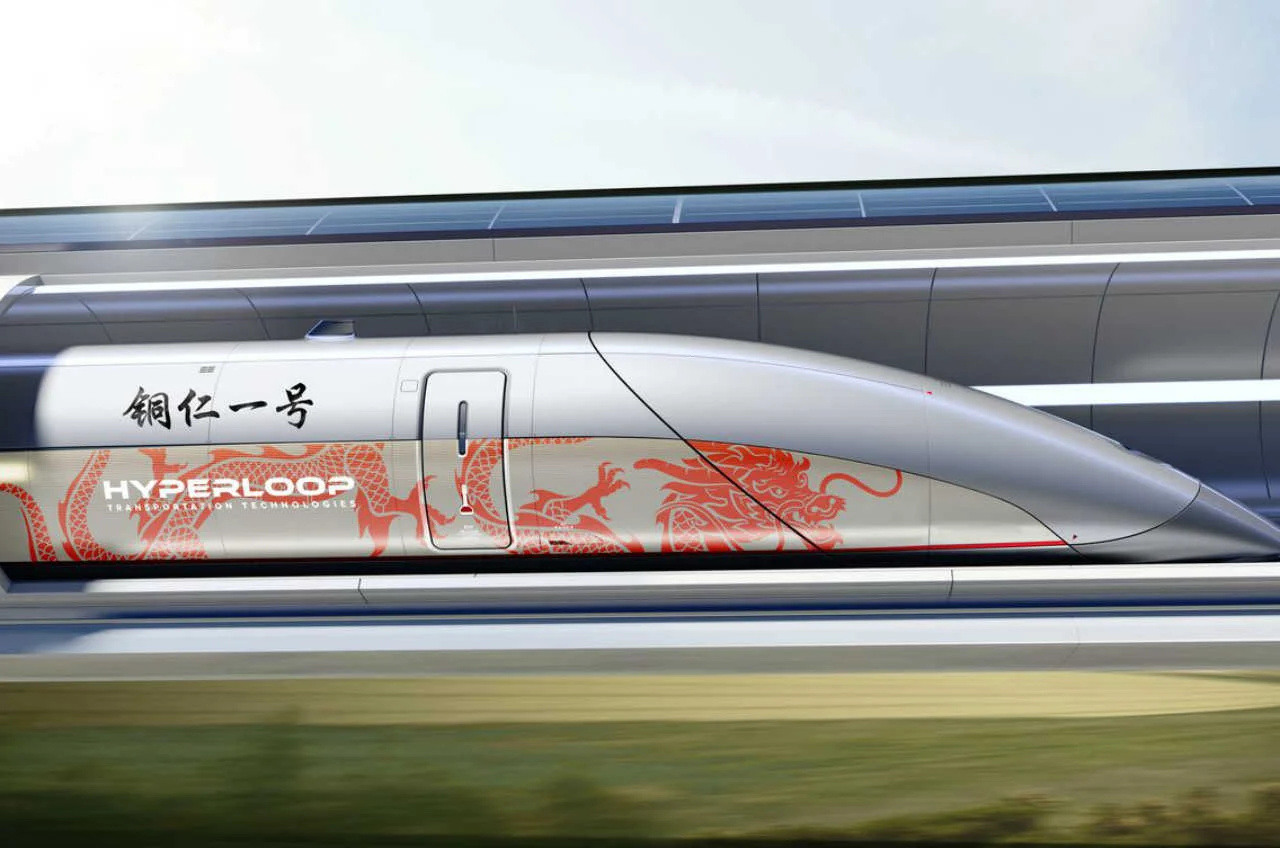


Elon Musk’s Hyperloop Project Promised Travel Above 1,000 km/h and Billion-Dollar Valuation, but Faces Delays, Investment Cuts, and Is Still Far from Becoming Commercial Reality.
When the concept of Hyperloop was introduced to the world, the promise seemed straight out of science fiction: capsules traveling in low-pressure tubes, almost without friction, reaching speeds exceeding 1,000 km/h, connecting entire cities in minutes. Elon Musk’s project quickly attracted global attention, billions in private investments, government support, and the expectation of a historic breakthrough in ground transportation. More than a decade later, however, the reality is much more complex.
The Hyperloop is not dead, but it also has not become the revolution promised. Between limited tests, companies that shifted focus, closures of specific operations, and deep technical difficulties, the project continues to develop — but remains far from large-scale commercial application, especially for passenger transport.
The Original Promise: Airplane Speed, Train Cost
The central idea of the Hyperloop was simple on paper and extremely challenging in practice. The capsules would travel inside tubes nearly under vacuum, drastically reducing air friction.
-
While the world looks at oil, the war with Iran is already disrupting helium supply from Qatar, affecting car and iPhone chips, threatening AI expansion, and putting pressure on aluminum packaging at the highest value in four years.

-
Global warming will expose a treasure hidden under the ice of Antarctica and may spark an international dispute over gold and valuable minerals.

-
A street vendor from Praia Grande built a robot made of scrap from scooters and washing machines that pulls his popcorn cart on the beach, emits sounds, and interacts with customers, becoming an attraction on the coast of São Paulo.

-
The specifications of the Xiaomi 18 Pro Max have been leaked, and the highlight is a dual 200 MP camera with a new 22-nanometer technology that promises to consume less energy and capture details in shadows and bright areas using LOFIC HDR.

With this, it would be possible to achieve speeds close to those of commercial aircraft, but with lower energy consumption and theoretically cheaper infrastructure than high-speed railroads.
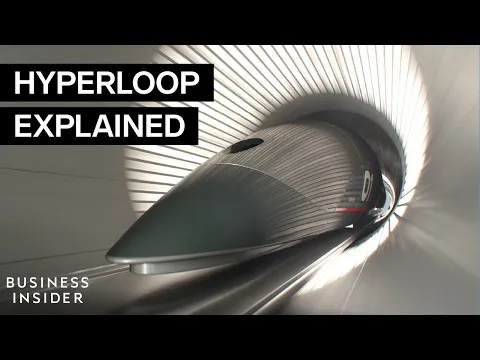

Initial studies spoke of connecting cities like Los Angeles and San Francisco in just over 30 minutes, something that would completely change the logic of urban and regional commuting. Not surprisingly, the project was quickly valued at tens of billions of dollars when considering international corridors, national networks, and associated infrastructure.
Billions Invested, but Few Meters Traveled
Over the years, several companies emerged to turn the concept into reality. The most well-known, Virgin Hyperloop, even conducted manned tests in a controlled environment, an important symbolic milestone. However, these tests occurred on extremely short tracks, far from any real commercial operation.
Over time, it became clear that scaling the system to hundreds of kilometers involves much greater challenges than those anticipated in the initial studies.
Maintaining perfectly aligned tubes over long distances, dealing with thermal expansion, ensuring safety in emergencies, and controlling costs proved to be much more difficult than the initial rhetoric suggested.
The Abandonment of Passenger Transport and Shift in Focus
A key point in the Hyperloop’s trajectory was the change in scope. Companies that initially advocated for passenger transport began to prioritize freight, which is considered less sensitive to risks, comfort, and safety regulations.

This repositioning does not mean complete failure, but it represents a clear break from the original promise that captivated the public. Transporting cargo in pressurized capsules is technically more feasible, requires fewer certifications, and tolerates larger margins of operational error. Transporting people at 1,000 km/h inside sealed tubes, however, requires safety levels close to those of commercial aviation — something still distant.
Hyperloop Timeline: From Revolutionary Idea to Current Situation
2013 — The Idea is Introduced
The concept of Hyperloop is publicly presented by Elon Musk, in a white paper that describes a transportation system in low-pressure tubes, with capsules traveling at speeds exceeding 1,000 km/h. Musk makes it clear that he does not intend to build the system, but encourages companies and universities to develop the technology.
This document is the official starting point of Hyperloop.
2014–2015 — The First Companies Emerge
Inspired by the concept, startups dedicated to developing Hyperloop emerge, primarily in the United States. Among them are Hyperloop One (which would later become Virgin Hyperloop) and other smaller initiatives.
During this period, the project gains global media attention and begins attracting private investors and preliminary studies from interested governments.
2016 — First Tests on Open Track
Hyperloop One conducts initial propulsion tests on short tracks in the Nevada desert. It is not yet a complete system but rather partial demonstrations of acceleration and braking.
The focus is to prove that the concept is physically possible, not that it is ready for commercial operation.
2017–2018 — Promises Expand and Government Studies Increase
Several countries and regions announce feasibility studies, including routes in the United States, Europe, the Middle East, and Asia. Evaluations estimate individual projects to be worth tens of billions of dollars.
At the same time, technical warnings begin to emerge about:
- actual construction cost,
- maintenance of the tubes,
- safety in case of failures,
- evacuating passengers.
2019 — Technical Advancements, but Still on a Small Scale
Technology evolves in the lab. Levitation, electric propulsion, and automated control systems are developed. However, no commercial route begins to be built.
The Hyperloop remains restricted to controlled environments, with tracks of just a few kilometers at most.
2020 — First Manned Test
Virgin Hyperloop conducts the first test with human passengers, an important symbolic milestone. The test takes place on an extremely short track, at a low speed compared to what is promised for commercial operation.
Despite the media impact, experts highlight that the test does not represent operational readiness, only initial safety validation.
2021–2022 — Growing Questions
Governments and investors demand more concrete data. Comparative studies show that conventional high-speed trains deliver more predictable results, with lower technical risk.
At the same time, the estimated cost of Hyperloop begins to rise, reducing its economic attractiveness.
2023 — Strategy Shift and Retraction
Virgin Hyperloop announces the abandonment of the focus on passenger transport, shifting to prioritize applications for freight and technological research. Part of the team is laid off, and commercial projects are suspended.
This moment marks an important turning point: the original promise begins to be officially revised.
2024 — Hyperloop Ceases to Be an Immediate Solution
The project is treated as long-term experimental technology. There are no large-scale works or commercial corridors under construction.
Universities, research centers, and companies continue to study the concept, but now without deadlines for real implementation.
2025 — Current Situation
Today, Hyperloop:
- is not abandoned,
- does not operate commercially,
- does not transport passengers,
- does not have active corridors under construction.
It exists as:
- research platform,
- evolving technological concept,
- potential future solution for specific niches, primarily freight.
The revolution promised for the 2020s has not happened.
Technical Challenges That Have Not Yet Been Overcome
Even after years of research, several obstacles remain without definitive solutions. Among them are:
- The complexity of maintaining extremely low pressure over hundreds of kilometers.
- The need for fast and safe evacuation systems in case of failures.
- The impact of micro-structural misalignments at high speeds.
- The actual cost of construction and maintenance, which has proven to be much higher than expected.
These factors explain why, despite aggressive marketing and functional prototypes, no country has begun construction of a fully operational Hyperloop corridor.
Investment Cuts and Government Caution
Another clear sign of the gap between promise and reality was the cooling of financial enthusiasm. Investors began to demand more concrete proof of economic viability. Governments, in turn, became more cautious when comparing Hyperloop with established alternatives, such as high-speed trains, which reach speeds of 300 to 400 km/h with mature technology and predictable returns.
In several cases, official studies concluded that Hyperloop still does not offer a clear advantage in cost-benefit when evaluated against criteria of risk, maintenance, and scalability.
Is Hyperloop Dead? No. But It Is Far from What It Promised
It is important to separate myth from reality. Hyperloop continues to exist as a technological concept. Universities, research centers, and companies are still studying magnetic levitation, low-pressure tubes, and advanced propulsion systems.
In specific niches, such as transporting sensitive freight or industrial testing, the technology may find future applications.
What has not materialized is the vision of a global hypersonic transportation network for passengers, operating on a continental scale in the coming decades.
The Contrast with Other Transport Megaprojects
When compared to Japanese, French, or Chinese bullet trains, Hyperloop reveals its main weakness: technological maturity. While high-speed railroads have decades of safe operation and millions of passengers transported, the Hyperloop still struggles to emerge from experimental environments.
This does not invalidate research but dismantles the narrative that the system would be ready to replace planes and trains in the short term.
What to Expect Moving Forward
The most realistic scenario points to a more modest Hyperloop, focused on specific applications, regional testing, and freight transport. The promised transformation — fast, cheap, and global — has been replaced by a slow, expensive, and highly technical path.
The story of Hyperloop is not one of absolute failure, but of an inflated expectation, typical of technological megaprojects that underestimate the complexity of the real world.
Hyperloop demonstrated how revolutionary ideas can attract billions even before proving their viability. Between paper and concrete, there exists a technical, financial, and regulatory abyss that does not always appear in initial announcements.
And you, reader: does Hyperloop still have a future as a real transport solution, or will it be remembered as just another megaproject that promised too much and delivered much less than expected?








A China já fez o dela e está testando. Em breve vai ser informado a primeira ligação entre duas cidades. Enquanto o ocidente pensa no agora, o oriente pensa daqui a 10 anos.