





 Portuguese
  English
  Spanish
  4 min of reading
  0 comments


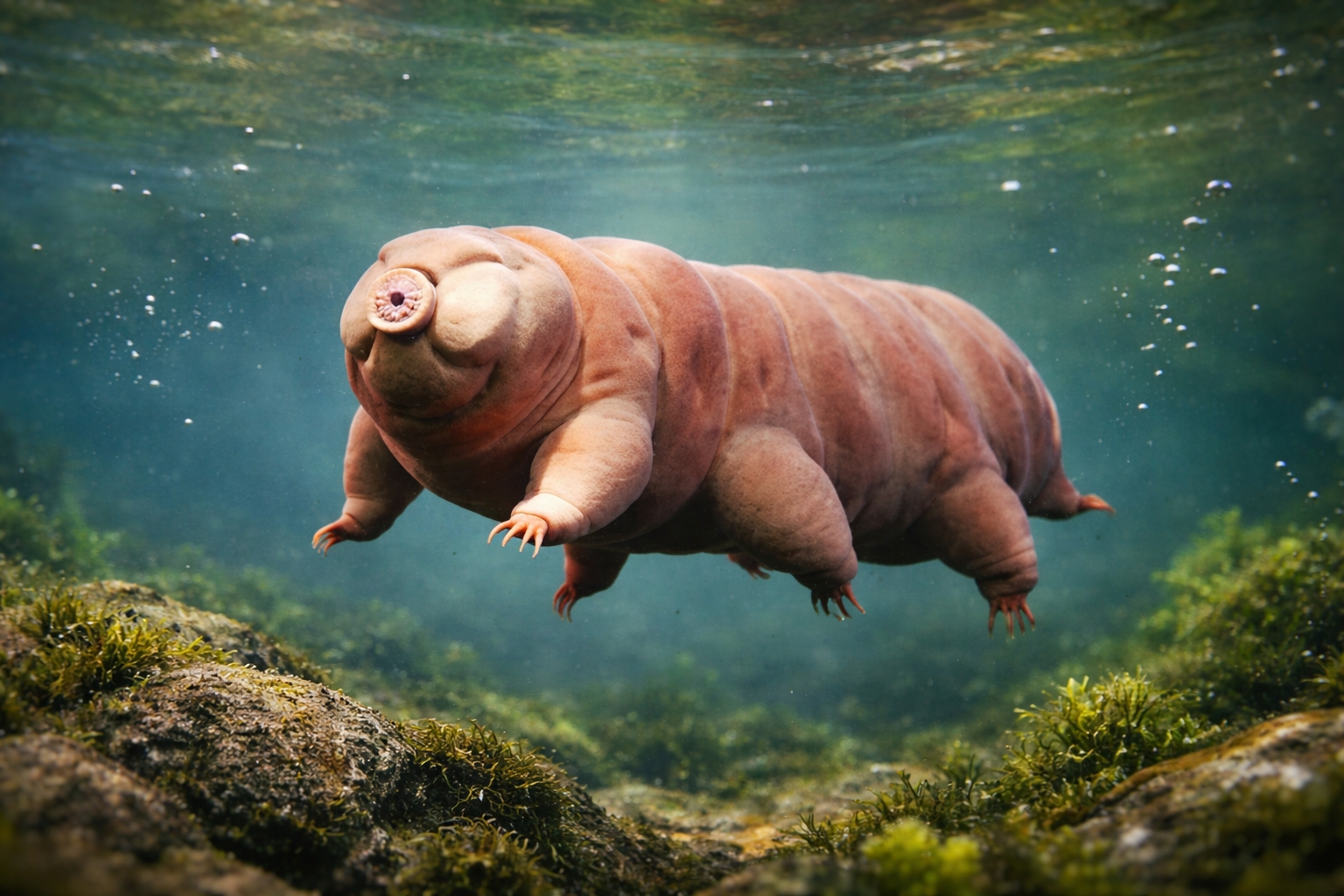
Microscopic and Almost Immortal, Tardigrade Freezes Entirely, Enters Extreme Dormancy, and “Returns to Life,” Surprising Scientists and Provoking Fascination and Curiosity Worldwide
When we think of life and death, most living beings follow a clear pattern: organisms die when exposed to extreme conditions, such as intense cold, dehydration, or lack of oxygen. However, there is a group of microscopic animals that defies these limits.
Although they are not “immortal” in the strict sense (they age and can die from biological causes), tardigrades, also known as “water bears,” demonstrate survival capabilities that seem to defy the very definition of biological death.
The Microanimal that Defies the Limits of Biological Life
In various environments on the planet, the microscopic animal tardigrade enters a state called cryptobiosis with almost 0% metabolism and tolerates extremes of temperature and time, surviving frozen for long periods and coming back to life when conditions improve, making an impact on contemporary biology and attracting the attention of scientists and the general public.
-
With a cost per shot close to zero, the DragonFire laser could change naval warfare in 2027 and provide British ships with nearly unlimited defense against drones.

-
A British startup creates tires that generate electricity in electric vehicles when passing over potholes, speed bumps, and cracks.

-
Scientists have created robots made with living cells that have their own nervous system, swim on their own, explore the environment, and self-organize without any genetic engineering, and now they want to do the same with human cells.

-
Students create a solar-powered ambulance that operates without a plug, without fuel, and still keeps medical equipment running in remote areas.


Tardigrades are microscopic creatures that measure on average between 0.1 mm and 1 mm and are found in virtually every place where there is moisture on the planet, including terrestrial and aquatic environments. They are popular in science for their impressive ability to survive in extreme conditions that would be fatal for most living beings.
What draws attention is that these microanimals can literally “stop” their vital functions and then restart them when the environment becomes favorable again — something many describe as a form of “almost immortality.”
Cryobiosis, the Mechanism That Seems to Defy Death
According to National Geographic, tardigrades can survive extremely adverse conditions through a process called cryptobiosis, a state in which the metabolism nearly disappears. This adaptation allows the organism to enter a state of suspended animation and withstand environments without water or with freezing temperatures.
During this transition, tardigrades expel most of the water from their bodies, retract their limbs, and adopt a nearly spherical shape known as a “tun.” The organism becomes so inactive that there are practically no detectable signs of life.
Extreme Temperatures and Deep Freezing
In a cryptobiotic state, these microanimals can tolerate temperatures ranging from close to absolute zero to levels exceeding 150 °C, well beyond the survival capacity of most known life forms.
When the temperature rises and water returns to the environment, the tardigrade reabsorbs moisture and restarts its biological functions — as if it had “woken up” from a deep sleep — usually within a few hours.
Resistance to Long Periods Without Water
Another impressive facet is that tardigrades can survive decades without water, remaining in a state of cryptobiosis until conditions improve and humidity returns, allowing the animal to resume active life.
This period of resistance makes them frequently used as models for study in extreme biology, as they can tolerate environments ranging from dry deserts to high altitudes and even exposure to the vacuum of space in scientific experiments.
What This Changes in Science and the Perception of Extreme Life
The capacity of tardigrades to withstand deep freezing and then return to active life has implications that go beyond scientific curiosity. This behavior challenges traditional definitions of biological death and opens pathways for research in biological preservation, cryopreservation of cells and tissues, and inspires studies related to survival in extreme conditions like those that may exist on other planets.
The resilience of these microanimals also stimulates debates about the limits of known biology and serves as inspiration for new technologies that could one day allow the preservation of biological material for prolonged periods, impacting medicine and biotechnology.
Why This Draws Attention from the General Public
The fact that such a small organism can survive almost without signs of life in extreme environments, “returning to life” after freezing or dehydration, provokes fascination and curiosity, generating interest from both scientists and the general public.
Although tardigrades are not truly immortal — they still age and can die — the way they manage to suspend vital processes and then successfully recover them is one of the most impressive chapters ever observed in animal biology.







-

-

-

-

-

13 pessoas reagiram a isso.