





 Portuguese
  English
  Spanish
 5 min of reading
  6 comments


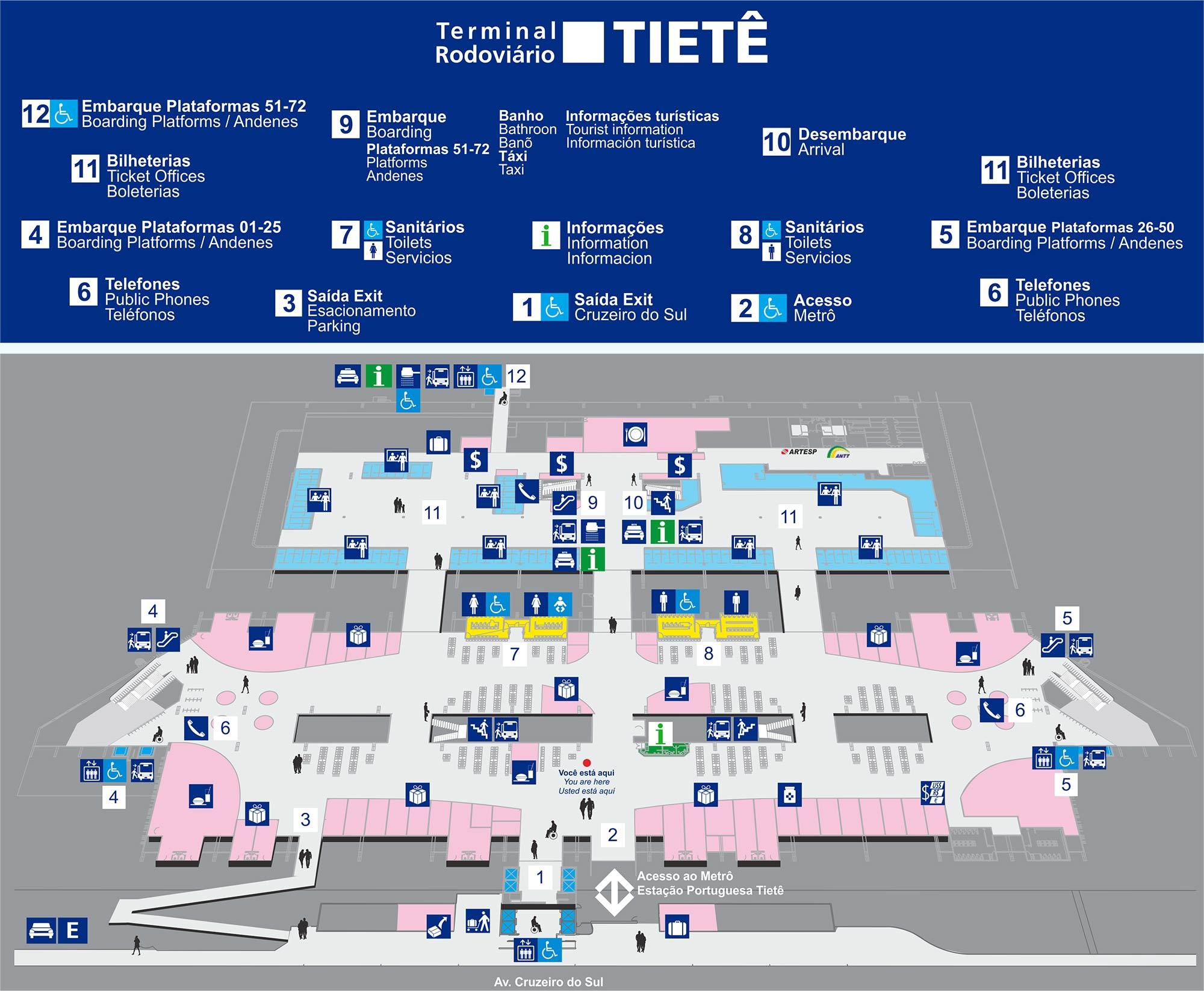


The Largest Bus Station in Latin America, Terminal Tietê Has 120,000 m², 89 Platforms, Over 1,000 Destinations, and Receives 11 Million Passengers Per Year.
In the largest metropolis in Latin America, where the world’s eyes often turn to skyscrapers, congested avenues, and the hustle and bustle of international airports, there is a mobility giant that goes unnoticed by many: the Terminal Rodoviário Tietê. Located in the northern zone of São Paulo, on the banks of the river that shares its name, the space is the largest bus station in Latin America and one of the largest in the world.
Inaugurated on May 9, 1982, Tietê was born with the mission to end the overcrowding that plagued smaller bus stations in São Paulo, such as the one at Luz. The result was the creation of a monumental structure, comparable to an airport in size, movement, and organization. Today, more than 11 million passengers pass through its gates every year, connecting São Paulo to over 1,000 national and international destinations.
Impressive Dimensions
Terminal Tietê is not just a boarding point: it is a true miniature city, with a built area of 120,000 m² — equivalent to 17 professional soccer fields.
-
The government puts R$ 8.6 billion on the table to change the highway (BR) with 50 overpasses, 28 bridges, 4 tunnels, and 40 km of bike lanes in 180 km of historic duplication.

-
BRL 20.1 Million Bridge Project Kicks Off: 200-Meter Construction to Improve Access in Three Cities in Minas Gerais

-
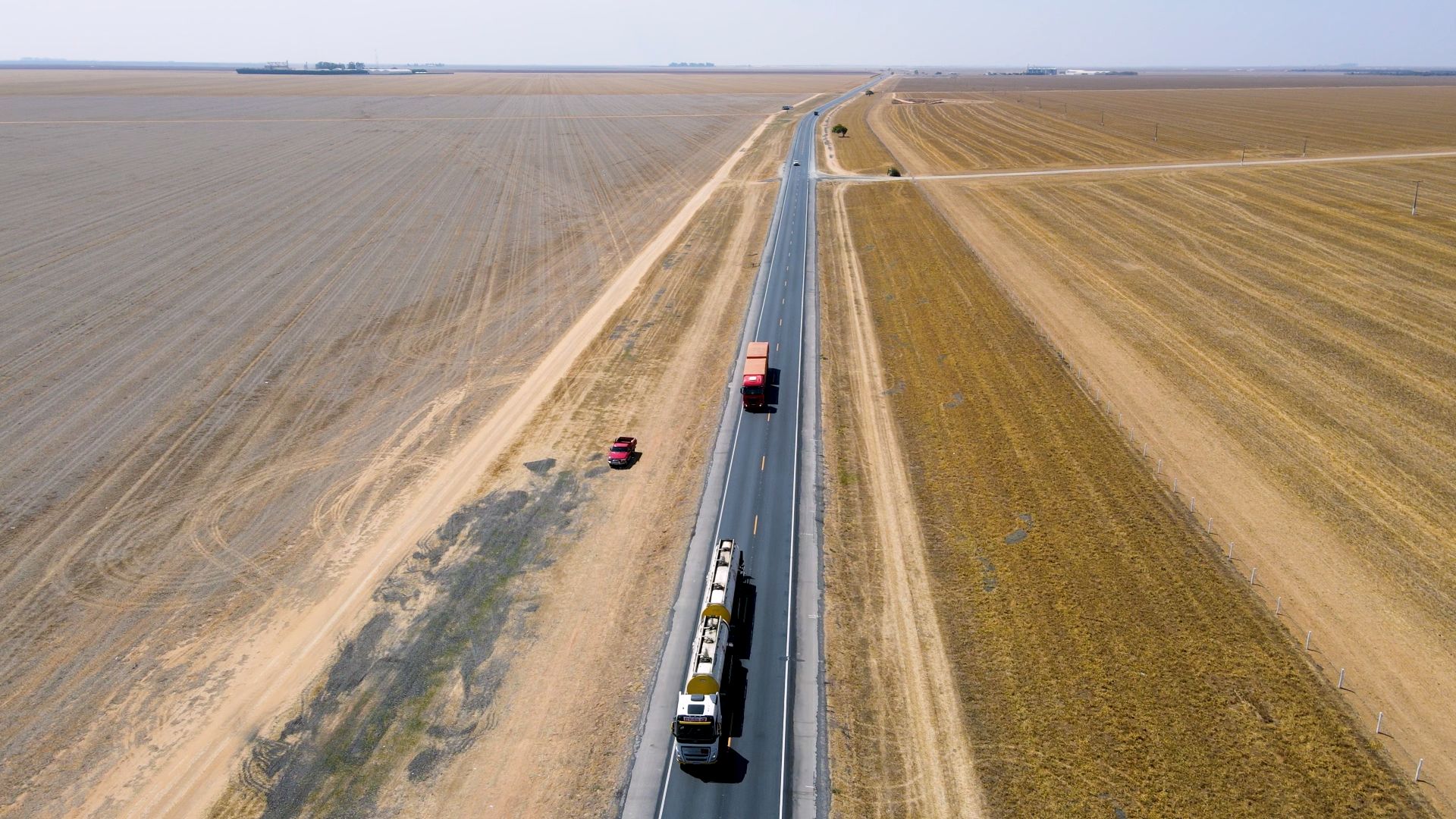
‘Endless Road’ In Brazil Is One of The Largest In The World: 145 Km Stretch On An Important Highway (BR) Crosses The West Of Bahia And Had 135.9 Km Revitalized With R$ 35.3 Million
-
Engineer From ITA Who Worked at Embraer Leads Free Flow Expansion With National Artificial Intelligence and Technology for Toll Without Barriers in Brazil

Among its official numbers:
- Platforms: 89, divided between boarding and disembarking, organized by region and type of journey.
- Operating Companies: over 300 bus companies operate in the space.
- Destinations: about 1,000 different, covering the entire national territory and neighboring countries.
- Daily Movement: between 60,000 and 70,000 people circulate through the terminal every day.
- Commerce and Services: dozens of establishments offer restaurants, pharmacies, cafés, stationery stores, ATMs, kiosks, and even fast-food chains.
- Continuous Operation: operates 24 hours a day, 7 days a week, without interruptions.
With this structure, Tietê is considered by transportation experts a strategic hub of Brazilian logistics, linking large capitals to small municipalities that do not have airports.
The Birth of a Mobility Giant
In the 1970s, São Paulo was experiencing the peak of urban growth and facing a serious problem: the existing bus stations could no longer accommodate the growing volume of passengers. It was in this context that the state government decided to build a monumental structure.
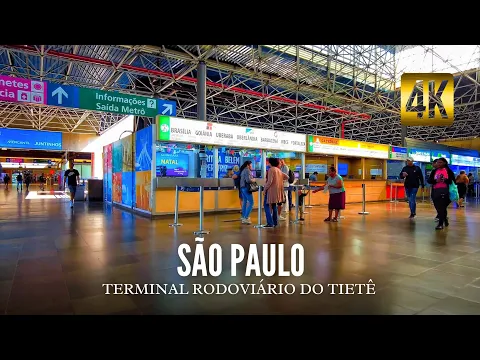

The project was designed by architect João Walter Toscano, who envisioned Tietê not just as a terminal but as a planned urban complex. The construction was carried out in partnership with the Traffic Engineering Company (CET) and Socicam, the company that manages the space to this day.
When inaugurated in 1982, Tietê was already recognized as the largest bus terminal in the world in built area, a title that marked the engineering and urban mobility of Brazil.
More Than Transportation: A Social Gear
Over the last four decades, Terminal Tietê has become the backdrop for millions of stories that reflect Brazilian reality.
- Entire families boarding from the countryside in search of a better life in the capital.
- Young people arriving to study at universities in São Paulo.
- Northeastern migrants who, during the 1980s and 1990s, made Tietê the gateway to the largest city in the country.
- Foreigners crossing borders on buses that depart from the terminal towards Argentina, Chile, Paraguay, Uruguay, Bolivia, and Peru.
Each platform is, at the same time, both a logistical point and a stage for human emotions: goodbyes, reunions, hugs, and tears that repeat daily, transforming Tietê into a microcosm of Brazilian diversity.
The Strategic Importance of Tietê
Brazil is a country where road transportation plays a central role. Unlike Europe or Asia, which have dense railway networks, here roads are the main arteries of circulation.
In this scenario, Tietê serves as a true continental hub:
- National Connections: connects São Paulo to all Brazilian regions, from capitals like Salvador, Recife, Belém, and Porto Alegre to medium-sized cities in the countryside.
- International Connections: maintains regular lines to neighboring countries, making it also a gateway to and from Brazil by land.
- Tourism: many foreigners use Tietê as a starting point to explore the country on bus routes, diving into an experience closer to Brazilian culture.
Challenges of a Giant That Never Sleeps
Despite its grandeur, the terminal faces typical challenges of major transportation hubs:
- Overcrowding During Long Holidays, when traffic can exceed 250,000 passengers in just one weekend.
- Old Infrastructure, which requires periodic renovations to maintain quality and safety.
- Limited Integration with Other Modes, as although connected to the Blue Line of the Metro, it has no direct link to airports or the passenger rail network.
Nonetheless, Tietê remains an example of efficiency and management, serving as a reference for international studies on bus terminals.
International Comparisons
To understand the significance of Tietê, it is useful to compare it to other large terminals:
- Port Authority (New York): receives 65 million passengers per year, but in a smaller area and in a city with a greater dependence on intercity buses.
- Retiro Terminal (Buenos Aires): is the largest in Argentina, but with lower traffic and less infrastructure than Tietê.
- Tietê (São Paulo): although with about 11 million passengers per year, stands out for its physical area, diversity of destinations, and strategic function for a continental country like Brazil.
Tietê: The Portrait of Bus-Bound Brazil
More than a monumental construction, Terminal Tietê is a symbol of Brazilian identity, where the bus still reigns as the main means of long-distance transport.
There coexist the street vendor who depends on the heavy flow of people, the migrant returning home after months of work, the student arriving full of expectations, and the foreign tourist discovering a Brazil far from traditional air routes.
Open 24 hours a day, Tietê is a space that never sleeps. Whether in the early morning or on a Monday morning, there are always buses arriving and departing, drivers rotating on routes covering thousands of kilometers and passengers carrying with them dreams, homesickness, and hopes.









Faltou informar que a inauguração do Terminal Rodoviário do Tietê foi na gestão do prefeito Paulo Maluf que terminou a obra.
Quem trabalhou por anos nesse colosso Terrminal Rodoviário, sabe do fundo do coração o quão gratificante foi fazer parte dessa história! Foi onde iniciei minha vida proffissional. Eu só tenho uma coisa a dizer: Eu Te Amo Tietê!!!
Gratidão!!!!!
Qual Governador construiu esse Terminal para podermos dar o crédito?