





 Portuguese
  English
  Spanish
  4 min of reading
  3 comments


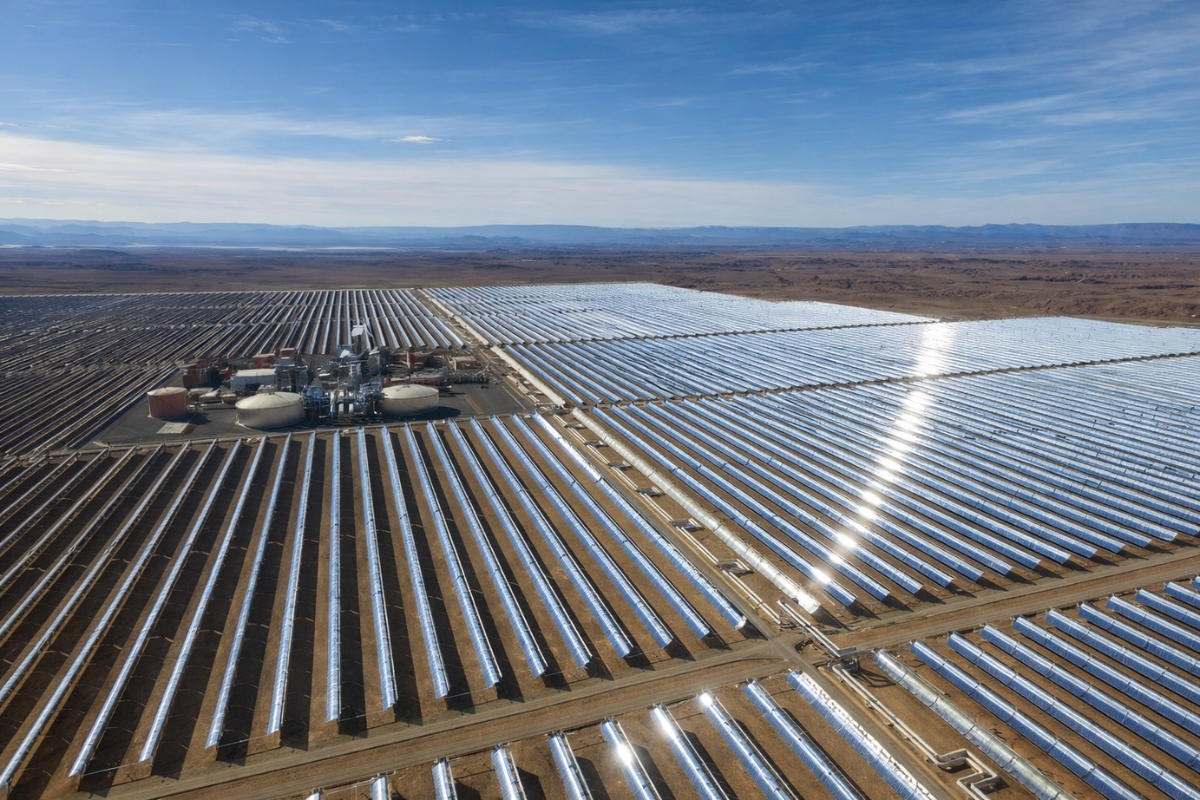


Desert and Loss of 2 Billion Euros: The Challenges Faced by the Largest Renewable Project. Discover the Behind-the-Scenes of This Journey
The world witnesses a monumental setback in the ambitious landscape of renewable energy. A colossal project, intended to transform paradigms, now seems to dwindle on the horizon, leaving behind only vast desert expanses and an estimated loss of 2 billion euros. This is a critical moment in humanity’s journey towards an energy transition, where the promise of infinite and renewable energy confronts unexpected and discouraging challenges.
In a global context marked by the urgency to reduce dependence on non-renewable energy sources, several initiatives have emerged as bastions of hope, promising a sustainable future based on inexhaustible and clean resources. However, as is characteristic of endeavors of such magnitude, not all paths taken lead to the desired success. Some falter even before reaching the fullness of their realization, be it due to financial limitations, insurmountable technical obstacles, or conflicts of interest among those involved.
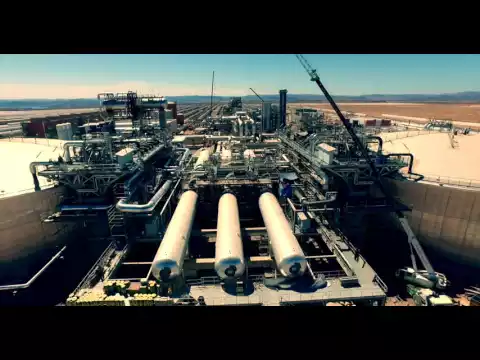

A Cutting-Edge Promise in Renewable Energy Generation
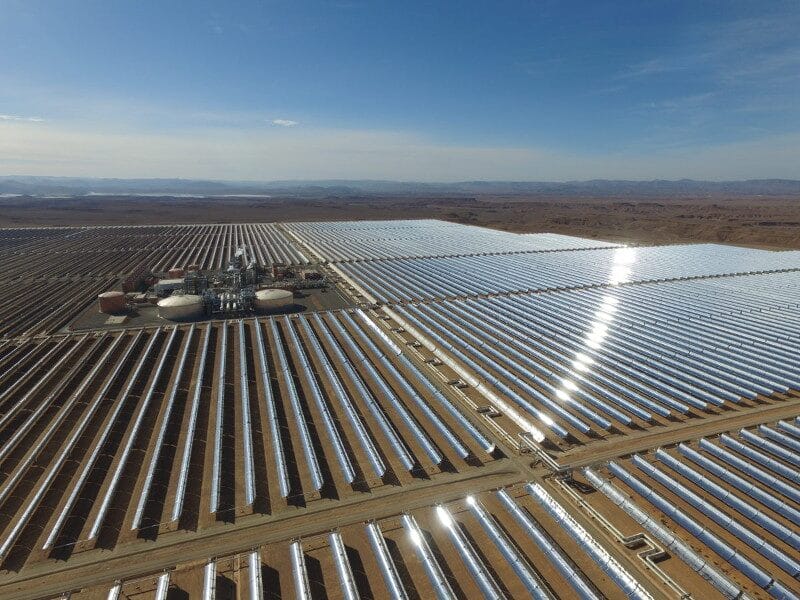
It is in this context that the largest solar project planned in Morocco emerged, a cutting-edge promise in renewable energy generation. The Noor Midelt I plant, with an estimated capacity of 800 MW and a projected investment of 2 billion dollars, stood out as a beacon of hope in a landscape thirsty for sustainable solutions. However, what seemed like a triumphant journey stalled in the face of a crucial impasse: the choice of technology to be employed.
-
The Brazilian state accelerates industrial competitiveness with a focus on the extraction of strategic minerals to boost the energy transition in Goiás.

-
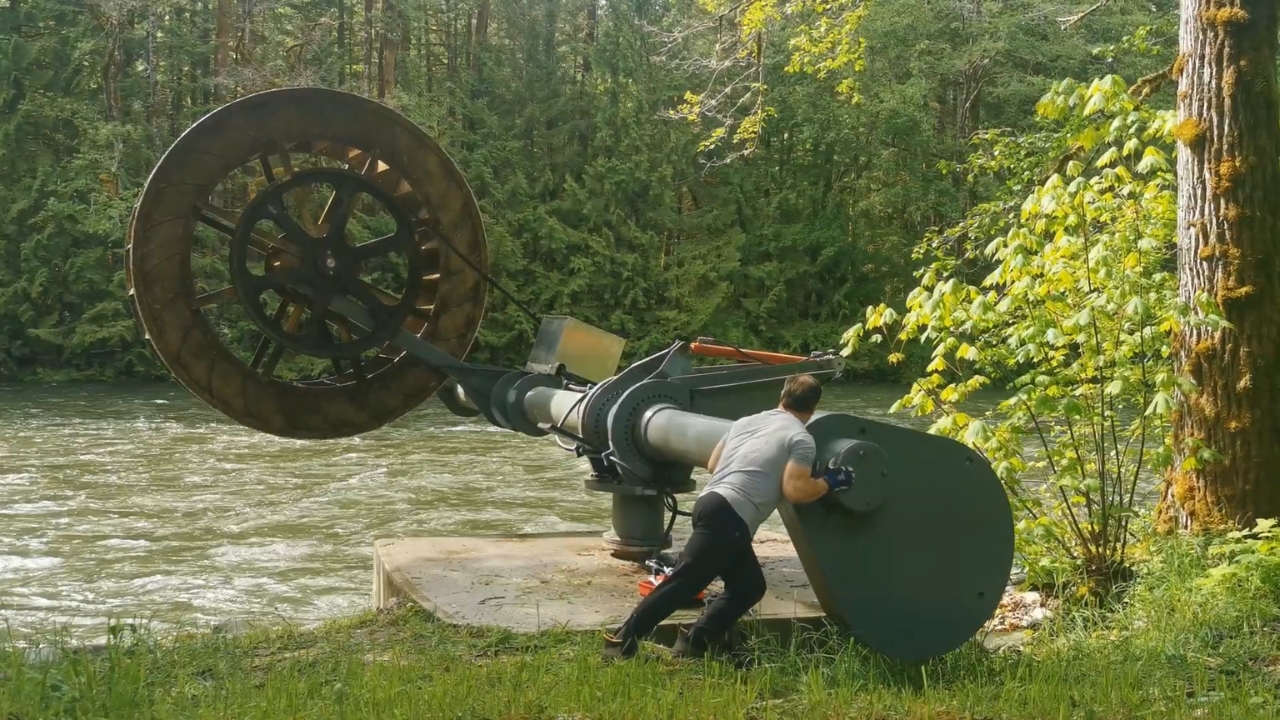
A Canadian retiree creates a hydroelectric system on a real river, generating energy continuously throughout the day and demonstrating how the power of water can supply a house with stability even in a simple structure.
-
Petrobras reaffirms its commitment to the market and ensures that it will carry out the energy transition safely to maintain national sovereignty.

-
Researchers discover a possible hydrogen deposit of up to 46 million tons beneath an ancient coal basin, and the volume could exceed half of the entire global production.


The heart of the controversy lay in the dispute between two diverging technologies: CSP (Concentrated Solar Power) and PV (Photovoltaic). While the former offered the advantage of prolonged energy storage, even after sunset, its higher cost made it a less viable option financially. On the other hand, the PV technology, more accessible in monetary terms, lacked the ability to maintain energy generation after dusk, limiting its effectiveness in high-energy-demand environments.
The Behind-the-Scenes of a Dispute Destined for Impasse
The clash between advocates of different technologies reverberated in the corridors of Moroccan power, where the Ministry of Energy and the network operator ONEE took a strong stance in favor of the photovoltaic approach. Given this scenario, MASEN, the state energy agency responsible for the project, found itself compelled to reevaluate its strategy, abandoning CSP in favor of PV technology or alternatives based on storage batteries.
Despite the challenges and differences, the main actors involved in Morocco’s renewable project demonstrate an unwavering commitment to its realization. EDF Renouvelables, the leader of the consortium responsible for the endeavor, reaffirms the country’s determination to move forward, betting on a combination of photovoltaic energy, thermosolar, and battery storage to make the project feasible.
The Role of International Financing in the Balance of Progress
In a scenario marked by uncertainties and turmoil, the financial support from institutions such as the World Bank and the European Investment Bank emerges as a fundamental pillar for the project’s continuity. As negotiations unfold behind the scenes, the backing of these entities ensures the stability needed for the advancement of the works, even in the face of the obstacles encountered.
Lessons Learned: Failure as a Springboard to Success
As the protagonists of this renewable saga wage their battles in the political, economic, and technological fields, it is inevitable to question the stumbles of the past in search of lessons for the future. The case of Noor Ouarzazate, an emblematic solar complex in Morocco, serves as a poignant reminder of the inherent risks of innovation. However, it is also a testament to the transformative potential of renewable energies when paired with a pragmatic and resilient vision.
Although the horizon of Morocco’s renewable project may have been overshadowed by tempestuous clouds, there are reasons for optimism and perseverance. In a world thirsty for sustainable solutions, each overcome obstacle is an opportunity to strengthen the foundations of a greener and more resilient future. As the winds of change blow over the sands of the desert, what appeared to be a momentary failure may ultimately reveal itself as a crucial chapter in the journey towards renewable energy.
Information prepared based on official communications and statements from MASEN (Moroccan Agency for Sustainable Energy), the Ministry of Energy of Morocco, ONEE (National Office of Electricity and Drinking Water), and EDF Renouvelables, as well as reports from international financial institutions such as the World Bank and the European Investment Bank. The content of the audiovisual material cited in the article was also taken into consideration.









Man, vocês têm que parar de usar IA para escreverem artigos. Vocês leram esse por exemplo?? Que piada de mau gosto… Chama o leitor, dizendo que fracassou um projeto de 2 bilhões de euros, porém só diz sobre a escolha entre 2 tipos de sistema, um mais barato e menos eficiente (o escolhido) e um mais caro. Ter escolhido o sistema menos eficiente, não significa exatamente, “fracasso”.
Pô, me ajuda aí: já não basta o site parecer um canivete suíço aberto de tanta propaganda que possui, ainda há de se encontrar matérias deste tipo!?
Nossa que texto ruim, redundante e sem sentido.
Estou falando do artigo