





 Portuguese
  English
  Spanish
  6 min of reading
  0 comments


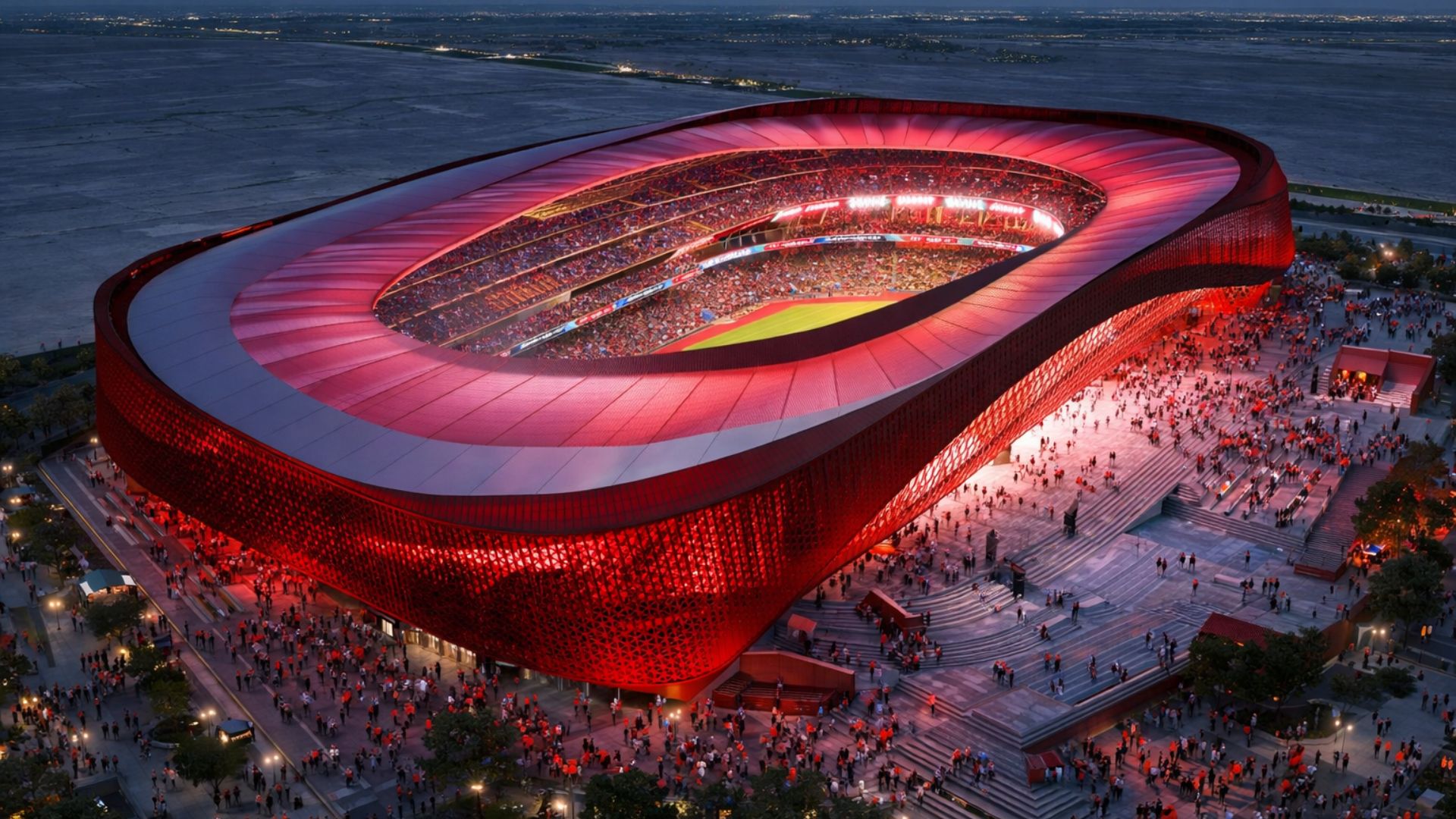
Sports Megaprojects Advance in Different Countries with Extreme Engineering, Billion-Dollar Costs, and Promises of Urban Reconfiguration, as Indebted Clubs and Governments Bet That New Stadiums Can Boost Economy, Tourism, and Revitalize Entire Neighborhoods, Even Amid High Financial Risks and Uncertain Outcomes.
A set of stadium megaprojects in various parts of the world has once again drawn attention for three central reasons: the massive scale, the costs that pressure clubs and governments, and the promise to redesign entire neighborhoods around the arenas.
In common, these projects try to justify themselves not only through football or entertainment, but through urban regeneration plans, tourism, and new commercial zones — a package that, when it fails, typically leaves behind debts that are difficult to manage.
In the most ambitious cases, engineering becomes a marketing argument.
-
Friends have been building a small “town” for 30 years to grow old together, with compact houses, a common area, nature surrounding it, and a collective life project designed for friendship, coexistence, and simplicity.

-
This small town in Germany created its own currency 24 years ago, today it circulates millions per year, is accepted in over 300 stores, and the German government allowed all of this to happen under one condition.

-
Curitiba is shrinking and is expected to lose 97,000 residents by 2050, while inland cities in Paraná such as Sarandi, Araucária, and Toledo are experiencing accelerated growth that is changing the entire state’s map.

-
Tourists were poisoned on Everest in a million-dollar fraud scheme involving helicopters that diverted over $19 million and shocked international authorities.


Instead of building taller structures, some proposals turn to underground solutions to bypass flight restrictions.
In others, the bet is to build “mini cities” integrated with the stadiums, with areas for consumption and services to operate every day, not just on game days.
At the same time, financial risk appears as the other side of the spectacle.
Already indebted clubs announce expensive stadiums as symbols of recovery, while local authorities are pressured to support projects that promise jobs, housing, and future revenues — projections that do not always materialize.
Al-Ahly Stadium Bets on Underground Solution to Bypass Air Restrictions
Al-Ahly, one of the most successful clubs in African football, is trying to close a historical gap: to have its own stadium associated with its identity and sporting size.
For decades, according to the club itself and promotional materials for the project, the team has switched venues and shared facilities, despite having a large fan base and a constant presence in regional competitions.
The solution presented for the future arena in the Sheikh Zayed region, in the Cairo area, arises from a concrete limitation.
The location is under a flight path related to Sphinx International Airport, imposing strict height limits.
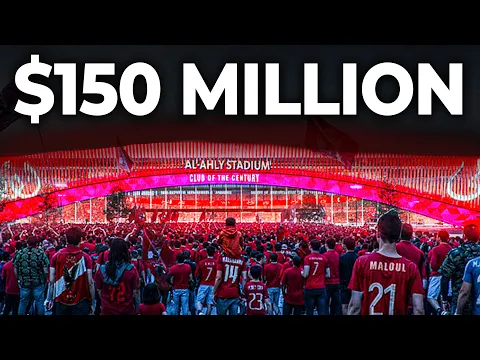

The chosen path was to invert the logic of a traditional construction.
Instead of growing upwards, the project plans to lower part of the structure, with the field at a lower level, reducing the volume above ground.
The released design includes a structural arch that supports the roof by cables and gives the stadium a silhouette easily recognizable from a distance.
Also appearing in the promotional materials are facades with large panels capable of operating as screens, in addition to a large external square designed to host the public before and after games, with areas for social interaction, commerce, and spaces linked to the club’s history.
However, there is divergence in the reported capacity according to the source consulted.
Communications and technical texts describe the stadium as an arena with around 42,000 seats, while promotional versions mention 50,000.
The cost cited in specialized reports is around US$ 180 million, with a timeline indicating completion by the end of this decade.
The public presentation of the design took place in February 2025, at an event held at the Temple of Hatshepsut in Luxor, associated with the project’s institutional disclosure.
From then on, the club began to treat the project as a long-term landmark, with a strong symbolic component for fans who have been waiting for years for a definitive “home.”
New Trafford Expands Manchester United’s Bet with 100,000-Seat Arena
In England, Manchester United has put on the table a project that involves memory and money.
Old Trafford is one of the most recognized stadiums in world football, but the perception of degradation has become a recurring theme among fans and in the British press, driven by reports of leaks and structural problems, as well as the debate over modernization.
In March 2025, the club announced the intention to proceed with a new 100,000-seat stadium as the center of a broader plan for the redevelopment of the Old Trafford area.
The design is attributed to the firm Foster + Partners.
The project describes a wide roof in a shape reminiscent of a tent or umbrella, and the presence of three masts, with a central element cited as a standout structure visible from afar.
The United’s strategy seeks to justify the size and cost through the logic of “sports district.”
The surroundings are presented as a space with commerce, entertainment, and infrastructure to attract people beyond game days.
The public promise includes economic and urban impact, with numbers provided by the club and echoed in sector publications.
Among them are estimates of job creation, increased visitors, and new housing construction, in a regeneration process that would depend on coordination with public authorities and investors.

The scale of the investment, however, clashes with the financial reality of Manchester United itself.
The original text mentions a debt of around US$ 1.4 billion, and the discussion about indebtedness and financing capacity appears as a sensitive point for the project.
Leaders maintain that “they will find a way to finance it.”
So far, however, the club has not presented a closed and public model detailing funding sources, timelines, and guarantees.
In projects of this type, the fear among some fans often is the passing of costs onto the end consumer, with ticket and season program prices becoming more expensive.
The issue emerges in public debate because the stadium redefines the relationship between club, territory, and fans, with possible gains and new economic filters for access.
Chinese Sports Complex Impresses with Construction Speed
In China, the Greater Bay Area Sports Centre in Guangzhou has become an example of construction speed and architectural ambition.
The complex, designed by Zaha Hadid Architects in partnership with a local institute, is located in the Nansha district on the west bank of the Pearl River Delta.
The set includes a main stadium, an indoor arena, and an aquatic center.
Construction began in late August 2023.
Records from the architecture firm itself and specialized databases indicate that the structure reached important milestones between 2024 and 2025.
Operational phases and inaugural events occurred throughout 2025.

The complex includes a stadium with a reported capacity of 60,000 seats, along with a 20,000-seat arena and a 4,000-seat aquatic facility.
Here, the check changes a relevant point from the original script.
Although the narrative mentions “10 billion dollars”, published values suggest an investment of over 8 billion yuan, which keeps the project at a billion-dollar level, but far from US$ 10 billion.
The difference matters because inflated costs fuel distorted interpretations regarding the fiscal weight and expected return of these facilities.
The Guangzhou case also shows a recurring pattern.
Arenas of this size are presented as multifunctional infrastructure, capable of hosting sports, shows, and large events, in an attempt to dilute the risk of the stadium becoming a white elephant.
Still, true financial sustainability depends on a consistent calendar, integration with transportation, commerce, and long-term urban policies.
In the end, what binds these stories is the same bet.
To use the stadium as a motor for urban transformation, and not just as a game venue.
When the concrete starts to rise, the question is not only whether the construction will be completed on time.
The central point becomes whether the city around it will truly come to life alongside it.
If these arenas promise to redefine neighborhoods and local economies, who will pay the bill when the project’s math doesn’t add up — the club, the public authorities, or the fans?









-

-

3 pessoas reagiram a isso.