





 Portuguese
  English
  Spanish
  4 min of reading
  11 comments





Extrajudicial Rural Usucaption Allows for the Regularization of Land Directly at the Registry Office. Understand the Law, Provision 65, and How Possessors Can Obtain Ownership.
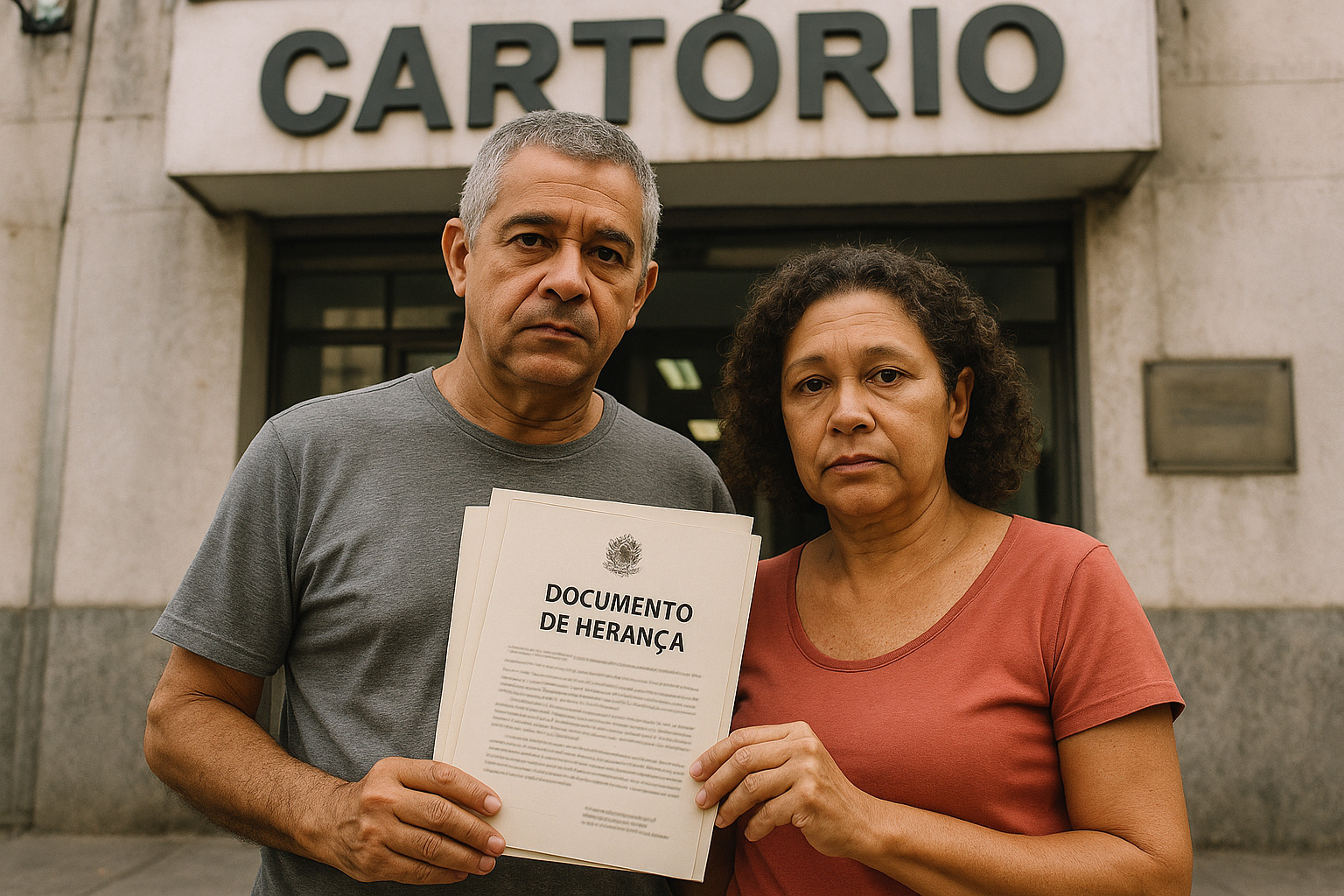
There are rights in the countryside that are so little known they seem like legal fiction. One of them is hidden within one of the largest landmarks in the country: Law No. 13,465/2017, which profoundly altered the Public Records Law (Law No. 6,015/73) and paved the way for rural possessors—many of whom have decades of peaceful occupation—to regularize the land directly at the registry office, without the need to open a judicial process that usually takes years.
This “legal shortcut,” which is 100% real and already regulated, took definitive shape with the Provision No. 65/2017 from the National Justice Council (CNJ), which brought the rules for extrajudicial rural usucaption. And despite the fact that the regulation is seven years old, it is still surprising how many farmers do not even know they can use this avenue.
The prerogative exists, is valid throughout the national territory, and has already been confirmed by numerous state Corregedorias.
-
The noise law will no longer be in effect at 10 PM starting in June with a new rule valid during the 2026 World Cup.

-
The Chamber opens a debate on driver’s licenses at 16 years old as part of a reform that includes around 270 proposals to change the Brazilian Traffic Code and may redesign rules for licensing, enforcement, and circulation in the country.

-
The new Civil Code could revolutionize marriages in Brazil with “express divorce” and changes that could exclude spouses from inheritance.
-
Banco do Brasil sues famous influencer for million-dollar debt and intensifies debate on delinquency, risks of seizure, and direct impact on Gkay’s credibility.


Extrajudicial Rural Usucaption: What Really Changed in Practice
Until 2017, anyone who wanted to usucap a piece of land needed to go to court, hire a lawyer, face expert examinations, subpoenas, judge’s dispatches, hearings, and, in most cases, a process that dragged on for five, ten, or even fifteen years.
With Law 13,465 and Provision 65, the rule changed: usucaption can now be done directly at the Real Estate Registry Office, with an administrative procedure, without a judge, without a hearing, and without a judicial process—as long as the case meets constitutional requirements.
For the special rural usucaption (art. 191 of the Federal Constitution), the minimum requirements are:
- peaceful and quiet possession for at least 5 years;
- an area of up to 50 hectares;
- productive use of the land, aimed at the sustenance of the family;
- absence of another urban or rural property.
All these elements are analyzed directly by the registry office.
The central figure of the process is the notary/registrar, who coordinates notifications, document analysis, plans, descriptive memorials, and statements from neighbors.
The Power of Provision 65/2017: The Registry Office Becomes a Regularizing Agency
Provision 65 is the instrument that brought extrajudicial usucaption to life. It stipulates:
- how the plan and descriptive memorial should be made;
- how the registry office must notify the neighbors;
- how possession is proven (photos, receipts, contracts, invoices);
- how the municipality’s, INCRA’s, and environmental agencies’ responses function;
- what the response time for each stage is;
- when the regularization can be completed.
Today, cities across the country, especially in Minas Gerais, Goiás, Bahia, Mato Grosso, and Paraná—already have hundreds of regularizations completed only through the registry office, without judicial intervention.
For family farmers who had no alternative, this procedure has literally become the shortest path between possession and the deed.
Why Is This Right Still So Unknown?
Despite being one of the biggest land advancements of recent decades, extrajudicial rural usucaption is still ignored because:
- many producers believe that only judicial usucaption exists;
- small registry offices still do not know how to provide proper guidance;
- municipalities do little to promote the mechanism;
- rural associations focus more on credit than on regularization.
Result: a constitutional right remains invisible, even though it is a gateway to rural credit, federal programs, real guarantees, family succession, financing, and property formalization.
The Practical Difference: When Extrajudicial Usucaption is Faster Than the Judicial Route
In court, a rural usucaption action typically involves:
- topographic expertise;
- manifestation of the Public Prosecutor’s Office;
- subpoenas by notice;
- appeals;
- sentencing;
- final judgment;
- final registration.
In the registry office, the logic changes: if there is no challenge, the regularization can be completed in 90 to 180 days, depending on the region. If there is a dispute with neighbors, the process may move to court, but only in those specific cases.
In other words, when everything is in order, the registry office completely replaces the judge.
Real Cases: Producers Who Regularized Their Land Thanks to Provision 65
Several states already have documented cases:
Minas Gerais
The Corregedoria released administrative decisions recognizing extrajudicial usucaption of small rural areas with family possession exceeding five years.
Paraná
Registry offices in the countryside regularized plots under 50 hectares in family farming situations.
Bahia and Goiás
There are records of possessors with more than 20 years of proven use who finally obtained a title through administrative means.
These cases show that the regulation works in real life, and not just on paper.
The Direct Social Impact: When the Title Changes Everything for Rural Families
For those living in the countryside, the deed is a game changer. With extrajudicial usucaption, families who have never had access to justice:
- can access rural credit through Pronaf;
- can participate in federal programs;
- gain access to technical assistance;
- can transfer the land to their children without legal insecurity;
- avoid inheritance disputes.
With the title in hand, the land ceases to be just a place of residence and becomes a full legal guarantee, recognized by the State.









Um processo de usucapião que já está andamento será da fazer no cartório alguém sabe me dizer
Bom dia! Sim, pede a dexistência do processo judicial, pagando eventuais custas e, ingressa com o pedido extra judicial no cartório.
O que muda é que o “processo” é endereçado ao oficial de registro e não ao juiz, não tem intervenção do Ministério Público, é mais rápido. Esquecerem de dizer que ainda precisa do advogado.
Será que é verdade?