





 Portuguese
  English
  Spanish
  6 min of reading
  0 comments


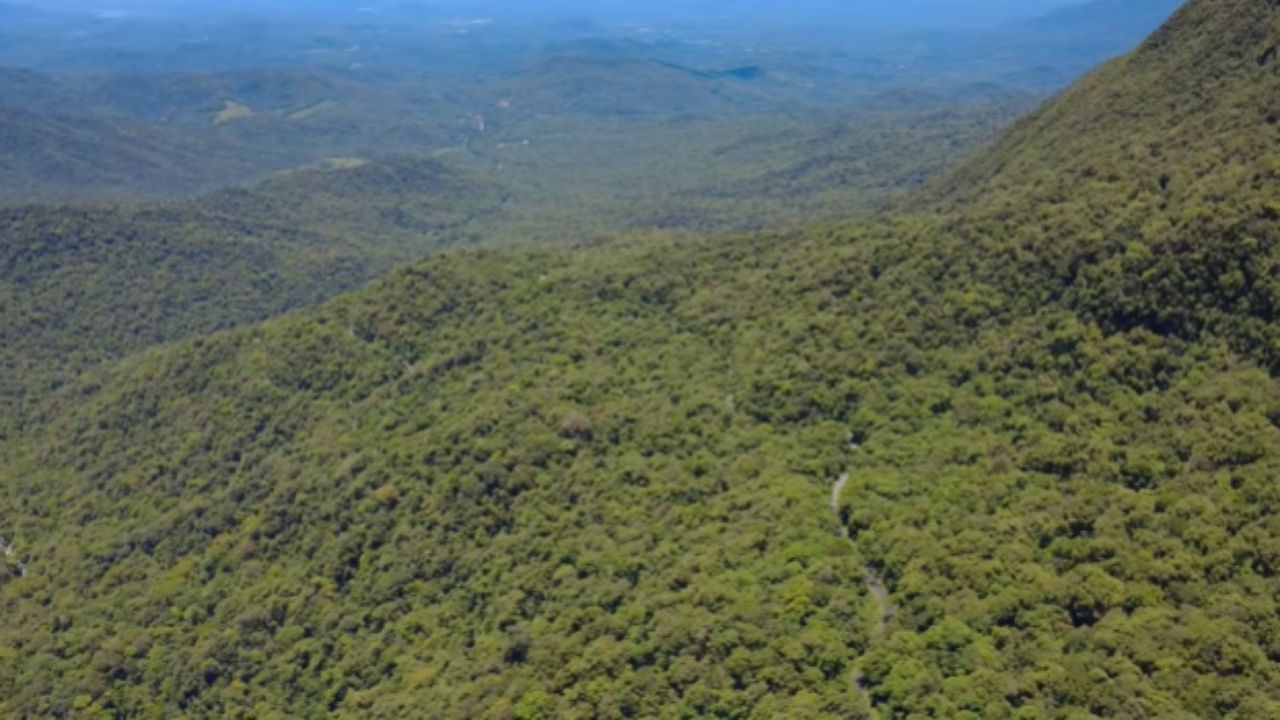
Between Dense Atlantic Forest, Cobblestone Curves, Exciting Lookouts, and Silent Colonial Towns, the Most Exuberant Crossing of Paraná Holds Landscapes, Stories, and a Peace Hard to Find Anywhere Else in Brazil.
Crossing the Serra do Mar via the Graciosa Road towards Morretes and Antonina is more than just a simple journey: it’s an immersion into preserved nature, historical architecture, crystal-clear rivers, and a countryside atmosphere that slows down even the fastest mind. At each stop, the feeling is the same: this is not just travel; it’s memory being built curve by curve.
Arrival at Graciosa Road: Start of the Most Exuberant Crossing of Paraná
The most exuberant crossing of Paraná begins in Quatro Barras, in the Curitiba region, where the old Graciosa Road welcomes with pure history. Right at the beginning, a landmark reminds us of Dom Pedro I’s passage through here, clearly indicating that this road was an important route centuries ago.
Just driving a few kilometers helps to understand why this road is so special. The pines lined along the roadside, the cold mountain climate, and the deep silence create an atmosphere that recalls the countryside of Europe. In some sections, it feels like time has stopped: small old shops, rustic bars, wooden houses, and an almost absolute tranquility.
-
Friends have been building a small “town” for 30 years to grow old together, with compact houses, a common area, nature surrounding it, and a collective life project designed for friendship, coexistence, and simplicity.

-
This small town in Germany created its own currency 24 years ago, today it circulates millions per year, is accepted in over 300 stores, and the German government allowed all of this to happen under one condition.

-
Curitiba is shrinking and is expected to lose 97,000 residents by 2050, while inland cities in Paraná such as Sarandi, Araucária, and Toledo are experiencing accelerated growth that is changing the entire state’s map.

-
Tourists were poisoned on Everest in a million-dollar fraud scheme involving helicopters that diverted over $19 million and shocked international authorities.


As the car moves forward, the Graciosa Road reveals one of the most beautiful details of the most exuberant crossing of Paraná. The edges are taken over by wildflowers, yellow and purple, naturally sprouting at the edge of the asphalt. It’s the kind of scene that makes anyone stop the car just to observe calmly and breathe the humid air of the forest.
Original Stretch of Stone and Dense Atlantic Forest
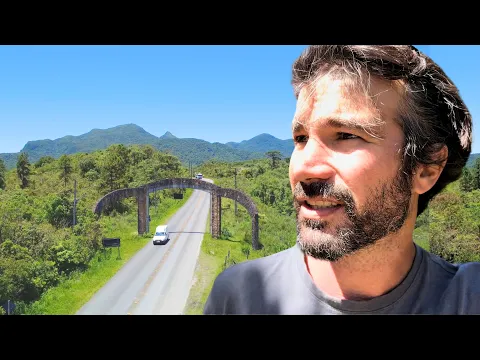

At one point along the way, a sign indicates the original stretch of Graciosa Road. Curiosity speaks louder, and the detour reveals an even more rustic piece of the most exuberant crossing of Paraná. The surface turns entirely to stone, the car moves slowly, and it feels like driving exactly the same path that was used centuries ago.
There, the Atlantic forest is very dense, thick, and impressively preserved. At times, it seems that no one has passed through there in years. Gigantic trees, plants with enormous leaves, and constant humidity create a scene that mixes respect, charm, and a bit of apprehension.
It is in this part that the Graciosa Road shows all its wild side. There is nothing but the road and the green; just look up to see the mountains embracing the path completely. At the end, a simple house lost in the forest reminds us that there are still people who chose to live right in the heart of this paradise.
Lookouts, Rapids, and Rivers in the Most Exuberant Crossing of Paraná
The most exuberant crossing of Paraná is not limited to the main route. In one section, a dirt road leads to what’s called the Tiger Waterfall, which practically reveals itself as a beautiful rapid, surrounded by stones and native vegetation. It’s not a giant fall, but the feeling of being in a nearly isolated spot in the mountains makes any detour worth it.
Back on the road, one of the highlights is the lookout with a view of Paranaguá Bay. From above, the landscape opens up and reveals the perfect meeting of sea, mountains, and sky, providing a broad view that helps to understand the grandeur of this region of Paraná.
Ahead, a metal bridge crosses a clear water river, forming rapids that can be observed both from above and from the stones below. The open floor of the bridge creates a slight vertigo but also adds an extra dose of excitement to the most exuberant crossing of Paraná.
Porto de Cima and the Colonial Charm of Morretes

Before reaching the main destination, the road passes through Porto de Cima, a small locality with a historic church, green square, and inns with old facades. It’s the kind of place that makes you slow down without even realizing it, just to look at every detail better.
Just a few kilometers later, Morretes appears, a historic town on the banks of a river that crosses the center. The ideal plan is to park the car and explore on foot. The pedestrian-only street, the preserved mansions, the small shops, and the restaurants by the water create a perfect setting for a leisurely walk.
While the mountains may be cold in the morning, in Morretes, the weather changes quickly. The heat increases, the sun is intense, and the contrast with the cool breeze from the mountains makes the experience even more remarkable. Mountains surround the town on all sides, reinforcing the feeling of being in a protected valley.
In the squares, ancient trees provide shade and hold stories. One of them catches attention by extending its branches over the pedestrian passage, as if it had decided on its own to grow towards the river. At the stalls, local sweets, typical cachaças, milk candy, banana candy, and straw crafts complete the atmosphere of a small tourist town that still feels authentic.
Morretes is also on the route of the famous Graciosa Train, which descends the mountains along the tracks in a ride that has become classic. Even if you choose to travel by road, it’s impossible not to consider this alternative and imagine how it must be to see the most exuberant crossing of Paraná from the carriages of a historic train.
Antonina: Train Station, Silence, and Bay View
From Morretes, the journey continues towards Antonina, another essential name in the most exuberant crossing of Paraná. Right upon arrival, the old train station dominates the scene, with its traditional architecture and a steam train that still operates on specific days, going to Morretes and back.
Next to it, a car adapted to run on the tracks shows how the region’s railway past remains alive. Moving up through the town, ancient churches mark the top of the highest areas, such as the Church of Bom Jesus and the Church of Nossa Senhora do Pilar, which offer a privileged view of Paranaguá Bay.
In Coronel Macedo Square, time seems to move even slower. The silence is broken only by the wind and the song of the birds, while enormous trees cast shadows over old benches and historic buildings. It’s the kind of place that makes you want to simply sit and watch life go by.
Walking a bit further brings you to Antonina’s waterfront, with a well-kept boardwalk, a park by the water, and the municipal pier extending over the sea or river that connects to the bay. The strong wind, open view, and simplicity of the setting turn even a simple sugarcane juice into a special travel moment.
Old mansions, including an inn that is now abandoned, remind us that Antonina once experienced busier times. Today, the town displays a rare peace, almost empty streets, and a sense of refuge that fits perfectly with the spirit of the most exuberant crossing of Paraná.
Why This Is the Most Exuberant Crossing of Paraná
At the end of the journey along Graciosa Road, Morretes, and Antonina, it’s easy to understand why so many travelers consider this route to be the most exuberant crossing of Paraná. Few itineraries manage to combine, in such a small space, preserved Atlantic forest, historic road, impressive lookouts, crystal-clear rivers, old train stations, and silent colonial towns.
It’s not just a beautiful journey. It’s a route that blends raw nature, Brazil’s history, local culture, and a tranquility that contrasts completely with the routine of major capitals. Those who travel this path return home with incredible photos, of course, but mainly with the feeling that they’ve found a piece of Brazil that still resists the test of time.
If you’re looking for an itinerary that delivers scenic roads, surprising stops, a mountain atmosphere, and towns full of personality, this is where you’ll find it all in one trip. The most exuberant crossing of Paraná is not just a destination: it’s an experience that stays in memory.
And you, have you experienced the most exuberant crossing of Paraná or would you spend a few days living the tranquil atmosphere of Morretes and Antonina?









-

-

3 pessoas reagiram a isso.