





 Portuguese
  English
  Spanish
  5 min of reading
  7 comments


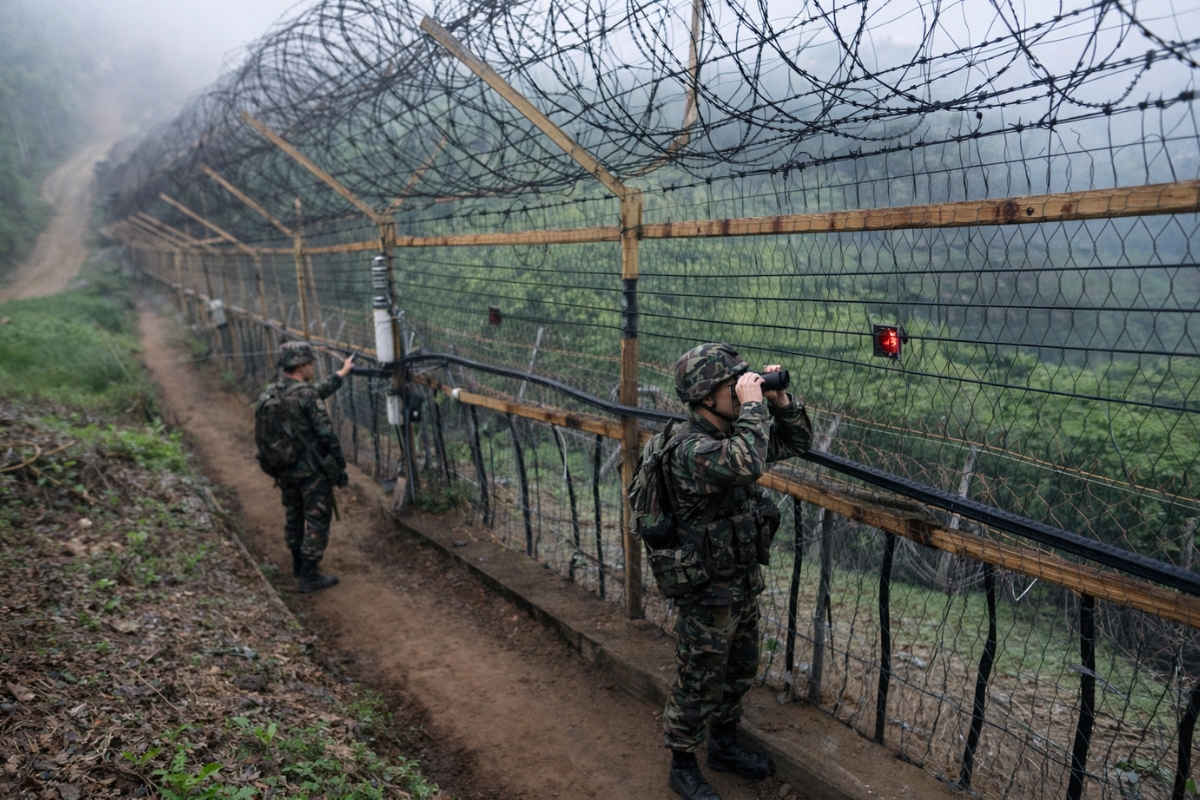


From The Ocean Floor To Windowless Buildings, Submarine Cables, Landing Stations, Data Centers, And Power Centers Operate Under Continuous Surveillance To Protect Data, Access Routes, And Critical Infrastructure In Real Time
At first glance, the idea seems exaggerated. But just paying attention reveals that there is more than one monitored place on Earth operating without pause. In some places, sensors and cameras silently do the work. In others, surveillance happens eye to eye, with constant human presence. And it’s exactly this that sparks the curiosity of those trying to understand how it all works.
What draws attention is not just the technology. It’s the scale of surveillance. Cables on the ocean floor, windowless buildings full of servers, isolated bases, tense borders, and political structures surrounded by security form an integrated network. Everything is connected by systems that monitor access, data, and movements in real time.
For specialists in critical infrastructure, this model is not an exaggeration.
“The protection of physical and digital networks is essential for global stability,” points out the International Telecommunications Agency in reports on communication security. When each step is observed closely, it becomes clear that surveillance here is not theory: it is operational routine.
-
Friends have been building a small “town” for 30 years to grow old together, with compact houses, a common area, nature surrounding it, and a collective life project designed for friendship, coexistence, and simplicity.

-
This small town in Germany created its own currency 24 years ago, today it circulates millions per year, is accepted in over 300 stores, and the German government allowed all of this to happen under one condition.

-
Curitiba is shrinking and is expected to lose 97,000 residents by 2050, while inland cities in Paraná such as Sarandi, Araucária, and Toledo are experiencing accelerated growth that is changing the entire state’s map.

-
Tourists were poisoned on Everest in a million-dollar fraud scheme involving helicopters that diverted over $19 million and shocked international authorities.


The Monitored Place That Starts At The Ocean Floor And Almost Nobody Sees
Few people imagine, but one of the most monitored points on Earth is far from urban cameras or armed soldiers. It starts at the bottom of the sea. Submarine cables traverse the ocean floor, continuously transporting data between continents, as occurs along the North Atlantic cable routes between the United States and Europe.
These thin lines, protected by structural layers, reach the continent through ducts and technical connections. At the landing points, there are fences, gates, and constant monitoring, as seen in the coastal areas of Bude, Cornwall, in the UK. Access is restricted and highly controlled.
The reason is simple: any damage to these cables can disrupt global communications, financial transactions, and digital transmissions. Therefore, inspection vessels and maritime monitoring systems circulate in these areas.
A curious detail is that many of these facilities are discreet, with closed constructions and almost no external identification.

Cable Stations Operate Like Monitored Areas With Eye-To-Eye Control
When the cables arrive on land, they enter compartmentalized technical structures. Reinforced gates, sensors, and surveillance are part of the first level of protection, as occurs at coastal facilities in the Sopelana region, Basque Country, Spain.
Inside these stations, distribution racks, connection panels, and technical corridors organize bundles of cables that lead to land networks. Technicians handle delicate connections, where any error can have wide-reaching impacts.
The practical consequence is the stability of global transmission. A physical failure at these points can cause slowdowns or interruptions in different countries simultaneously.
Data Centers Form Another Monitored Place That Supports The Digital World
If the cables transport data, the data centers store everything. These windowless buildings concentrate servers, structured cabling, and large-scale electrical systems, as seen in Ashburn, Virginia (USA), one of the largest concentrations of data centers in the world.
Inside, long corridors reveal metal racks, constant artificial lighting, and technical ventilation. Access depends on biometrics, cards, and automated doors.
It is there that data is processed, stored, and redistributed. Digital services, institutional systems, and corporate networks directly depend on these structures.
Physical Security Transforms Data Centers Into Monitored Areas 24/7
Outside, the scene changes. Tall fences, guardhouses, metal gates, and cameras delineate the perimeter, as seen in the data center complexes of Loudoun County, Virginia (USA).
Security teams conduct constant patrols, and access is limited to authorized personnel with mandatory identification. This physical barrier reduces the risk of invasion or sabotage, while human monitoring complements electronic systems.

Isolated Bases Form A Monitored Place Where Approaching Is Limited
In remote areas, military facilities operate under secrecy. Restricted roads, warning signs, and constant patrolling surround these areas, as occurs at Area 51, in Nevada (USA).
Observation towers, sensors, and cameras track any movement. The geographical isolation facilitates control of airspace and ground, protecting classified tests and operations.
Borders Where Surveillance Happens Literally Eye To Eye
Among all scenarios, this may be the most tense. In militarized zones, soldiers remain positioned, directly observing the opposite side.
The most emblematic example is the Demilitarized Zone (DMZ) between North and South Korea, especially at the Joint Security Area (Panmunjom). Here, surveillance is direct and human: an unexpected gesture can provoke an immediate response.
Power Centers Also Make The List Of Most Monitored Places
Government complexes operate under reinforced security. Barriers, monumental gates, and armed surveillance surround these spaces, as seen at the White House, in Washington, D.C.
Cameras monitor entrances, plazas, and administrative buildings. The goal is to prevent invasions and protect sensitive institutional structures.
Satellites Expand Earth Surveillance Beyond The Ground
Above all this, there is orbital observation. Parabolic antennas and ground stations connect systems to equipment in orbit, as occurs in operations linked to Schriever Space Force Base, in Colorado (USA).
These devices monitor communications, movements, and territorial changes, expanding surveillance to a planetary scale.
The sum of all these systems shows that there is not just one monitored place on Earth, but an entire network operating in an integrated manner. Cables, servers, fences, military bases, borders, and satellites work together to keep data, territories, and structures under continuous control.
In the end, what stands out is not just the technology but the human presence added to it. In some places, surveillance still happens eye to eye, reminding us that behind every automated system, there is still someone observing.
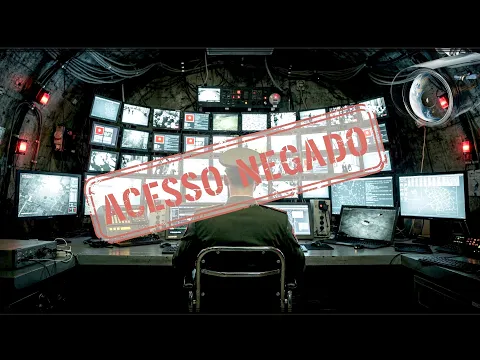










Até os vigilantes têm sua vida vigiada, ninguém pode escapar, todos são suspeitos. E aqui no Brasil também existe data centers
Ah esqueci ! Faltou mostrar os data centers aqui do Brasil, eles existem.
Não se pode esquecer que a vida de todos os vigilantes também é vigiada, todos são suspeitos e ninguém pode confiar em ninguém.