





 Portuguese
  English
  Spanish
  4 min of reading
  2 comments


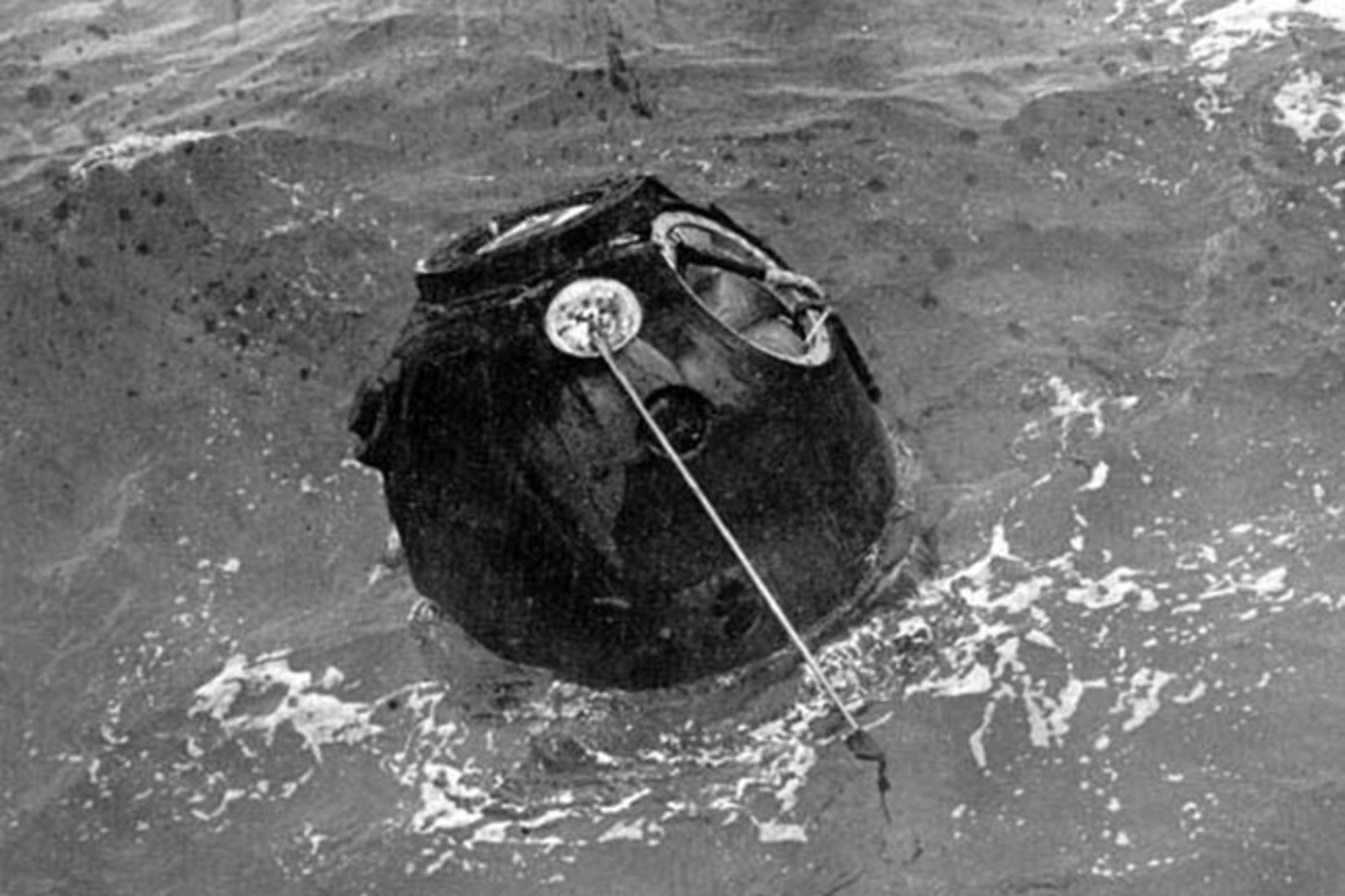


Zond 5 Mission in 1968 Takes Two Testudo Horsfieldii Turtles 1,950 Kilometers from the Moon, Orbits the Natural Satellite, and Returns to Earth After Landing in the Indian Ocean
On the night of September 14 to 15, 1968, the Zond 5 mission launched from Baikonur towards the Moon with two turtles aboard, orbited the satellite at about 1,950 kilometers, and returned to Earth on September 21, after landing in the Indian Ocean.
Tension in the Control Center During the Zond 5 Mission
After applause, whistles, and the clinking of vodka bottles, silence took over the control center in Eupatoria.
Engineers closely monitored the screens while Vasili Mishin, chief designer from Baikonur, supervised each step of the Zond 5.
-
Motorola launched the Signature with a gold seal from DxOMark, tying with the iPhone 17 Pro in camera performance, Snapdragon 8 Gen 5 that surpassed 3 million in benchmarks, and a zoom that impresses even at night.

-
Satellites reveal beneath the Sahara a giant river buried for thousands of kilometers: study shows that the largest hot desert on the planet was once traversed by a river system comparable to the largest on Earth.

-
Scientists have captured something never seen in space: newly born stars are creating gigantic rings of light a thousand times larger than the distance between the Earth and the Sun, and this changes everything we knew about stellar birth.

-
Geologists find traces of a continent that disappeared 155 million years ago after separating from Australia and reveal that it did not sink, but broke into fragments scattered across Southeast Asia.

The Soyuz spacecraft, successfully launched by a Proton rocket from the Baikonur Cosmodrome in Kazakhstan, encountered problems shortly after takeoff.
The situation required quick responses amid the space race between the Soviet Union and the United States.
Mishin kept his gaze fixed on the panel lights. Under the watchful eye of colleagues and authorities in Moscow, he provided precise instructions.
The 7K-L1 spacecraft managed to overcome the first incident, relieving the control center and allowing celebrations to resume.

The Circumlunar Journey and Technical Challenges
Hundreds of meters above, the 7K-L1 was heading towards the Moon. The Zond 5‘s journey would go down in history as the first to orbit the natural satellite and return to Earth, despite facing various setbacks along the way.
During the trip, part of the mechanism was contaminated and became unusable. Upon returning, another problem prevented the operation from occurring as planned.
The sensor for locating Earth was poorly installed, and the optics of the star sensors were blocked by thermal insulation.
The descent was marked by severe oscillation. The external shield of the spacecraft, weighing about 5,400 kilograms, reached high temperatures during reentry.
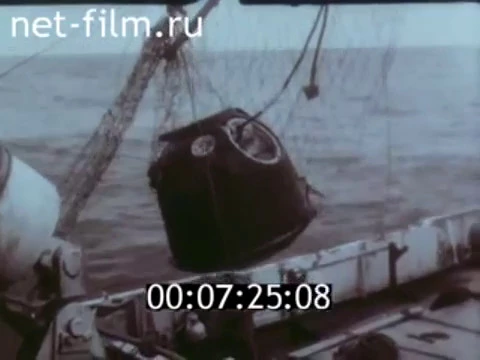
The capsule landed in the Indian Ocean on September 21, around seven in the evening.
Large parachutes cushioned the fall, while flares indicated its location near the ship Borovichy.
The next morning, the capsule was retrieved from the water and transferred to the cargo ship Viasili Golovin, heading to Bombay and then to the USSR on an Antonov aircraft.
The Peculiar Crew of the Zond 5
The highlight of the Zond 5 was its biological payload. To assess potential effects of a circumlunar journey, the Soviets sent five fruit flies, worms, plants, seeds, bacteria, and two Testudo horsfieldii turtles.
There was also a mannequin measuring 1.75 meters and weighing 70 kilograms, equipped with sensors to measure radiation levels.
The composition resembled a space Ark, with a fabric and plastic cosmonaut in the pilot’s seat.
Upon return, the turtles had teary eyes. They had lost 10% of their body weight and were hungry, as they hadn’t eaten since days before takeoff. Reports indicate that one of them suffered an injury to an eye.
Despite being healthy, they were euthanized after initial examinations for autopsy and further studies. The journey, however, was considered successfully completed. The Zond 5 also captured images during the trip.
International Repercussions and the Episode of Intercepted Voices
The mission sparked interest outside the Soviet Union. At the Jodrell Bank Observatory in Manchester, Sir Bernard Lovell tracked the Zond 5 and intercepted transmissions with human voices, generating suspicions about a possible crewed flight.
The voices were recordings used to test space communications. Among them was that of cosmonaut Valeri Bykovsky. According to reports, the transmissions were detected on the night of September 19 to 20 during the spacecraft’s return.
Authors of works on space exploration indicate that the audios served to train teams for the lunar program.
Soviet ingenuity fueled speculation abroad about a potential crewed flight around the Moon.
Pioneering Animals in the Space Race
The Zond 5 was not the only mission with animals. Zond 6 also transported biological cargo, but the capsule depressurized during return. Years later, turtles boarded Zond 8 and Soyuz 20, which remained in space for 90 days.
Even before Yuri Gagarin traveled to space in 1961, insects and mammals had already made similar journeys. Fruit flies flew in 1946 on the V-2 rocket. In 1949, the monkey Albert II participated in a similar mission.
Monkeys like Able, Baker, Sam, and Ham were also part of space flights. Dogs drew attention, especially Laika, sent into space in 1957 aboard Sputnik 2. The capsule was not designed for return, and the animal died in orbit.
Sputnik 2 completed 2,370 orbits before being incinerated in the atmosphere on April 14. Between 1948 and 1961, 48 dogs, 15 monkeys, and two rabbits went to space.
Twenty-seven died. Like the turtles of the Zond 5, these animals paved the way for astronauts.
The mission of 1968 remains a milestone in lunar exploration. By reaching about 1,950 kilometers from the Moon and returning to Earth, the Zond 5 solidified a technical achievement amid the space race, even with failures and incidents along the way.
With information from Xataka.







A Rússia sempre foi melhor que EUA. EUA ganham no marqueting?
Muita tecnologia, e nenhum respeito aos animais…
Deviam fornecer alimentos, e não sacrificar após o retorno.