





 Portuguese
  English
  Spanish
  2 min of reading
  3 comments


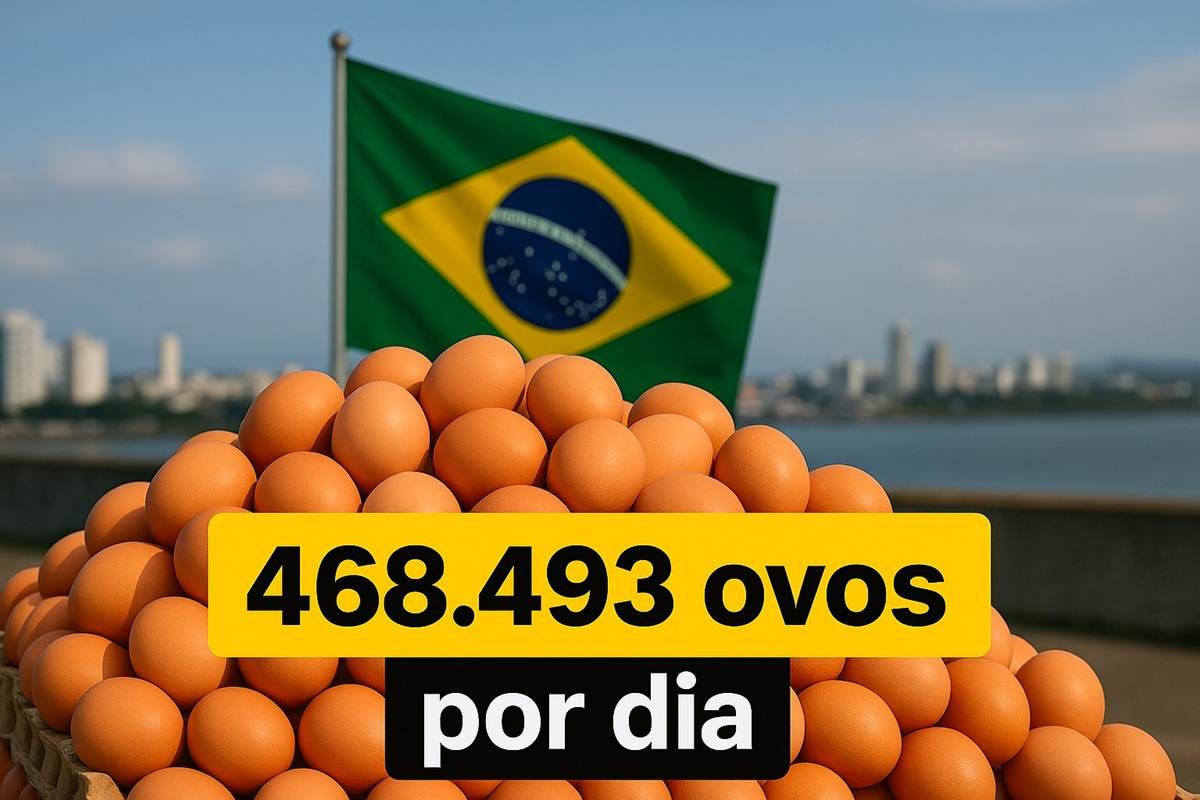


São Bento do Una Achieves Unprecedented Strength in Poultry Farming by Registering 171 Million Eggs in the Year, Consolidating Leadership in the Northeast and Advancing in a National Scenario that Hit a Historical Record in Production in 2024
São Bento do Una remains in a prominent position in the national poultry farming scenario and appears as the city with the highest egg production in the Northeast.
The data are part of the Municipal Livestock Survey, released in September by the Brazilian Institute of Geography and Statistics, which presents a broad overview of the activity in 2024. The municipality registered 171 million dozens during the period and consolidated its presence among the major hubs in the country.
The regional leadership occurs in a year marked by expressive growth in the sector. Brazil reached 5.4 billion dozens, which represents 64.8 billion units.
-
The water that almost everyone throws away after cooking potatoes carries nutrients released during the preparation and can be reused to help in the development of plants when used correctly at the base of gardens and pots, at no additional cost and without changing the routine.

-
The sea water temperature rose from 28 to 34 degrees in Santa Catarina and killed up to 90% of the oysters: producers who planted over 1 million seeds lost practically everything and say that if it happens again, production is doomed to end.

-
An Indian tree that grows in the Brazilian Northeast produces an oil capable of acting against more than 200 species of pests and interrupting the insect cycle, gaining ground as a natural alternative in soybean, cotton, and vegetable crops.

-
The rise in oil prices in the Middle East is already affecting Brazilian sugar: mills in the Central-South are seeing their margins shrink just as ethanol gains strength.


This amount corresponds to 305 eggs per inhabitant and establishes a new record in the historical series.
The growth was recorded in 24 of the 27 federative units, maintaining the continuous expansion trajectory that began in 1999. The result places the activity at a high level and reinforces the role of municipalities with strong production capacity.
Municipalities That Lead the Ranking
The survey shows that Santa Maria de Jetibá, in Espírito Santo, produced 346 million dozens and occupies the first position nationally. Next is Bastos, in São Paulo, with 270 million. São Bento do Una follows closely, reaffirming its relevance.
The ranking also includes Primavera do Leste, in Mato Grosso, with 112 million, and Beberibe, in Ceará, with 85 million.
These cities sustain the national volume and help define the pace of the sector, which continues to expand. The performance of São Bento do Una strengthens its position in the Northeast, where it has become a reference.
The Strength of the Flock
The survey also records an increase in the total number of poultry. In 2024, the country reached 1.6 billion animals, nearly eight times the Brazilian population.
The number increased by 1.7% compared to the previous year, with 26.8 million birds added. Of the total, 277.5 million are hens, an increase of 6.8%. Santa Maria de Jetibá leads this breeding, while São Bento do Una maintains an essential role in egg production in the region.









Incrível, por dispor minimamente de recursos hidrico, importar insumos p alimentação… que o agreste meridional pernambucano se mire no exemplo…
O Estagiário que escreveu essa reportagem citou as outras cidades e respectivos estados, mas omitiu em que estado fica São Bento do Una, como Pernambucano esclareço ao mesmo que São Bento do Una fica no Agreste de Pernambuco.
Parabéns a São Bento do Una