





 Portuguese
  English
  Spanish
  3 min of reading
  0 comments


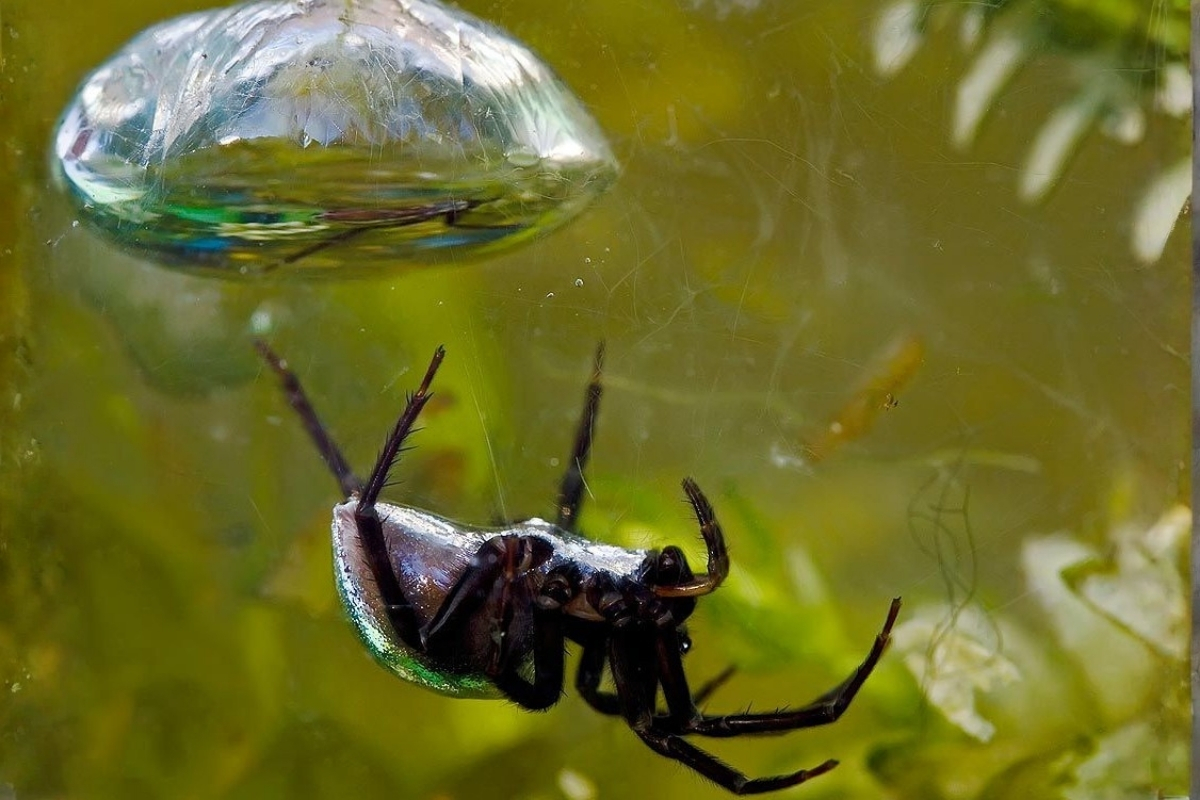
While other spiders avoid water, this species lives submerged, hunts inside air-filled domes, and directly depends on the quality of the aquatic environment
The diving bell spider is the only known spider that spends most of its life completely submerged. Unlike other species that only live close to the water, it has adapted its entire way of life to the aquatic environment, from breathing to hunting.
This adaptation is noteworthy because it involves the construction of a air bubble around its body, allowing for long periods submerged. This behavior makes the species one of the most extreme examples of evolution among arachnids.
How The Spider Can Breathe Underwater For Long Periods
To survive submerged, the diving bell spider uses the hydrophobic hairs on its abdomen to capture and maintain a bubble of air alongside its body. This bubble acts as a reservoir, allowing for gas exchange even underwater.
-
Scientists find about 1 million giant live eggs hatching in an active underwater volcano, discover a natural furnace on the ocean floor, and reveal one of the most unlikely nurseries ever seen in the ocean.
-
Scientists launched a bait camera to the bottom of the Pacific Ocean and saw something that no one expected.
-
Is a smart plug worth it in a regular home? What does it offer: turns on and off via smartphone, creates routines by schedule, prevents forgotten devices, sometimes monitors consumption, and improves habits without renovation or miracles.

-
Airbus and Mercedes take the G-Class to the skies: the ACH145 helicopter priced at R$ 78 million debuts in São Paulo, unit goes to Brazilian, AMG cabin, 5-blade rotor, and a 2-year wait.


With this mechanism, the spider can remain submerged for a long time without needing to surface. This strategy eliminates constant reliance on the surface and provides an advantage in stable aquatic environments.
The Construction of The Submerged Dome That Serves as Home and Hunting Base


In addition to its personal air bubble, the species builds an underwater dome-shaped retreat using silk produced by its own body. This structure is anchored between aquatic plants and roots, creating a safe space filled with air.
Inside this dome, the spider shelters, rests, and consumes its prey. The environment also serves as a strategic point for observation and attack, making the construction essential for its survival.
Hunting Strategy Includes Insects, Larvae, and Even Small Fish
The diving bell spider is a silent and patient hunter. It usually positions itself at the entrance of the dome and waits for prey to approach before quickly attacking and returning to the retreat.
The diet consists of small insects and aquatic larvae, but can also include tadpoles and small fish. This variety demonstrates a great capacity for adaptation and utilization of available resources in the environment.
Intensive Parental Care Ensures Offspring Survival

The females of the species stand out for their diligent parental care. After laying eggs, the eggs are carried in a special silk pouch until they hatch, providing constant protection.
Even after birth, the females remain close to their young, offering defense and food until they are ready to live independently. This behavior significantly increases the survival rate.
Presence of The Species Indicates Clean Water and Balanced Environment
The occurrence of the diving bell spider in lakes and rivers is associated with good water quality, as the species is sensitive to pollution and turbidity. A population decline can signal important environmental imbalances.
Although more common in Europe and Asia, the species also appears in regions of North America, occupying different freshwater habitats. This distribution reinforces its ability to adapt to various aquatic environments.
The combination of underwater breathing, shelter construction, efficient hunting, and parental care makes the diving bell spider one of the most impressive examples of aquatic biodiversity. Its presence not only intrigues science but also helps monitor the health of the ecosystems in which it lives.







-

-

-

4 pessoas reagiram a isso.