





 Portuguese
  English
  Spanish
 4 min of reading
  3 comments


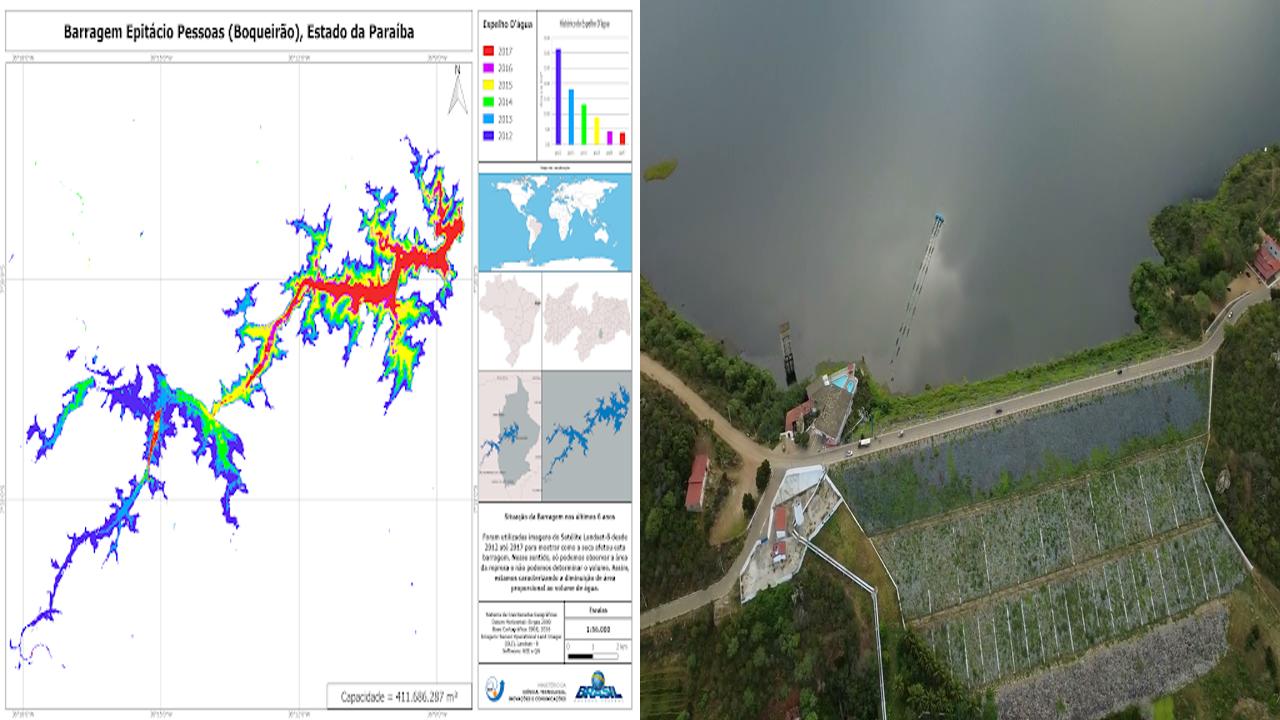


With 411 Million m³, the Epitácio Pessoa Dam Dominates the Paraíba Sertão and Provides Water for Over 1 Million People in Cariri and Agreste.
When the sun of the Paraíba sertão reaches its peak and the caatinga stretches in shades of gray and dry green as far as the eye can see, a huge mirror of water breaks the landscape and completely changes the logic of survival in the interior of the state. It is the Epitácio Pessoa Dam, better known as Boqueirão, a reservoir with capacity for 411 million cubic meters, created to hold the historic droughts of Borborema and ensure supply for one of the most populous regions in the Northeast.
Built by the National Department of Works Against Droughts (DNOCS) and inaugurated in 1956, Boqueirão is now the main water source for cities such as Campina Grande, Queimadas, Boqueirão, and dozens of smaller municipalities that rely on its water for human consumption, irrigation, and essential economic activities. In times of scarcity, it directly or integrally supplies over 1 million people, becoming a strategic piece of water security for the state.
One of the Largest Dams in the Northeast and the Largest Strategic One in Paraíba
Although it is not the largest in absolute volume, a position held by Castanhão in Ceará – the Epitácio Pessoa Dam is among the main reservoirs in the Northeast when considering the combination of capacity, flooded area, economic role, and population reach.
-
Friends have been building a small “town” for 30 years to grow old together, with compact houses, a common area, nature surrounding it, and a collective life project designed for friendship, coexistence, and simplicity.

-
This small town in Germany created its own currency 24 years ago, today it circulates millions per year, is accepted in over 300 stores, and the German government allowed all of this to happen under one condition.

-
Curitiba is shrinking and is expected to lose 97,000 residents by 2050, while inland cities in Paraná such as Sarandi, Araucária, and Toledo are experiencing accelerated growth that is changing the entire state’s map.

-
Tourists were poisoned on Everest in a million-dollar fraud scheme involving helicopters that diverted over $19 million and shocked international authorities.




With 411 million m³, it is the largest strategic dam in Paraíba, surpassing traditional sources like the Coremas-Mãe d’Água Dam and the Acauã Dam. In times of flooding, its flooded surface exceeds 2,500 hectares, transforming the sertão into a bluish landscape that seems out of place from the typical aridity of the region.
The reservoir was designed precisely for this contrast: a large artificial lake, capable of withstanding prolonged droughts and storing enough water to endure entire years of irregular precipitation.
Between Collapses and Rebirths: The Boqueirão as a Thermometer of Drought
The behavior of the Epitácio Pessoa Dam has become a kind of official thermometer for droughts in the Northeast. In 2017, for example, after five consecutive years of drought, the reservoir reached a historic low of only 2.9% of its capacity. At the time, experts warned that Campina Grande — the second largest city in Paraíba — could face extreme rationing.

The turning point came with one of the largest water infrastructure projects in the country: the arrival of water from the East Axis of the São Francisco River Transposition, which began to enter Boqueirão in 2017.
This recharge changed the scenario, boosted the recovery of the reservoir, and restored safety margins for regional supply.
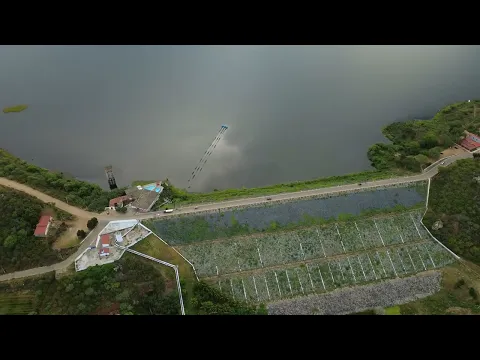
This process also transformed the dam into a center for discussions on water security, management efficiency, and climate adaptation, as extreme fluctuations began to be recorded more frequently due to the climatic variability of the Northeast.
The Dam that Shaped Cities, Economies, and Rural Life in Cariri
The impact of Boqueirão goes beyond urban supply. It is central to the irrigation of small and medium rural properties in the region, helping in the production of corn, beans, vegetables, fodder for livestock, and family farming fruits.
In times of high water levels, its influence reaches riverside communities that depend on water for animal hydration, cultivation, and traditional activities.
Its presence has also created new markets: simple tourism along the lake’s edges, artisanal fishing, small stands, rural gastronomy, and boat tours. For many residents, it is more than infrastructure — it is landscape, memory, geographical reference, and a sense of belonging.
It is common to find families that have witnessed the filling of the dam in different decades, or who remember the great floods and periods of extreme drought. The story of Boqueirão is also the story of those who built homes around it, adapted their crops, and took root in a territory that learned to coexist with its cycles.
A Reservoir that Became a Symbol of Water Resistance
For the state of Paraíba, the Epitácio Pessoa Dam represents the very struggle to coexist with drought. It was designed for this: to endure, to last, and to sustain cities in one of the most challenging biomes in the world.
Its existence shows how strategic works alter economies, broaden development horizons, and form safety networks for millions of people.
Even with challenges like intense evaporation, rapid level fluctuations, and urbanization pressure, Boqueirão remains one of the structural pieces of northeastern water engineering. It survives, oscillates, recovers, and with each cycle, reaffirms its importance.
Because in the sertão, a large water work is not just infrastructure.
It is a guarantee of the future.
It is a reminder of the droughts that have been overcome.
It is proof that water, when stored intelligently, can transform entire regions.










O maior reservatório artificial de água do Brasil é o lago de Sobradinho na Bahia. Uma construção faraônica na década de 60 que precisou mudar 5 cidades do lugar.
Infelizmente a matéria não dá a devida importância à transposicao do rio São Francisco e seu principal indutor, o Presidente Luís Inácio Lula da Silva. Eu que conheço a realidade dos últimos 70 anos e a presente, fico inconformado com esse tipo de informação que tem como objetivo ocupar a verdade ou dizer parte dela.
Seria interessante estudo para criar uma hidrelétrica nesse reservatório.