





 Portuguese
  English
  Spanish
  4 min of reading
  0 comments


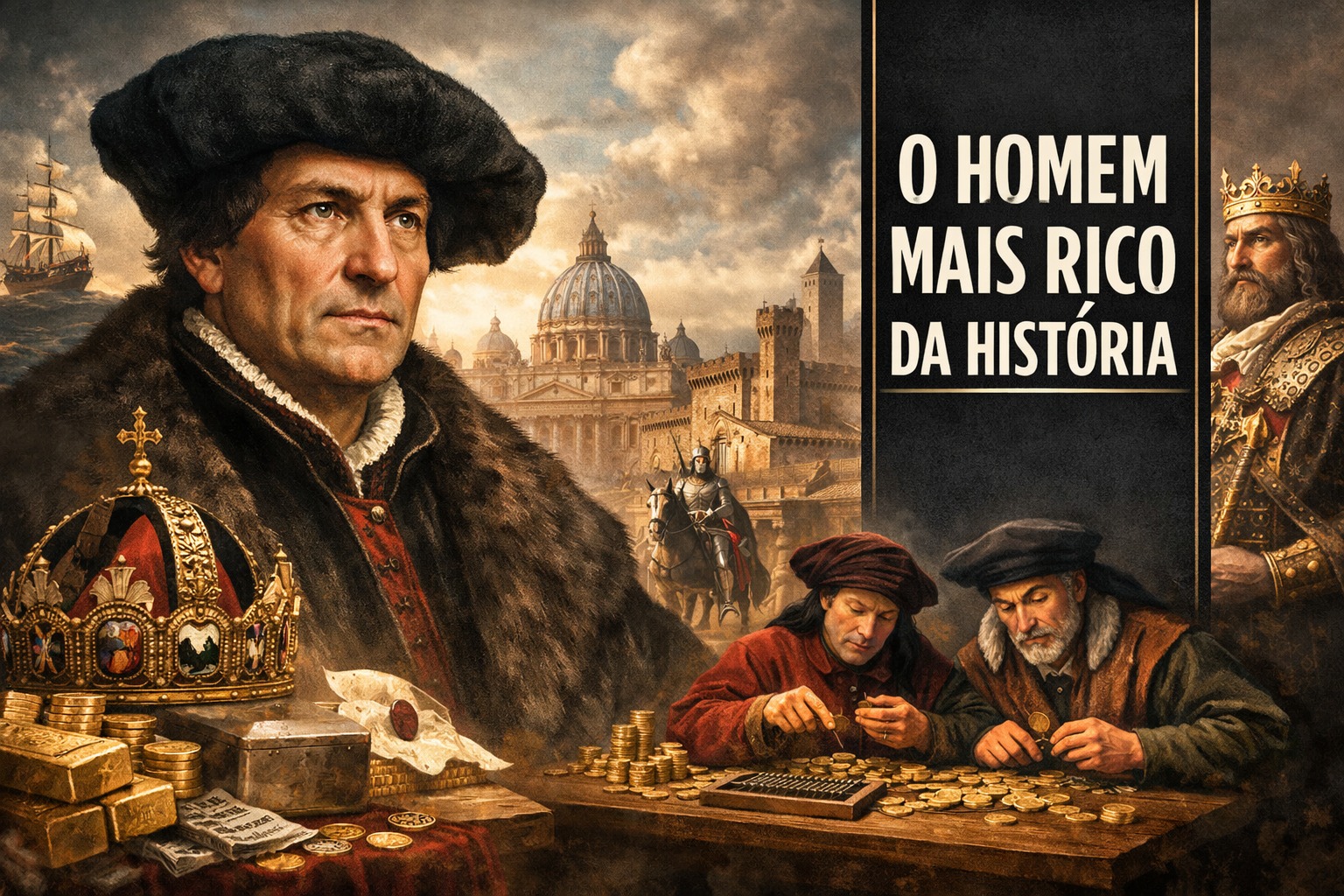
Jakob Fugger 1459-1525 Concentrated 10% of European Wealth, Estimated Today at US$ 400 Billion and R$ 1.2 Trillion, Financed Emperors, Kings, and the Vatican and Surpassed Modern Magnates According to Historical Biographer
Jakob Fugger, a German banker born in Augsburg, concentrated around 10% of European wealth in the 16th century, equivalent today to US$ 400 billion, by financing empires, kingdoms, and the Church, becoming the richest individual in recorded history.
Jakob Fugger lived between 1459-1525 and built his fortune in a fragmented economically Europe, operating on an international scale when trade, credit, and mining were still regionally based.
According to historical estimates gathered by biographer Greg Steinmetz, Fugger’s fortune would today equate to approximately R$ 1.2 trillion, a value that exceeds the wealth attributed to contemporary billionaires.
-
Bauer Group collapses after failed judicial recovery: 25 years, 800 vehicles, and a network of gas stations leave a debt of R$ 50 million and 100 layoffs, exposing costs, tight margins, and expensive credit in Brazil.

-
Premium Brazilian brand born during the pandemic brings fine cocoa from Bahia to Switzerland, Germany, and France, has won 9 awards, and claims to have the 2nd best milk chocolate in the world: meet Luz Cacau.

-
Júnior Friboi has just purchased one of the largest feedlots in all of Brazil, located in Goiás, with the capacity to produce 180,000 cattle per year, and the manager has already come forward to reassure employees about layoffs.

-
Pharmacy inside the supermarket: what changes now in your purchase, why medicines won’t go on the shelves, which rules remain strict, mandatory pharmacist, separate space, controlled storage, more convenience and competition in the country.


Steinmetz claims that Fugger was not only the richest man of his time but the richest in the history of mankind, considering economic proportion and systemic influence over governments.

Financing Empires and the Church
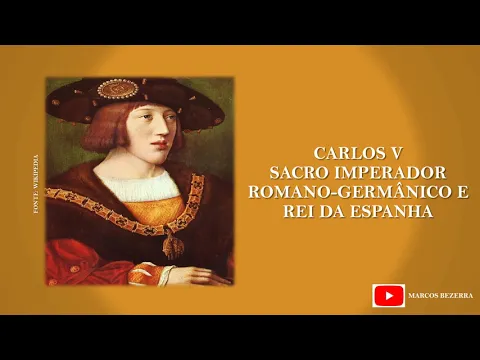
Fugger’s business included direct financing to emperors of the Holy Roman Empire, such as Maximilian I and Charles V, as well as European kings and the Vatican.
Among the monarchs financed was Henry VIII of England, demonstrating the political reach of his credit operations and the dependence of European governments on his resources.
Fugger’s financial activities supported military campaigns, imperial elections, and strategic decisions, placing the banker at the center of the continent’s power dynamics.
Economic Base and Strategic Sectors
Fugger’s fortune was built on copper and precious metals mining, international trade, and large-scale credit operations, considered early pillars of modern European capitalism.
The banker controlled mines in Hungary and reinvested profits in other sectors, ensuring a steady flow of capital and risk mitigation across different markets.
This model allowed for continuous expansion even during periods of political instability, reinforcing his dominant position in the financial system of the time.
Historical Assessment of Wealth
Greg Steinmetz, former editor of the Wall Street Journal and author of the book The Richest Man Who Ever Lived, published in 2015, acknowledges limitations in comparing historical fortunes.
Still, the author argues that Fugger’s economic influence is measurable by the concentration of around 2% of all European production at the time of his death.
This level would place Fugger far ahead of figures like Elon Musk, Bill Gates, or Warren Buffett, considering proportional impact, according to the biographer’s analysis.
Wealth Without Political Prominence
Despite his wealth, Fugger maintained a discreet demeanor and did not seek political office, direct religious influence, or cultural prominence during the European Renaissance.
Unlike the Medici or the Borgias, he did not sponsor artists or build monumental palaces, opting instead for reserved involvement in the power dynamics of the time.
This choice contributed to his lesser presence in popular memory, despite the far-reaching impact of his economic decisions, something often overlooked in historical narratives.
Barriers to Historical Diffusion
Another factor cited by Steinmetz was the language barrier, as Fugger was German and remained little known in the English-speaking world for centuries.
The biographer himself noted that he decided to write about Fugger after realizing the scarcity of available material in English for the international audience.
This statement was made in an interview with BBC Mundo, a source mentioned when discussing the historical relevance of the German banker.
Enduring Financial Strategy
Fugger advocated for diversification and rebalance of investments, a strategy considered advanced even by today’s global market standards.
“Divide your fortune into four equal parts: stocks, real estate, bonds, and gold,” he advised, anticipating recurring losses in some assets.
This method underpins today’s practices of family offices and major wealth management firms, demonstrating the relevance of Fugger’s financial thinking.
Wealth Without Limits: Social and Institutional Legacy
In addition to his fortune, Fugger created the Fuggerei in 1521, a social housing complex in Augsburg, considered the oldest still in operation.
More than 500 years later, foundations linked to the family continue to manage this asset, preserving part of the banker’s social legacy.
The permanence of these institutions shows that the wealth accumulated by Fugger not only shaped the European economy but continues to generate lasting historical impact.
With information from Diário do Comércio.








-

-

-

-

-

9 pessoas reagiram a isso.