





 Portuguese
  English
  Spanish
  4 min of reading
  0 comments


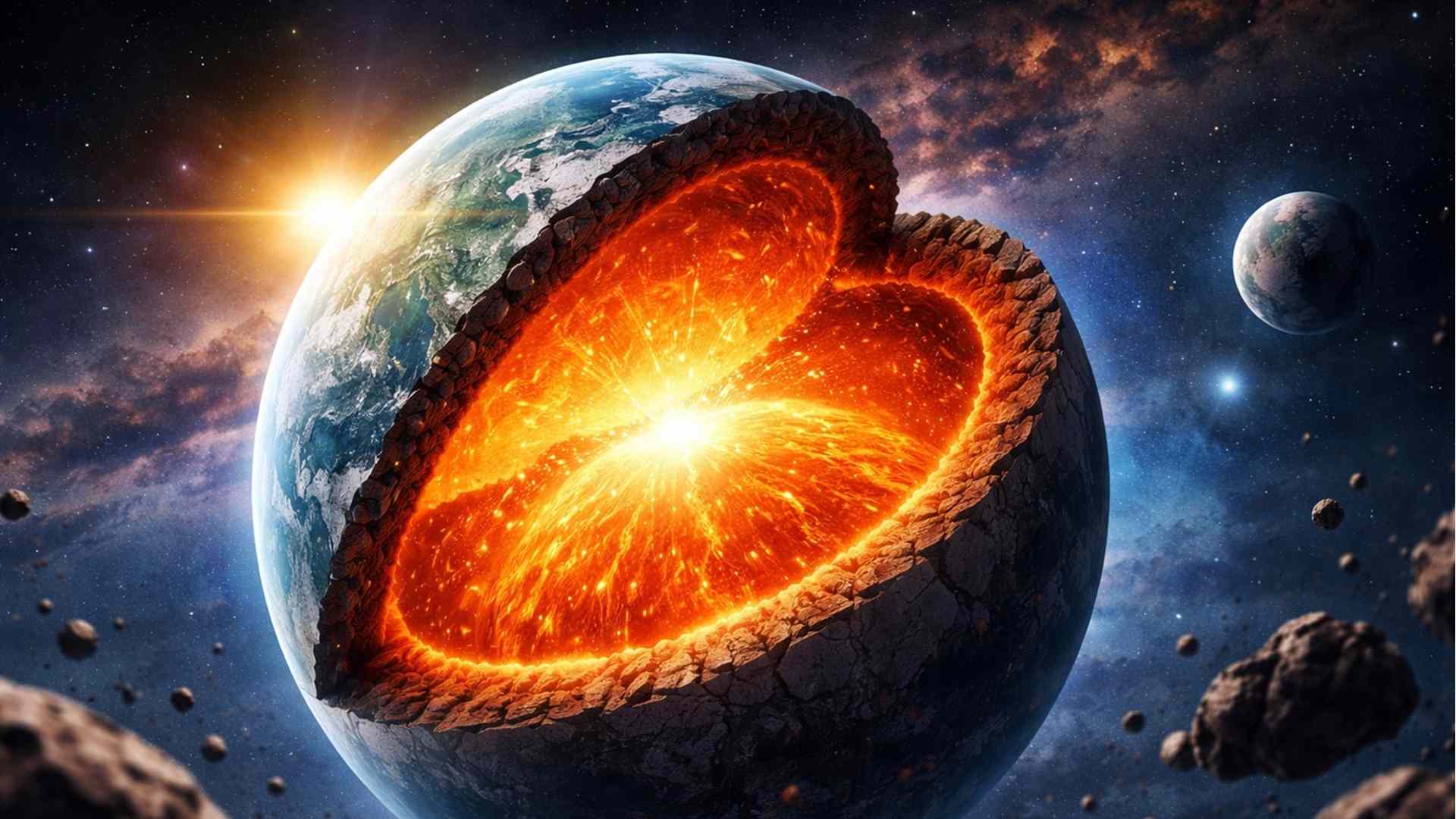
Study Published in Nature Astronomy Indicates That Subterranean Oceans of Magma on Super-Earths May Generate Stable Magnetic Fields for Billions of Years, Protecting Atmospheres Against Cosmic Radiation and Significantly Expanding the Scientific Criteria Used to Assess the Habitability of Exoplanets Outside the Solar System.
A study published in Nature Astronomy indicates that vast subterranean oceans of molten rock on rocky super-Earths may generate long-lasting magnetic fields, protecting planets from harmful radiation and expanding their habitability conditions even when metallic cores are unable to sustain an active dynamo.
Below the surface of rocky super-Earths, deep layers of magma may be playing a central role in maintaining conditions favorable for life.
The research, led by Miki Nakajima from the University of Rochester, proposes that these basal magma oceans function as an alternative source of planetary magnetic fields, capable of blocking solar wind and cosmic radiation over geological timescales.
-
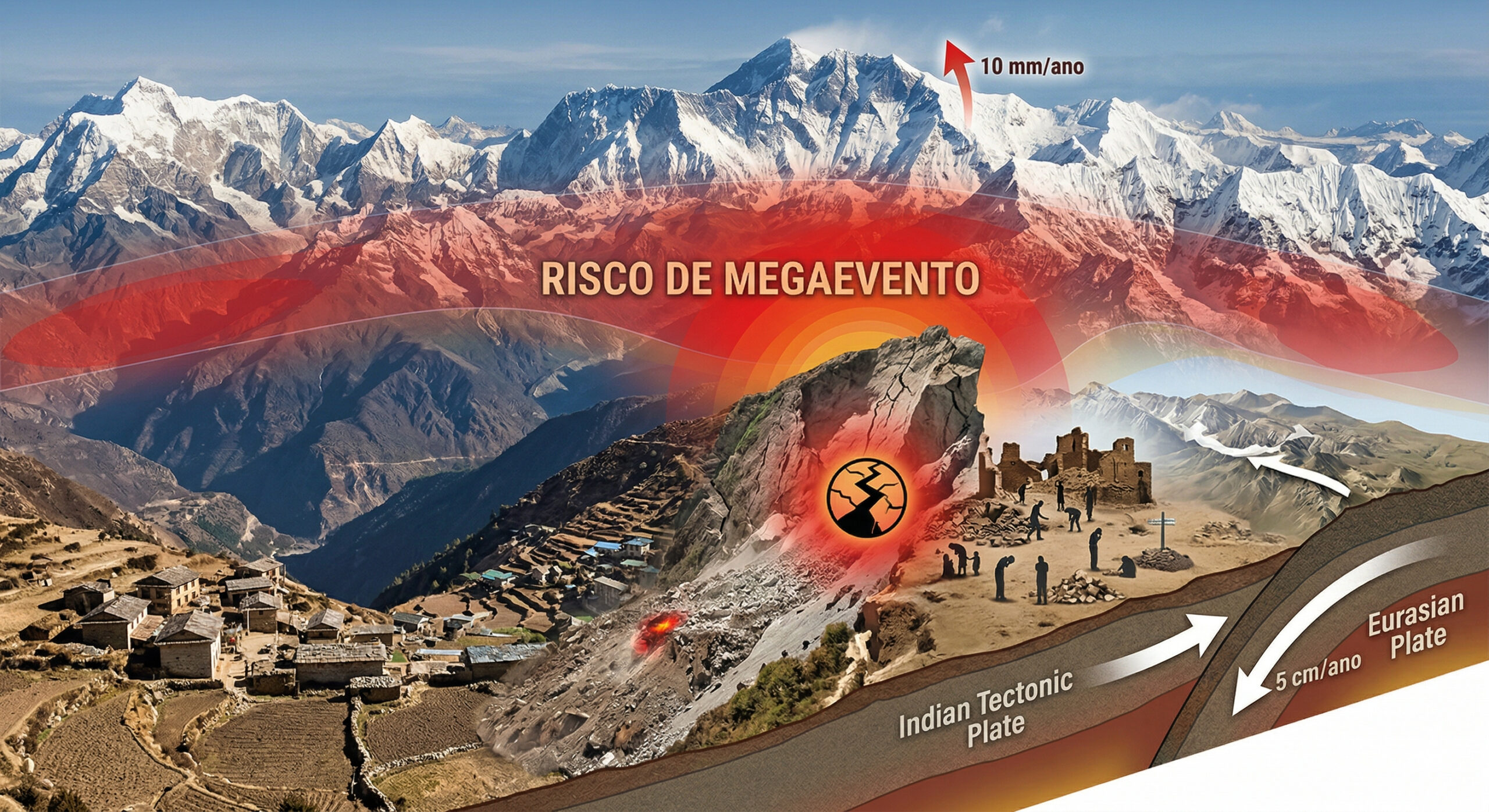
The Himalayas continue to grow to this day, with tectonic plates advancing 5 cm per year, mountains rising up to 10 mm annually, and the 2015 earthquake that killed 9,000 people may have increased the risk of an even larger seismic mega-event.
-
At an altitude of 400 km by astronauts from the International Space Station, Paris transforms at night into a golden mesh so precise that it reveals the outline of the Seine River, avenues, and entire neighborhoods like a luminous map drawn over the Earth.

-
iPhone 17 reaches historic low price with 256 GB, 120 Hz display, and drops to R$ 5,703 on Shopee, featuring A19 chip, dual 48 MP cameras, battery life of up to 30 hours, and advanced AI features.

-
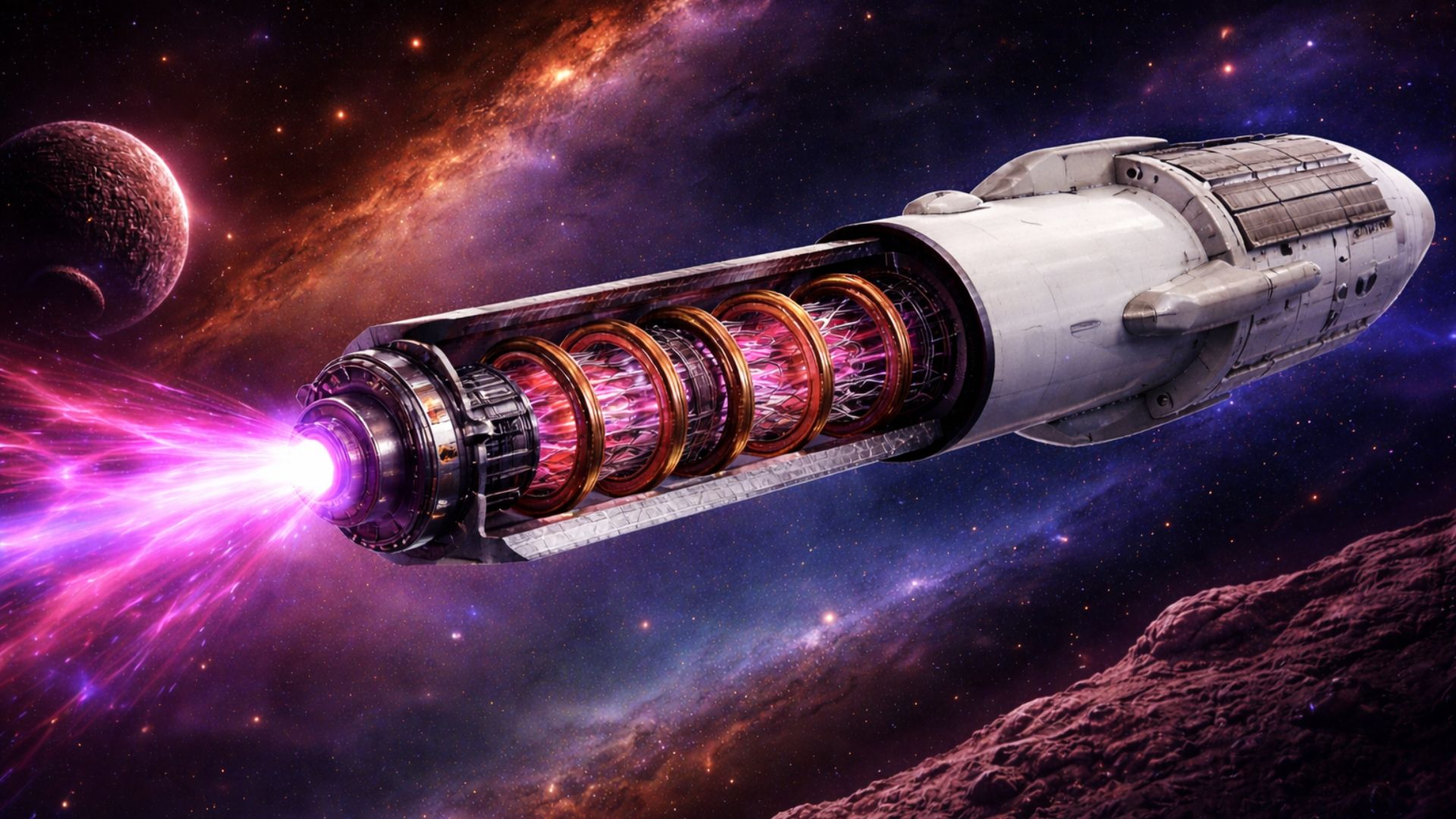
Trip to Mars getting closer: Pulsar Fusion, from the UK, advances with plasma ignition in fusion engine and could drastically reduce space travel time, making crewed missions faster, safer, and economically viable.

Magma Oceans as an Alternative to the Metallic Core
On Earth, the magnetic field is generated by the movement of liquid iron in the outer core. On larger rocky planets, however, the core may be completely solid or entirely liquid, conditions considered insufficient to sustain a stable dynamo for long periods. The study suggests that, in these cases, the basal magma oceans may take on this role.
According to Nakajima, super-Earths can produce dynamos both in their cores and in deep magma regions, significantly expanding their habitability potential. These molten layers, located at the base of the mantle, are called BMOs and, under extreme pressures, may acquire unusual electrical properties.
Electric Conductivity of Molten Rock Under High Pressure
The central point of the research is the ability of molten rocks to become electrically conductive. According to the published results, high pressure inside super-Earths can transform magma into a medium capable of conducting electricity similarly to metals.
While Earth’s basal magma ocean is believed to have existed only for a short time after the planet’s formation, super-Earths, due to their greater mass and internal pressure, may maintain these molten regions for billions of years.
This persistence increases the possibility of stable, long-lasting magnetic fields, even on planets with inactive cores.
Laser Shock Experiments and Advanced Simulations
To test this hypothesis, the team conducted laser shock experiments at the University of Rochester’s Laser Energetics Laboratory. The tests reproduced extreme pressures similar to those expected inside rocky super-Earths, allowing for the observation of the behavior of molten rock under these conditions.
The experiments were combined with quantum mechanics simulations and planetary evolution models. The analyzed mineral was (Mg,Fe)O, common in planetary mantles. The results showed that, under pressures equivalent to those of a super-Earth, this molten material becomes sufficiently conductive to sustain an active magnetic dynamo.
Nakajima highlighted that the work was challenging as it marked her first experimental experience, given that her background is mostly computational. She noted that interdisciplinary collaboration was crucial for the project’s success, integrating laboratory work, theoretical modeling, and advanced simulations.
Direct Implications for the Habitability of Exoplanets
According to the researchers, magnetic fields generated by basal magma oceans may rival or even exceed Earth’s magnetic field in intensity and duration. This prolonged protection could be crucial for preserving planetary atmospheres against erosion caused by solar wind and energetic particles.
The presence of a magnetic field is often overlooked in initial habitability assessments, despite its central role in atmospheric protection.
The dynamo driven by BMOs expands the pool of planets considered potentially habitable, including worlds previously dismissed for having non-metallic or structurally static cores.
New Approach in the Search for Life Beyond the Solar System
Based on these results, super-Earths that maintain active basal magma oceans are now seen as relevant candidates in the search for extraterrestrial life.
The hypothesis suggests that deep molten rock may be a silent yet decisive factor in a planet’s ability to sustain stable environments over cosmic time.
Nakajima stated that future direct observations of magnetic fields on exoplanets will be essential to test the proposed model.
These measurements could confirm whether hidden oceans of magma are indeed responsible for shaping the potential for life on worlds beyond our solar system, redefining classic criteria of habitability.








-

-

-

-

-

24 pessoas reagiram a isso.