





 Portuguese
  English
  Spanish
  5 min of reading
  0 comments


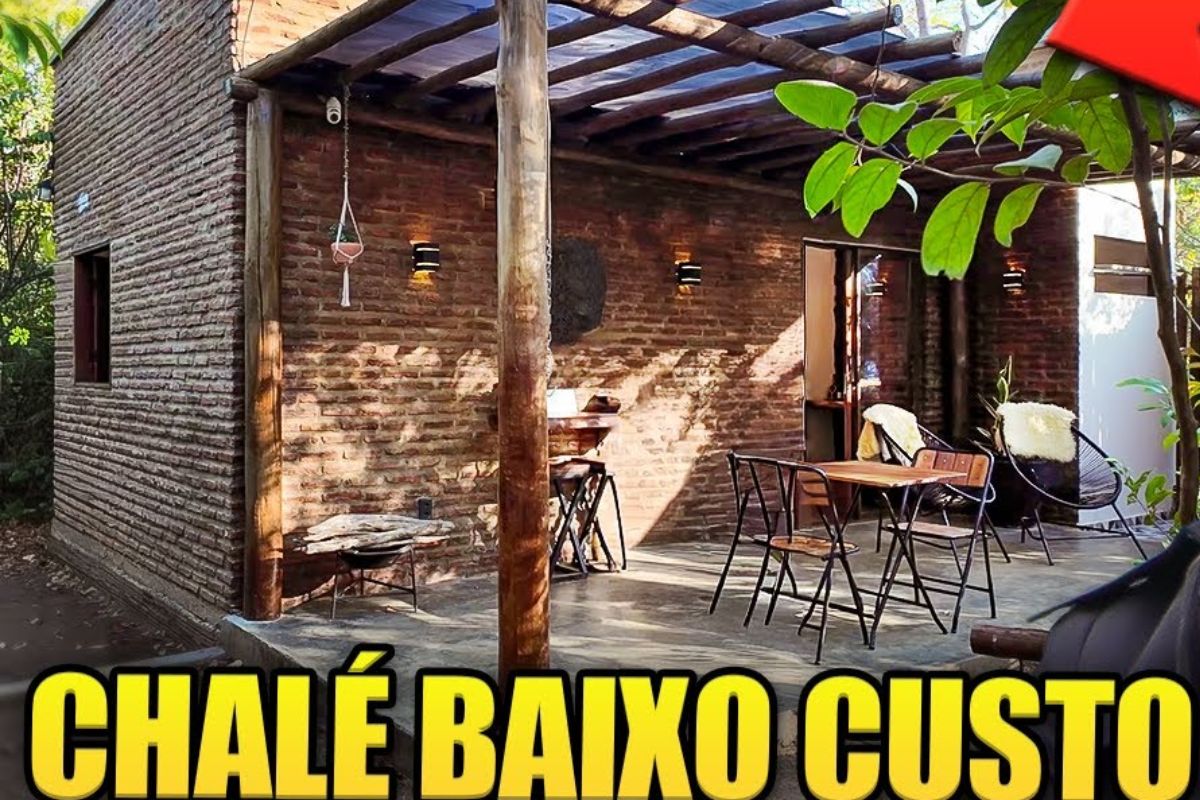
Houses Built With Solid Brick, Burnt Cement, Lean Structure, and Focused on Seasonal Rental Can Reduce the Work, Speed Up the Return, and Transform a Small Property Into an Asset That Pays for Itself Quickly Just With Overnight Stays.
The central point of this model is simple and very pragmatic. When the land is already resolved and the construction is done with low-cost solutions, the work becomes cheaper, faster, and easier to finance. From there, the property begins to be used on Airbnb or other seasonal platforms, and the daily rate pays off the investment. It’s a logic of a house that is born to be productive.
In the analyzed example, it is a compact chalet designed for a couple, with about 35 m² including internal area and balcony, built with low-cost techniques and focused on experience. With a daily rate of around R$ 200, the calculation shows that in about 500 overnight stays the construction pays off, meaning 1 to 3 years of operation, depending on the occupancy rate. After this period, the house remains as an asset and continues generating income.
Why Low Cost Is the Starting Point
Conventional constructions require many stages. Reinforced concrete, wooden forms, iron reinforcement, internal and external plaster, mass, sanding, sealer, and several layers of paint. Each stage means time and labor. This is where the cheap turns expensive.
-
This small town in Germany created its own currency 24 years ago, today it circulates millions per year, is accepted in over 300 stores, and the German government allowed all of this to happen under one condition.

-
Curitiba is shrinking and is expected to lose 97,000 residents by 2050, while inland cities in Paraná such as Sarandi, Araucária, and Toledo are experiencing accelerated growth that is changing the entire state’s map.

-
Tourists were poisoned on Everest in a million-dollar fraud scheme involving helicopters that diverted over $19 million and shocked international authorities.

-
Hidden beneath the dense forest of the Sierra Nevada, Betoma emerges in a neighbor of Brazil as the greatest archaeological discovery of the century, revealing a colossal ancestral city covering over 18 km², with 8,334 stone structures and the potential to rewrite the history of South American civilizations.


When the proposal is a low-cost house, the approach changes. Instead of creating stages, steps are eliminated. The structure and sealing are resolved at once. The finish stops being something that hides the wall and becomes something that values the material itself.
Thus, the final budget decreases without compromising the result. Less work means fewer people, less time, and less money.
Solid Brick Masonry Reduces Steps and Labor
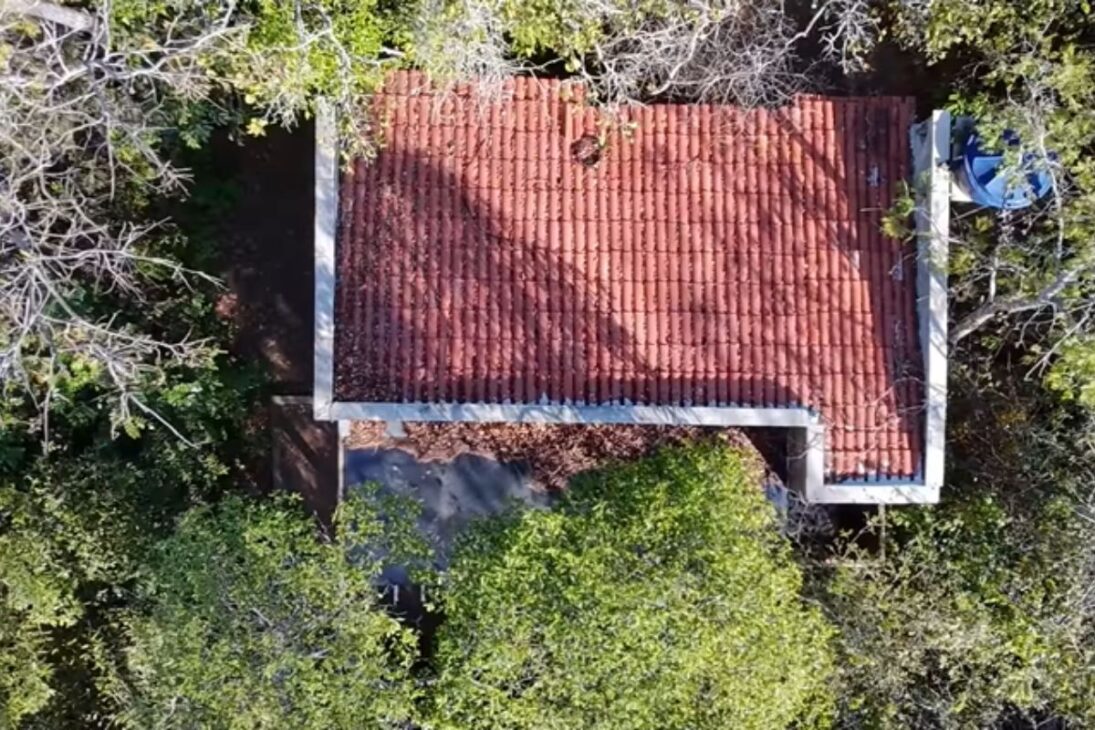
The use of solid brick masonry is the key to this type of project. This brick can work as structural masonry, eliminating the need for reinforced concrete columns and beams. This means that the wall is already ready to support the roof. There’s no need to create a structure and then enclose it. The wall does it all.
Another advantage is the finish. Instead of skimming, plastering, sanding, sealing, and painting each side of the wall, you just need to apply a waterproofing agent and protect the brick. It’s a cheaper finish than paint that maintains the natural look.
The result is technical, standardized, and compatible with financing. For those who want to build spending less, self-supporting masonry with solid brick is one of the most rational solutions.
Burnt Cement and Integrated Floor as an Economic Solution
On the floor, the logic of low cost repeats itself. What would normally be just the subfloor also becomes the final floor. The subfloor is made, cement is sprinkled, and the finish is done with a trowel. Burnt cement is ready.
It is one of the cheapest floors after soil-cement and, when well done, provides a modern look and easy maintenance.
If there are contraction joints or planned cuts, the natural cracks of burnt cement are controlled.
And, if the resident wants to install vinyl flooring or another finish in the future, they will already have a leveled base. Thus, the owner can start with a low-cost floor and invest in the premium finish only when the house is already generating returns from the overnight stays. First pay for the work, then upgrade the finish.
Light Eucalyptus Structure and Material Reuse
Another point that reduces the budget is the use of eucalyptus wood structure. It is more economical than concrete because it doesn’t require forms, pouring, or iron. The pillar is assembled, and the stage is completed. Less industrialized input, more renewable material, and faster execution.
The same reasoning applies to frames and furniture. Low-maintenance aluminum doors and windows, translucent polycarbonate roofing to increase natural light, and metal furniture with rustic wood sourced from a local sawmill create a low-cost set with a good perception of value. These are choices that the guest perceives as charm but that do not burden the work. It’s intelligent design, not expensive luxury.
How Airbnb Factors Into the Equation and Pays for the Work
The calculation presented in the material is straightforward. A low-cost house, with about 35 m², can be built for less than R$ 100,000. If this house is put up for seasonal rent at a daily rate of R$ 200, each stay brings the owner closer to the break-even point. In approximately 500 overnight stays, the invested amount is recouped. In 1 to 3 years, depending on occupancy, the property can pay for itself.
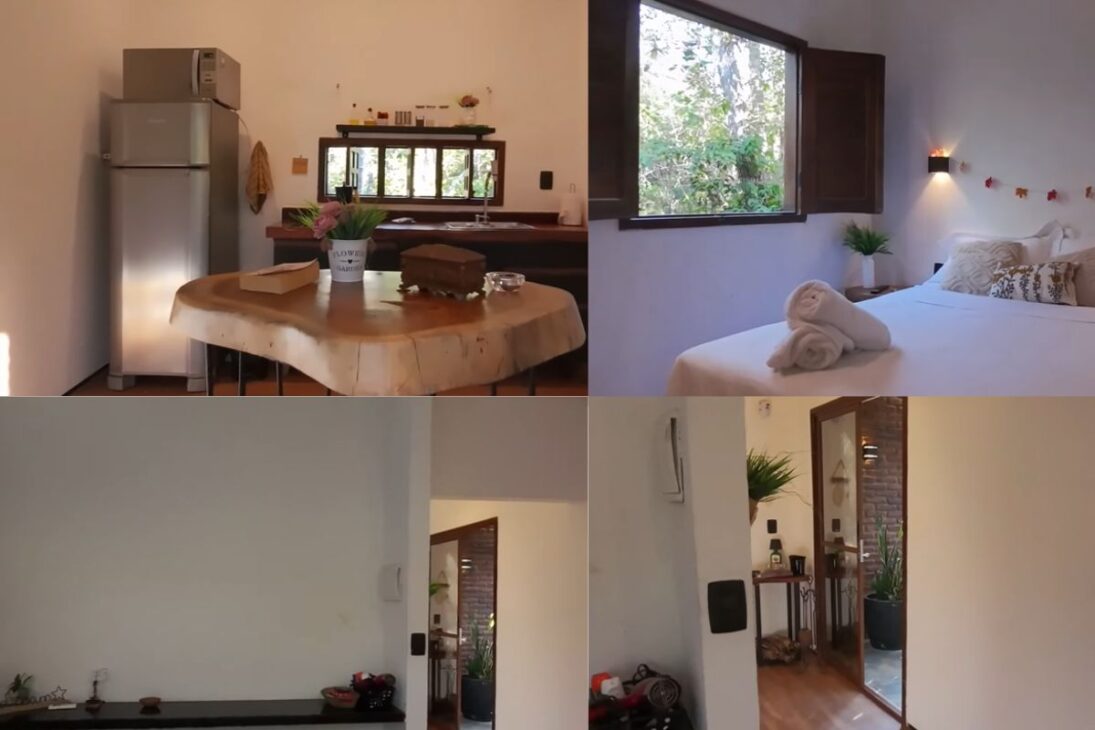
This works because the house was designed for rental from the start. It is small, photogenic, integrated with its surroundings, with a balcony, good lighting, and items that the guest values, such as a functional kitchen, well-designed bathroom, outdoor area with a fire pit, and green decor.
Thus, it can maintain an interesting occupancy rate and does not remain idle. A house that is beautiful and biophilic always rents more.
Details That Add Value Without Increasing Costs
Simple plants like Snake Plant, rope lamps, rustic wooden stools, wooden countertops in the kitchen and bathroom, and creative coatings made of Portuguese stone glued to the wall are examples of low-cost details that enhance the perception of care.
When the guest feels that everything has been thought through, they are more likely to accept the daily rate. High perceived value with low actual cost is the heart of this model.
Another detail that helps is repeating coatings in wet areas. Using the same material in the bathroom and kitchen reduces cuts, waste, and the need for technical reserve stock. The house looks visually more elegant, and the owner spends less.
And since the property is for lodging, the integrated internal organization, with few walls and good cross ventilation, ensures comfort without greatly increasing the built area. Less square footage, more intelligent layout.
The low-cost house model designed for Airbnb shows that it is possible to build with a controlled budget, use simple techniques like solid brick, burnt cement, and a light structure, and still transform the property into a source of income that pays for the construction in a short time.
It doesn’t depend on expensive decor, but on choices coherent with the rental purpose.
For those studying to build on their own land and want the house to pay for itself, this combination of lean construction with seasonal rental is a realistic strategy.

Now I want to know from you: what item would you prioritize in a low-cost house to leave the guest delighted without overspending?









-

2 pessoas reagiram a isso.