





 Portuguese
  English
  Spanish
 4 min of reading
  0 comments


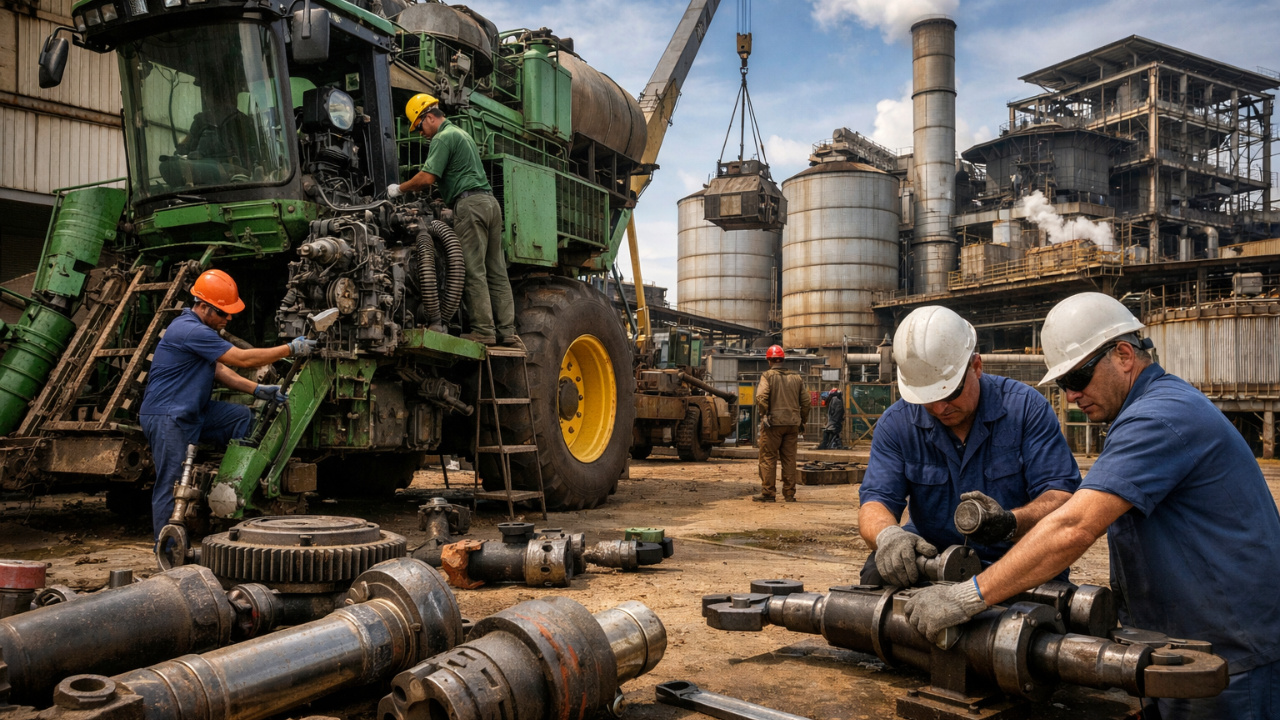
Focusing on Sugarcane Harvest, Sugar Mills in SP Reinforce Industrial Maintenance and Reform Sugarcane Harvesters During the Sugar-Ethanol Off-Season.
The sugar-ethanol off-season has mobilized thousands of workers in the São Paulo sugar mills of Catanduva and Novo Horizonte, in the northwest of the state, since the end of the last sugarcane harvest in November.
What happens during this period is a true task force for industrial maintenance, involving disassembly of machines, equipment inspection, and reform of sugarcane harvesters.
The goal is clear: to ensure efficiency, safety, and productivity in the next agricultural cycle, which begins in March.
-
The sugar-energy sector advances with agricultural technology, but agricultural productivity still raises concerns.

-
The eggshell that almost everyone throws away is made up of about 95% calcium carbonate and can help enrich the soil when crushed, slowly releasing nutrients and being reused in home gardens and vegetable patches.

-
This farm in the United States does not use sunlight, does not use soil, and produces 500 times more food per square meter than traditional agriculture: the secret lies in 42,000 LEDs, hydroponics, and a system that recycles even the heat from the lamps.

-
The water that almost everyone throws away after cooking potatoes carries nutrients released during the preparation and can be reused to help in the development of plants when used correctly at the base of gardens and pots, at no additional cost and without changing the routine.


While the sugarcane fields await the new harvest, the warehouses transform into large workshops.
Thus, the period that could represent a pause turns into one of the most strategic phases for the sugar-energy sector.
Sugar-Ethanol Off-Season Requires Intensive Planning and Industrial Maintenance
Immediately after the harvest ends, the units initiate a rigorous schedule of inspections and repairs.
In Catanduva (SP), for example, 164 employees work exclusively on machine and equipment maintenance.
In addition, the mill maintains an inventory of thousands of parts to expedite the services.
This way, delays that could compromise the start of the next sugarcane harvest are avoided.
The work is planned based on a mapping carried out during the productive period.
That is, while the mill is in operation, technicians identify failures and wear that need to be corrected during the off-season.
Sugarcane Harvesters Undergo Reforms That Can Reach R$ 150 Thousand
Among the equipment that demands the most attention are the sugarcane harvesters.
During the harvest, these machines operate 24 hours a day, for up to nine consecutive months.
With an average lifespan of 18,000 hours — equivalent to five harvests — they need to be completely disassembled for inspection.
Parts are evaluated, replaced, and adjusted before returning to the field.
The cost of reform for each piece of equipment can reach R$ 150 thousand.
Still, the investment is considered essential to maintain productivity and avoid unexpected downtime during the sugarcane harvest.
Mills and Boilers Also Enter the Schedule of the Sugar-Ethanol Off-Season
The industrial maintenance is not limited to the agricultural sector.
The mills and boiler areas, responsible for crushing and generating energy, also undergo complete disassembly.
These sectors experience high wear throughout the harvest.
In Catanduva, the crushing capacity reaches 600 tons of sugarcane per hour, which requires equipment in perfect condition.
Therefore, any failure can directly impact the production of sugar, ethanol, and energy.
For this reason, preventive inspection becomes indispensable.
Sugar Mills in São Paulo Mobilize Thousands of Workers During the Off-Season
About 60 kilometers from Catanduva, in the rural area of Novo Horizonte (SP), another unit also intensifies its work during the sugar-ethanol off-season.
Part of the repairs has been carried out by third-party companies, which managed to expedite the delivery of equipment this year.
At the unit, about 3,000 employees work in different sectors.
During the off-season, many are reassigned to maintenance teams.
This is the case for Lenin Camargo, a sugar factory operator during the harvest and leader of the valve maintenance group from December to April.
The change in role reinforces how the period demands versatility and integration of teams.
Weather Influences the Schedule of Sugarcane Harvest
Another factor that directly interferes with planning is the weather.
The rainy season in northwest São Paulo can delay the installation of equipment in outdoor areas.
Thus, the schedule needs to consider not only the technical complexity of the repairs but also the environmental conditions.
Therefore, larger structures, often moved with the help of cranes, depend on fair weather for safe installation.
This care reduces risks and ensures that everything is ready before the start of the new sugarcane harvest.
Improvements and Modernization Increase Efficiency in Sugarcane Harvest
In addition to preventive maintenance, the São Paulo mills take advantage of the off-season to implement structural improvements.
Equipment is modernized, materials replaced, and processes optimized.
The goal is to increase industrial efficiency and reduce operational costs. Consequently, the next harvest tends to be more productive and sustainable.
The sugar-ethanol off-season, therefore, does not represent a period of inactivity.
On the contrary, it is a decisive stage that sustains the entire productive chain of the sector.
Thus, by investing in industrial maintenance, reform of sugarcane harvesters, and qualification of teams, the mills ensure that when the sugarcane harvest begins, each machine is ready to operate at maximum pace.
See more at: Mills Invest in Maintenance During the Sugarcane Off-Season










-

-

2 pessoas reagiram a isso.