





 Portuguese
  English
  Spanish
  5 min of reading
  0 comments


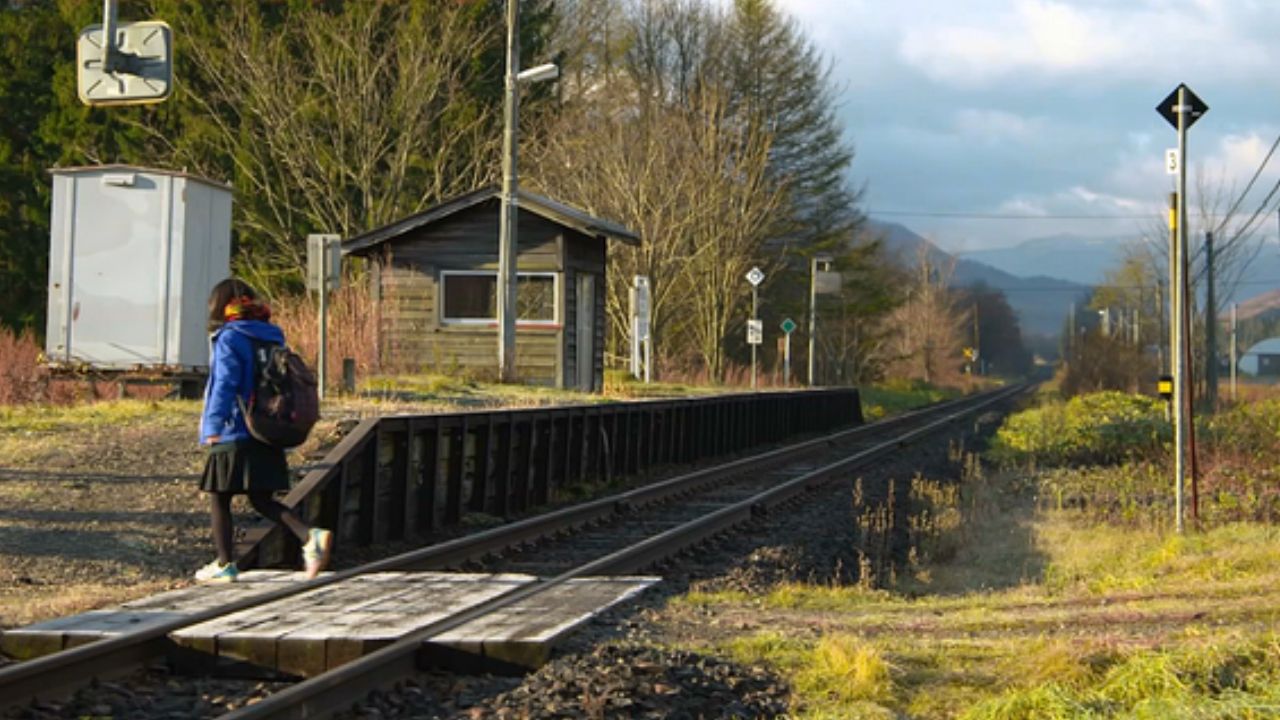
A Rural Station in Northern Japan Gained International Visibility by Remaining in Operation Despite Low Usage, After the Railway Operator Considered the Dependency of Students on the Service During a Restructuring Process of the Network in Areas Affected by Population Decline.
A railway station located in a rural area of Hokkaido, in northern Japan, became associated with an administrative decision that drew attention outside the country.
The maintenance of regular stops at a point with minimal usage aimed to avoid disrupting the commute of a high school student to school, according to explanations released by the railway operator.
The episode gained international visibility amid discussions about infrastructure costs in sparsely populated regions and, over time, began to be cited as a specific case of public service adaptation to a concrete educational need.
-
Friends have been building a small “town” for 30 years to grow old together, with compact houses, a common area, nature surrounding it, and a collective life project designed for friendship, coexistence, and simplicity.

-
This small town in Germany created its own currency 24 years ago, today it circulates millions per year, is accepted in over 300 stores, and the German government allowed all of this to happen under one condition.

-
Curitiba is shrinking and is expected to lose 97,000 residents by 2050, while inland cities in Paraná such as Sarandi, Araucária, and Toledo are experiencing accelerated growth that is changing the entire state’s map.

-
Tourists were poisoned on Everest in a million-dollar fraud scheme involving helicopters that diverted over $19 million and shocked international authorities.


The story spread primarily from 2016, when reports revealed that trains continued to stop daily at an almost deactivated station.
According to the company responsible for the line, the decision sought to ensure that a student could travel to and from school without interruption.
Although the popular narrative simplified the episode as an “exclusive train,” records from that time indicate that it was a station with extremely low usage, kept active because it still served students in the area.
Railway Restructuring in Rural Areas of Hokkaido
The case occurred in the municipality of Engaru, in Hokkaido, an area marked by long distances between communities and a continuous process of population decline.
In this context, the Kyū-Shirataki station was part of the Sekihoku Main Line, operated by JR Hokkaido, responsible for the island’s railway network.
In the early 2010s, the company began a review of its operations in rural areas.
At the time, the number of passengers had consistently decreased, and some stations no longer recorded regular traffic throughout the day.
As a result of this diagnosis, the operator announced the gradual closure of several points considered underutilized.
Among them were Kyū-Shirataki, as well as the Kami-Shirataki and Shimo-Shirataki stations, all located in the same region.

During the reevaluation process, JR Hokkaido identified that students still depended on that line to reach schools in neighboring towns.
Among the users was a high school student, Kana Harada, whose daily route included boarding at Kyū-Shirataki, as initially reported by the Japanese press and later by international outlets.
Adjustment of Schedules to Meet School Routine
Based on this assessment, the company decided to keep the station operational for a longer time.
The justification presented was to prevent interruption of access to school for those who directly depended on that boarding point.
In practice, the stop schedules were adjusted to coincide with the start and end of classes.
Reports published at the time indicated that the service was quite limited, with few trains stopping daily at the station.
In widely shared versions on social media, the operation came to be described as restricted to one train in the morning and another at the end of the day.
Subsequent information, however, indicated that schedules could vary, although the station maintained a reduced number of stops, compatible with the low usage recorded.
The central fact, according to available records, is that the station remained open even without significant demand, while other stops in the region were deactivated.
The railway line as a whole, in turn, continued to operate normally and serve other passengers along the route.
Impacts of Limited Operation on the Student’s Routine
Even with the maintenance of service, logistics imposed restrictions on the student.
The reduced availability of schedules required strict planning to avoid missing the train, as there were no frequent transport alternatives in the region.
If this occurred, the journey to another station would represent a longer and more complex route.
Reports published by Japanese outlets indicate that the limited schedule also restricted participation in activities outside regular class hours.

Extracurricular commitments and school events at the end of the day became difficult to reconcile with the available return schedules.
Still, the station remained active while the student attended school.
According to information released by the operator, the decision took into account the dependence of surrounding students, not just one individual.
Even so, Kyū-Shirataki had minimal usage compared to other stops on the line.
Viral Narrative and Subsequent Clarifications
With the international repercussion, clarifications arose regarding some points of the story.
One of them relates to the idea that an entire train circulated solely for one passenger.
According to subsequent reports, the trains that stopped at Kyū-Shirataki were already in operation and transporting other users along the route.
Among them were students boarding at previous stations.
In this context, the term “only passenger” came to be used to refer to the regular frequency of that specific station, not the railway line as a whole.
Still, the fact that a stop with such low usage was maintained in operation for years contributed to the highlighting of the episode as an atypical case of transport management.
The station’s operations ended in late March 2016, a date that coincided with the end of the school term.
After the student’s school cycle ended, Kyū-Shirataki was officially closed, along with other stations in the region that were already scheduled to be closed in the restructuring plan.









-

2 pessoas reagiram a isso.