





 Portuguese
  English
  Spanish
  4 min of reading
  0 comments


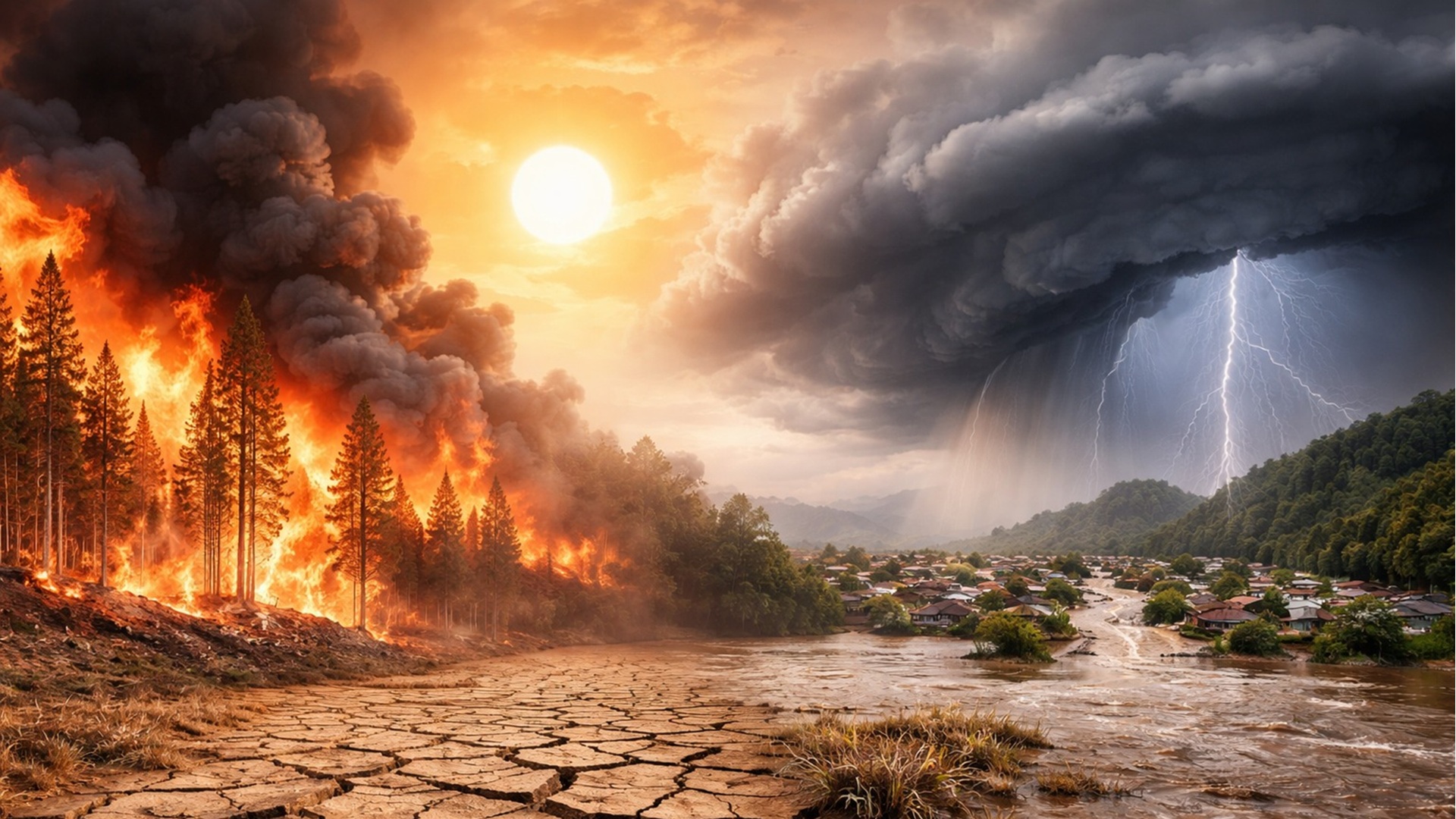
The Year 2025 Ends in Brazil Marked by Prolonged Drought, Record Heat Waves, Extreme Rain, Floods, Tornadoes, and Landslides, with Accumulated Impacts on Millions of People, Urban Infrastructure, Agricultural Production, and Public Systems for Natural Disaster Response Across the Country
The year 2025 concludes in Brazil marked by an unprecedented sequence of extreme natural events, combining prolonged drought, record heat, intense rainfall, floods, tornadoes, and landslides in different regions of the country.
Over the past twelve months, official records indicate direct impacts on millions of people, with human losses, significant economic damages, and increasing pressure on emergency response systems and urban and rural infrastructure.
Persistent Drought and Worsening of the Water Crisis

In 2025, droughtstruck hard in the Midwest, Southeast, and Northeast, drastically reducing reservoir levels and affecting water supply in dozens of municipalities.
-
While the world looks at oil, the war with Iran is already disrupting helium supply from Qatar, affecting car and iPhone chips, threatening AI expansion, and putting pressure on aluminum packaging at the highest value in four years.

-
Global warming will expose a treasure hidden under the ice of Antarctica and may spark an international dispute over gold and valuable minerals.

-
A street vendor from Praia Grande built a robot made of scrap from scooters and washing machines that pulls his popcorn cart on the beach, emits sounds, and interacts with customers, becoming an attraction on the coast of São Paulo.

-
The specifications of the Xiaomi 18 Pro Max have been leaked, and the highlight is a dual 200 MP camera with a new 22-nanometer technology that promises to consume less energy and capture details in shadows and bright areas using LOFIC HDR.


Data from the National Institute of Meteorology indicated below-average rainfall during critical periods, compromising the expected water recovery after summer.
In the Northeast, intermittent rivers remained dry for months, affecting family farming, livestock raising, and food security for communities dependent on rain. In the Southeast, water supply systems operated in a state of alert for long periods, raising risks of rationing and straining urban and industrial consumption.
Successive Heat Waves and Impacts on Health

Extreme heat was another dominant feature of 2025, with successive waves of high temperatures recorded between January and October in various Brazilian regions.
In December, capitals like Rio de Janeiro, Cuiabá, and Teresina faced consecutive days with elevated temperatures and a heat index above historical norms.
Reports from state health departments indicated an increase in visits for dehydration, heat stroke, and worsening of cardiovascular and respiratory diseases.
Workers exposed to the sun, the elderly, and children were among the most vulnerable groups to the prolonged effects of extreme heat.
Concentrated Rain and Floods in the Southeast
While part of the country faced drought, the Southeast experienced episodes of extreme concentrated rainfall, especially in the first quarter of the year.
In January, the Steel Valley in Minas Gerais recorded exceptional amounts of precipitation in a short time, causing floods and landslides.
According to the Civil Defense, the incident resulted in dozens of homeless individuals, destruction of homes, and disruptions on highways and essential services.
Entire neighborhoods were submerged, highlighting the vulnerability of densely populated urban areas with insufficient drainage.
Landslides and Human Losses
Landslides associated with intense rainfall caused human and material losses in different metropolitan regions.
Unstable slopes, informal settlements, and saturated soils contributed to the collapse of homes in risk areas.
In various municipalities, families needed to be evacuated as a preventive measure, increasing the number of displaced individuals throughout the year.
Experts warned about the recurrence of these events during intense rain periods, especially where housing and containment policies are insufficient.
Historical Floods in the South of the Country
The South of Brazil faced large-scale flooding again in 2025, especially between May and June.
Cities in Rio Grande do Sul recorded overflowing rivers, prolonged flooding, and severe damage to urban and rural infrastructure.
Bridges, roads, and power systems were compromised, isolating entire communities for days.
Agriculture suffered significant losses, with crops submerged and direct damages to regional production.
Tornadoes and Severe Winds in the South
In addition to the floods, the South also recorded episodes of tornadoes and severe winds throughout 2025.
In the interior of Paraná, a tornado hit urban and rural areas, destroying homes, schools, and agricultural structures in just a few minutes.
Roofs were torn off, trees were uprooted, and power lines were damaged, leaving thousands without electricity. Such events, although localized, reinforced the challenges of short-term weather forecasting in the country.
Cyclones and Intense Storms
Extratropical cyclones also marked the year, causing storms, strong winds, and heavy seas in the South and Southeast coasts.
Winds exceeding 100 kilometers per hour were recorded during some episodes, according to official meteorological data.
The impact included interruptions in power supply, structural collapses, and damages to port and coastal activities.
Fires and Burns Associated with Drought
The combination of prolonged drought and extreme heat increased the risk of forest fires in different Brazilian biomes.
Areas of the Cerrado and the Amazon recorded fire outbreaks, affecting air quality and raising environmental concerns.
Municipalities reported difficulties in combating the fire, exacerbated by limited resources and unfavorable weather conditions.
Accumulated Social and Economic Impacts
Throughout 2025, natural disasters caused significant social impacts, with thousands of families displaced or homeless.
Municipalities and states faced high costs for infrastructure reconstruction, social assistance, and economic recovery. Small rural producers were among the most affected, especially in regions hit simultaneously by drought and floods.
A Year of Extremes and Future Challenges
The end of 2025 consolidates a scenario of increasingly frequent and intense climatic extremes in Brazil.
The overlap of drought, record heat, intense rains, floods, tornadoes, and landslides exposed historical structural weaknesses.
Authorities and experts emphasize the need for investments in climate adaptation, urban planning, and alert systems.
The year concludes making it clear that extreme natural events have ceased to be an exception and have come to shape, permanently, Brazilian daily life.








-

Uma pessoa reagiu a isso.