





 Portuguese
  English
  Spanish
  3 min of reading
  76 comments


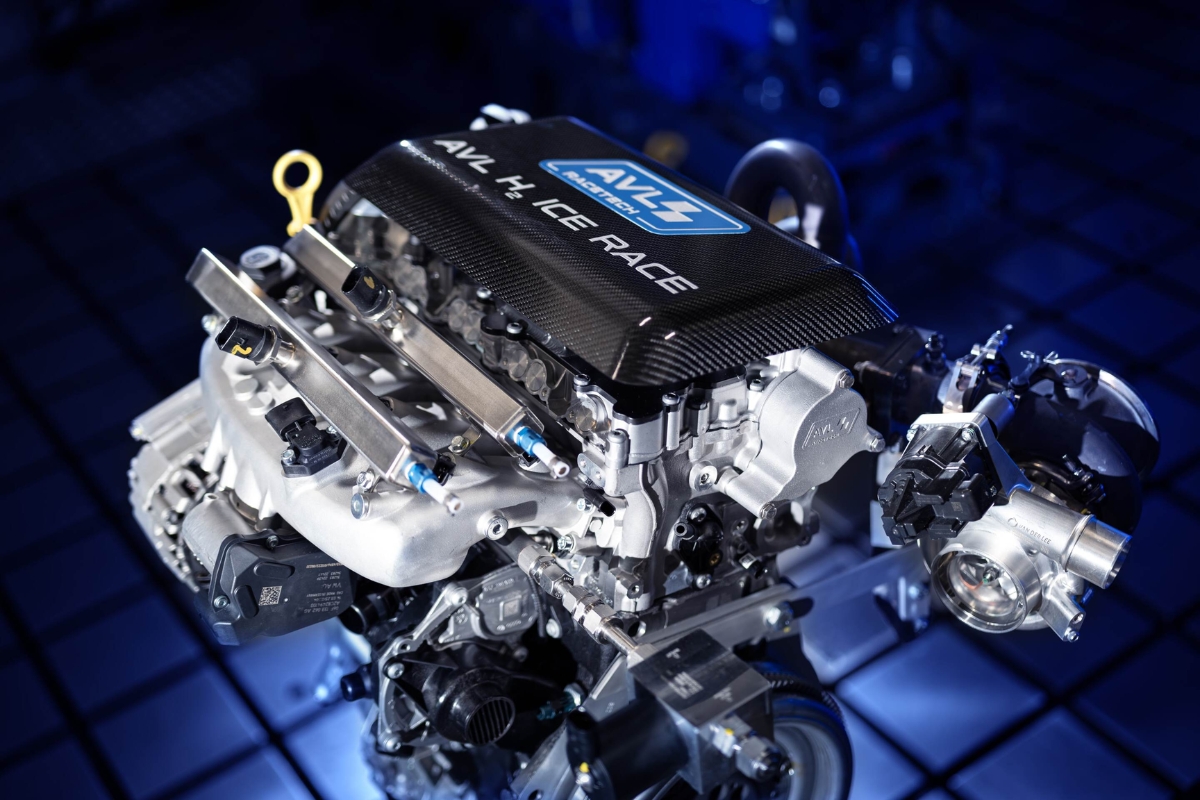


AVL Racetech Bets On Water To Tame Hydrogen: Injectors Spray In The Manifold, Reduce Detonation Risks, Improve Ignition And Release 410 HP In A 2-Liter, Reigniting The Debate About Converting Current Engines Without Extra Costs
The water engine is running for the first time in history. It has 400 HP of power and 6,500 RPM. With the active search for decarbonization, engines are one of the main focuses.
For years, there has been talk about the need to achieve sustainable mobility. When the technology of the future is mentioned, fossil fuels are never considered, but rather cleaner alternatives such as electricity or hydrogen.
In the quest for cleaner transportation, the possibility of burning H with combustion engines is being considered. Its operation is less efficient than the current method (the fuel cell system), but it retains much of the essence of these types of propulsion, with a sound similar to what we find in gasoline engines.
-
Motorola launched the Signature with a gold seal from DxOMark, tying with the iPhone 17 Pro in camera performance, Snapdragon 8 Gen 5 that surpassed 3 million in benchmarks, and a zoom that impresses even at night.

-
Satellites reveal beneath the Sahara a giant river buried for thousands of kilometers: study shows that the largest hot desert on the planet was once traversed by a river system comparable to the largest on Earth.

-
Scientists have captured something never seen in space: newly born stars are creating gigantic rings of light a thousand times larger than the distance between the Earth and the Sun, and this changes everything we knew about stellar birth.

-
Geologists find traces of a continent that disappeared 155 million years ago after separating from Australia and reveal that it did not sink, but broke into fragments scattered across Southeast Asia.
Here Comes A Water Engine That Surprises Us With Its Power
This is what the first European water engine aims to do. In reality, it is the first European hydrogen engine that has one trick: water injection, which is why we call it that. It comes from the hands of engineers at AVL Racetech, specialists in developing technologies for competition and suppliers of equipment from Formula 1 to NASCAR.
As announced on their website, they have created a 2-liter turbocharged combustion engine that develops 410 HP of power at 6,500 RPM and delivers an engine torque of 500 Nm between 3,000 and 4,000 RPM.

These figures are typical of gasoline turbocharged engines with similar power that, until now, were above the propulsion systems that burned hydrogen. To achieve these numbers, they warn that it is vital to inject hot water into the intake system.
Through injectors, they spray water into the air intake manifold. According to their account, this makes a more homogeneous ignition of H possible and prevents premature autoignition or detonation.
The Water Engine Is A Reality, But Not As You Thought: It Boasts 400 HP Of Power
Now it is essential that the piece completes its testing phase and is subjected to examination in competition. Its implementation in a realistic environment will be vital to verify to what extent we are facing a reliable system or not.
Its results will determine whether it is possible to see it as a large-scale project or a good idea written on paper. The company believes that it is an interesting option beyond the already known fuel cell. Its argument is that it is feasible to convert gasoline combustion engines to hydrogen and this should not incur additional costs.

The Water Engine Is Not That New
Although it seems like an innovative and futuristic presentation, we have seen this concept before. BMW has already worked with this system. They sprayed water into the manifold to lower the temperature of the air “landing” in the combustion chamber and exercise control over premature autoignition generated in response to excessive temperatures.
The Germans claimed that this system increased power and reduced consumption. By having cooler air with a greater density, the oxygen content in the combustion chamber increased, allowing for a higher average pressure during combustion, implying an increase in power and torque. It even reduced the volume of nitrogen oxide particles, which are highly harmful to humans.
For now, we have to wait to see how far this new 400 HP water engine goes. In the meantime, alternatives continue to emerge, such as the impossible engine that could be used in cars.








Chamar de motor de água é enganar os inocentes. Não existe a possibilidade de um motor a água. É um umtor a hidrogênio. Esse tipo de motor surgiu durante a segunda guerra mundial e foi utilizado pelos alemães. É um sistema ainda economicamente inviável e inseguro. O hidrogênio é altamente explosivo. Qualquer vazamento causa incêndio e explosão. Ainda tem muito chão pra essa tecnologia ser viável.
Eu montei uma vez um sistema de injeção de hidrogênio num motor Fiat fire com um bomba pneumática que comprimia o hidrogênio em 2 bar pra alimentar o motor e mesmo 10 litros por minuto não dava conta até que explodiu quase nos matou mesmo com 2 válvulas corta fogo e passar por dentro da água pra não ter retorno de chamas ele explodiu !!!!!!! Pra funcionar bem tem que armazenar hidrogênio mas sabe e uma bomba
Só enrolação já poderia estar rodando estes veículo pois tem mais de 10 anos que este sistema foi inventado mais as grandes empresas petrolificas não deixam a tecnologia ser desenvolvida e prolifera pois acabarão todos cheques do petróleo, pois todos cidadão pode simplesmente encher o tanques em suas residência, e são controladores pelo poderes … Já tinhão que ter acabado a erra do combustível fóssil a tempos ….
Esse sistema já não foi elaborado por Stanley Meyen? Porque vcs estão vocês sendo o primeiro a fazer o motor a água? Então oque ele fez, faz juz a sua tecnologia anteriormente feita antes de vcs !