





 Portuguese
  English
  Spanish
  5 min of reading
  0 comments


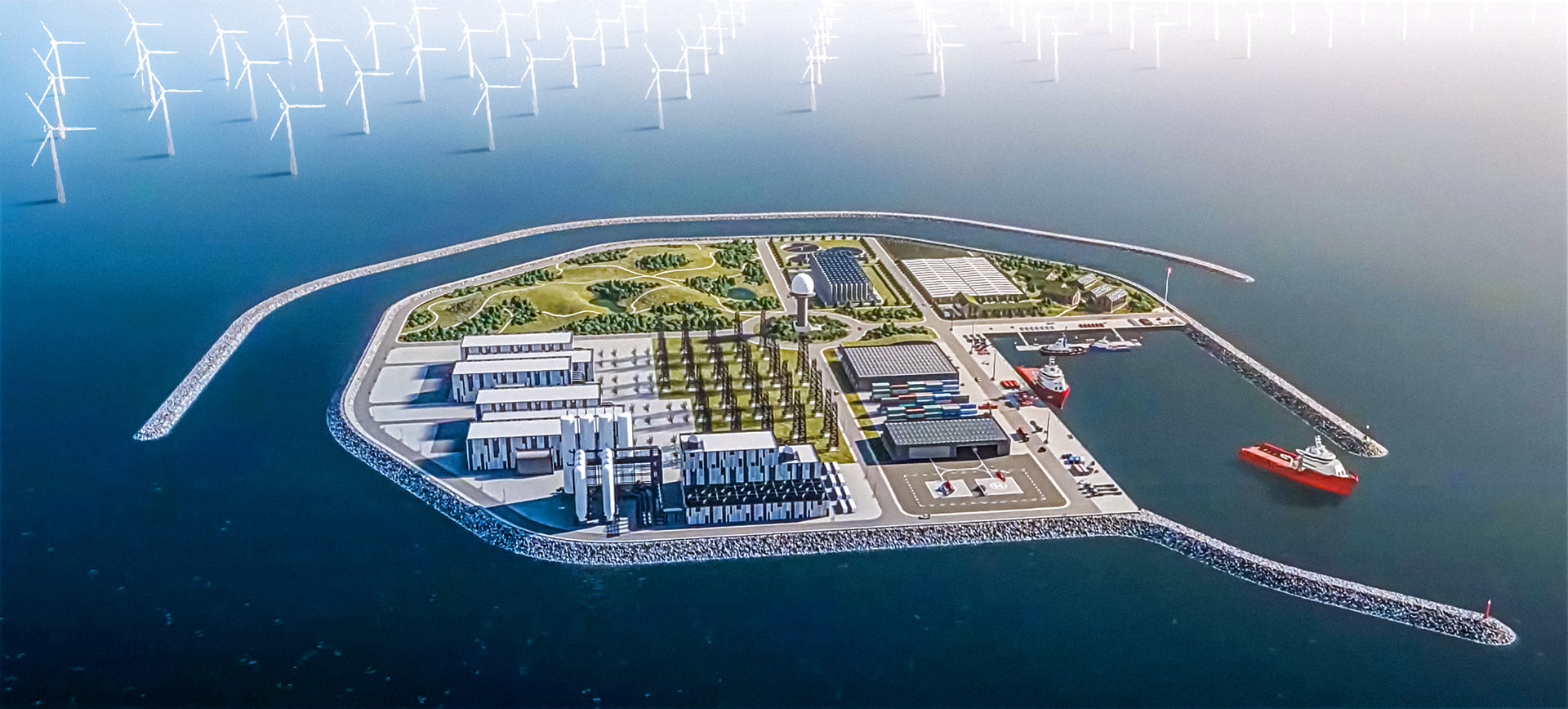
Denmark Builds The First Energy Island In The World With 10 GW And US$ 30 Billion In The North Sea To Supply Millions With Offshore Wind And Green Hydrogen.
At a time when Europe is trying to balance energy security, climate, and geopolitical independence, an ambitious project begins to take shape in the cold waters of the North Sea. This is the so-called Energy Island, an artificial complex that Denmark is constructing to interconnect dozens of offshore wind farms and distribute renewable electricity to multiple countries simultaneously. More than just a maritime engineering feat, the island represents a new model of energy matrix, where a structure in the middle of the ocean functions as a continental hub for clean energy.
The scale is impressive: the cost is already estimated at over US$ 30 billion, the total capacity could reach 10 gigawatts (GW), and the energy volume would be sufficient to supply up to 10 million European households.
This monumental bet encapsulates the question that today drives governments, utilities, investors, and engineers: who will control clean energy in the next decade? Denmark believes that part of the answer lies at sea.
-
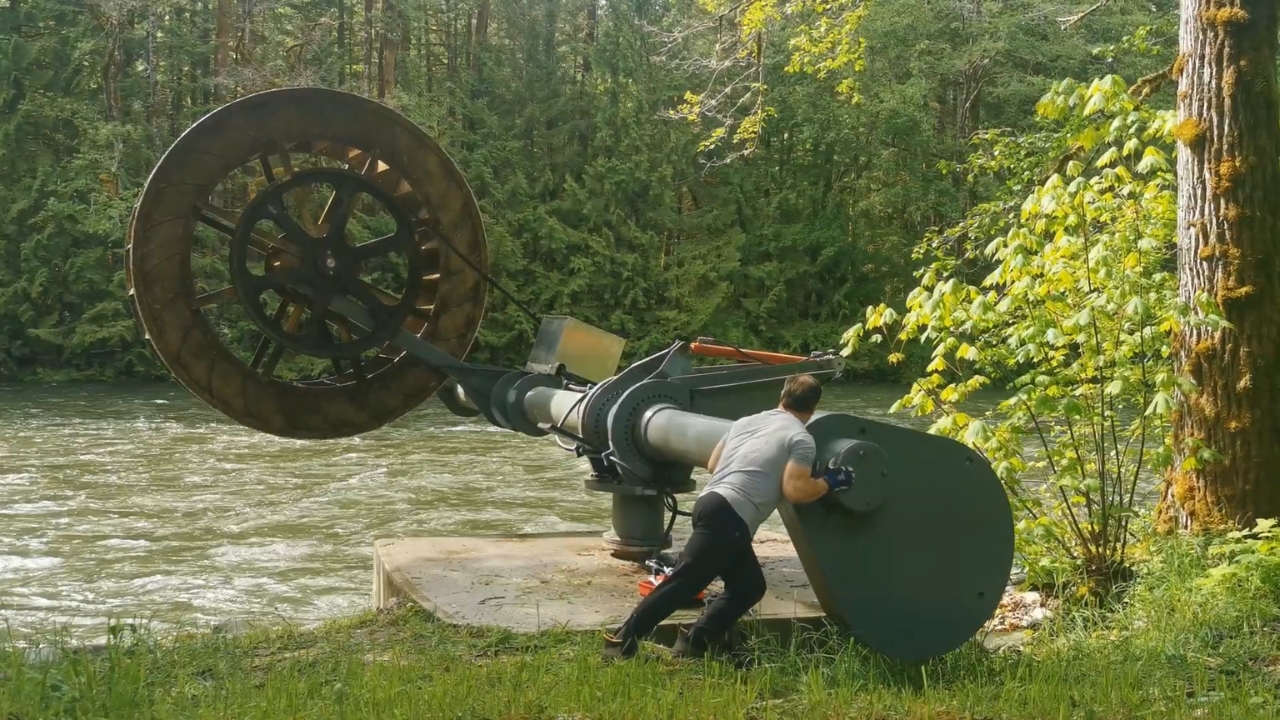
A Canadian retiree creates a hydroelectric system on a real river, generating energy continuously throughout the day and demonstrating how the power of water can supply a house with stability even in a simple structure.
-
Petrobras reaffirms its commitment to the market and ensures that it will carry out the energy transition safely to maintain national sovereignty.

-
Researchers discover a possible hydrogen deposit of up to 46 million tons beneath an ancient coal basin, and the volume could exceed half of the entire global production.

-
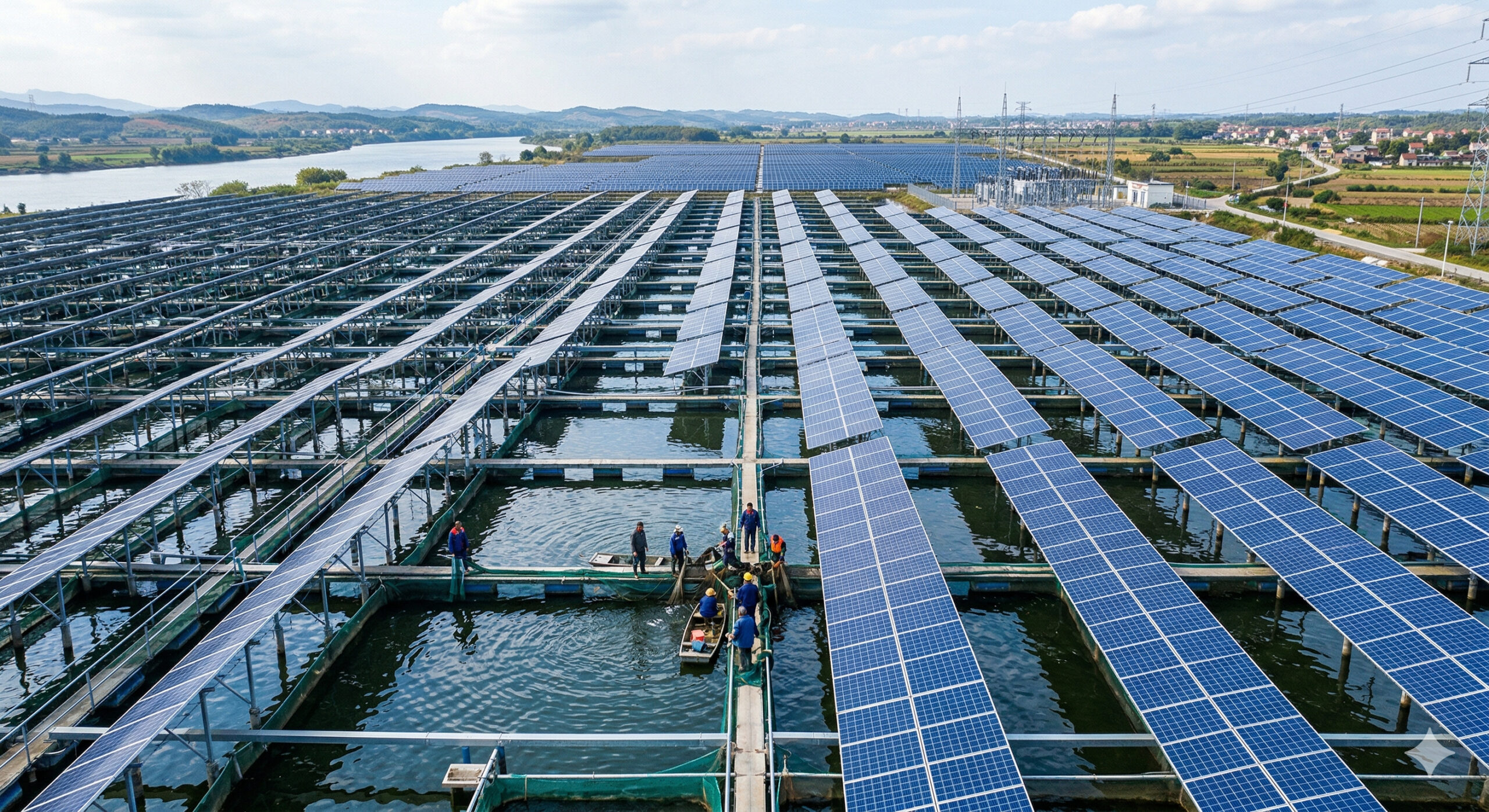
China bets on the Fishery-PV model and transforms fish farms into giant solar plants, covering ponds with panels that generate energy while utilizing the same space for large-scale aquaculture production.

How An Energy Island Works And Why It Is Not Just “A Bigger Wind Farm”
The logic of the Energy Island is not to build turbines around it and pull cables to the coast, as is already done in several countries. The difference lies in electrical integration.
The island will be an artificial platform with converter substations, transformers, control systems, and all the necessary infrastructure to concentrate the energy from dozens of wind farms distributed around the North Sea. This energy will be converted to high voltage direct current (HVDC) and sent directly to the connected countries.

In simple terms, the island functions as a continental transformer in the middle of the ocean, eliminating one of the bottlenecks of traditional offshore parks: the need for each complex to have its own direct connection to the shore.
By unifying conversion, transmission, and dispatch, Denmark reduces losses, lowers infrastructure costs, and creates a flexible system that can be modularly expanded.
10 Gigawatts: Industrial Scale For A New Electric Europe
To understand why 10 GW is such an explosive number, it is necessary to compare it with the current reality. Today, a typical offshore wind farm in Europe has between 300 and 500 megawatts (MW). Some reach up to 1.2 GW.
The Energy Island, therefore, is equivalent to building between 20 and 30 conventional parks, and concentrating them in a single distribution point.
This is the moment when scale ceases to be just an engineering issue and becomes geopolitics. An island that exports energy to multiple countries simultaneously creates interdependence, regulatory cooperation, electrical standardization, trade exchange, and diplomatic negotiation based on megawatts. Electricity takes on the role that natural gas has played for decades.
The North Sea Has Become The New Middle East Of Clean Energy
Geography helps explain the ambition. The North Sea has fast, constant, and predictable winds, with a capacity factor above 50%, nearly double the global average.
This means that when a solar panel is inactive at night, the turbine in the North Sea continues to spin. Furthermore, the relatively shallow depth allows for the installation of fixed foundations, which are cheaper than floating turbines.
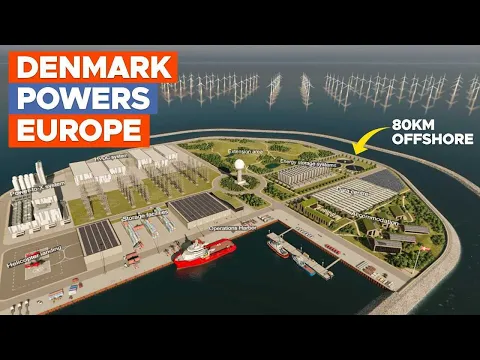
For this reason, the region is consolidating as the largest offshore wind hub on the planet, with the United Kingdom, Netherlands, Germany, Denmark, Norway, and Belgium connected by a web of underwater cables.
This scenario explains why Denmark does not just want to generate energy: it wants to centralize, convert, export, and sell energy. Who controls the central node controls the flow.
Continental Interconnection: Germany, Netherlands, Belgium, And Beyond
The project has multinational potential from its conception. The Energy Island will incorporate direct connections with Germany, Netherlands, and Belgium, forming a maritime electric corridor capable of sending energy to the industrial heart of Europe and, at the same time, receiving surplus energy when needed.
There are plans to integrate United Kingdom and Norway, creating a “Northern HVDC Belt,” where Norwegian hydropower and British wind energy communicate in real-time with the Danish system.
This network creates an unprecedented phenomenon: instant transnational energy, something unthinkable in the era of coal, pipelines, and natural gas. This is of interest to Europe because it reduces dangerous dependencies, such as Russian gas, which for years fueled boilers, industries, and thermoelectric plants.
Billions Of Dollars, Complex Engineering, And A New European Naval Industry
Building the Energy Island requires more than just turbines. It involves marine foundation, dredging, storm protection, high voltage underwater cables, converter substations, HVDC infrastructure, port logistics, and installation vessels capable of transporting giant components.
Each modern offshore turbine can exceed 260 meters in height, with blades over 110 meters and generators from 15 to 18 MW. Installing hundreds of them requires machines, shipyards, naval welders, specialized ports, and some of the largest marine cranes in the world.
The cascading effect on the economy creates direct jobs in naval, electrical, civil engineering, metallurgy, ports, cabling, and offshore welding. It is a green reindustrialization in practice.
Green Hydrogen: The Second Phase Of The Island
The Energy Island was not designed just to transmit energy, but also to produce green hydrogen with the wind surplus. This is key to reaching sectors that direct electricity cannot easily reach, such as steelmaking, aviation, and ocean navigation.
Denmark is already discussing the installation of marine electrolyzers, transforming the island into an export hub for hydrogen to the port of Rotterdam and other European industrial regions.
Environmental Impact And The Ecological Issue At Sea
The installation of turbines offshore raises debates about migratory birds, marine mammals, sedimentation, and underwater noise. The project plans for continuous monitoring, sound emission limits during critical periods, and studies so that the turbine bases act as artificial reefs, something already observed in parts of the North Sea.
Environmentalists do not dismiss impacts but emphasize that the alternative of continuing to burn gas and coal at scale produces incomparably greater damage to the climate and global biodiversity.
Post-Oil Europe: The Energy Island As A Symbol
Looking to the future, the Energy Island represents a clash of eras: from oil and gas to wind and hydrogen. Europe is already working with scenarios of 180 GW of offshore wind by 2040, and the Danish island will be the prototype of a constellation of interconnected energy hubs.
If everything goes well, the question will cease to be “who has oil?” and will become “who has wind, who has sun, and who has the capacity to interconnect?” This is the civilizational shift that the North Sea is about to inaugurate.









-

-

-

5 pessoas reagiram a isso.