





 Portuguese
  English
  Spanish
  3 min of reading
  0 comments


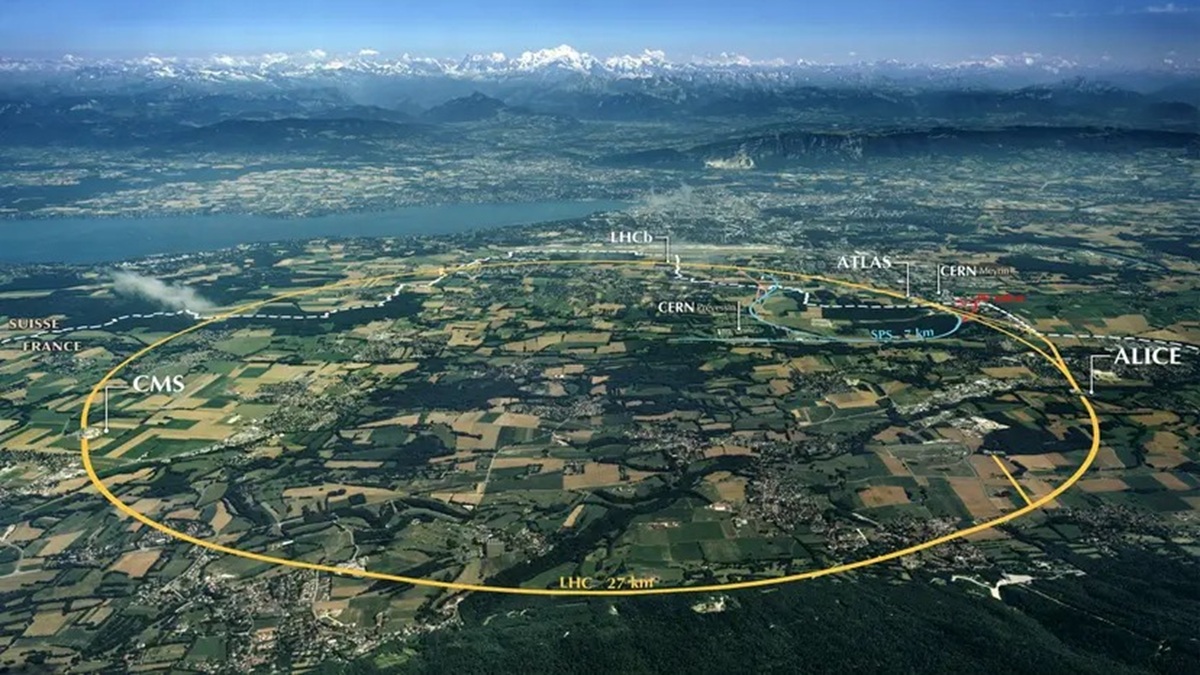
The Integration of the Cooling System of the Large Hadron Collider into the Urban Network of Ferney-Voltaire Allows for the Reuse of Up to 5 Megawatts of Waste Heat, Supplying Thousands of Homes, Reducing CO2 Emissions and Increasing the Energy Efficiency of CERN
The world’s most powerful particle accelerator began supplying heating to homes and businesses in France since mid-January by integrating its cooling system into an urban network, reducing CO2 emissions and dependence on traditional energy sources.
The Large Hadron Collider (LHC), operated by CERN, has been supplying the French city of Ferney-Voltaire over the past two weeks, following the activation of a heat exchange system connected to the accelerator’s 27-kilometer underground ring.
Heat Exchange System Connects the Accelerator to the Urban Network
The initiative became possible after the activation of a new system that captures the heated water from the LHC’s cooling circuits. These circuits are essential for maintaining the safe operation of the equipment throughout the 27-kilometer ring.
-
With a cost per shot close to zero, the DragonFire laser could change naval warfare in 2027 and provide British ships with nearly unlimited defense against drones.

-
A British startup creates tires that generate electricity in electric vehicles when passing over potholes, speed bumps, and cracks.

-
Scientists have created robots made with living cells that have their own nervous system, swim on their own, explore the environment, and self-organize without any genetic engineering, and now they want to do the same with human cells.

-
Students create a solar-powered ambulance that operates without a plug, without fuel, and still keeps medical equipment running in remote areas.


The water used to cool the systems absorbs heat during its circulation through the equipment. Traditionally, this heat would be dissipated into the atmosphere through cooling towers before the water was reused in the system.
With the new arrangement, the heated water first passes through two heat exchangers with a capacity of five megawatts each, which transfer thermal energy to the urban heating network of Ferney-Voltaire, inaugurated on December 12.
Point 8 of the LHC Enables the Connection with Ferney-Voltaire
The LHC has eight surface points distributed around its underground ring. The so-called Point 8, located on the Franco-Swiss border, near the village of Prévessin-Moëns, was chosen as the link for the system.
This point is situated about 2.7 kilometers from the city of Ferney-Voltaire and concentrates cryogenic facilities that require constant cooling with water, creating suitable conditions for thermal recovery.
The building at Point 8 houses the connection between CERN’s heat exchange system and the heating network of the new commercial and residential area of the French city, allowing for the continuous supply of reused thermal energy.
Supply of Up to 5 MW and Impact During Phase LS3
As part of the urban network, CERN supplies heat whenever possible, as long as its research activities are not affected. Currently, Ferney-Voltaire uses up to five megawatts from the accelerator.
The system has the potential to supply double that capacity when the accelerators are fully operational. Even so, the supply will continue during periods of lower scientific activity.
This timing coincides with the LHC entering its third phase of extended shutdown, known as LS3, aimed at major upgrades for the future High Luminosity LHC. Despite the pause, several systems at Point 8 will continue to be cooled.
During the LS3 phase, CERN will be able to supply between one and five megawatts to the heating network, except for a total period of five months over several years, ensuring partial continuity of thermal supply.
Energy Strategy Foresees Annual Savings of Up to 30 GWh
The reuse of waste heat marks the first time that the LHC, known for colliding protons at speeds close to the speed of light, is used as a renewable thermal source for urban use.
According to CERN, the project integrates a broader energy efficiency strategy aligned with the ISO 50001 standard. The organization has been redesigning its infrastructure to systematically capture and reuse waste heat.
Other initiatives include the Prévessin Data Center, equipped with a heat recovery system that is expected to heat most of its buildings starting in the winter of 2026/2027.
There are also plans to recover heat from the cooling towers of Point 1 of the LHC, aiming to supply buildings in the Meyrin complex, expanding the use of energy reuse.
According to CERN, collectively, these initiatives will allow saving between 25 and 30 GWh per year starting in 2027, representing a significant advancement in the responsible management of energy within the organization.








-

-

-

-

11 pessoas reagiram a isso.