





 Portuguese
  English
  Spanish
  4 min of reading
  0 comments


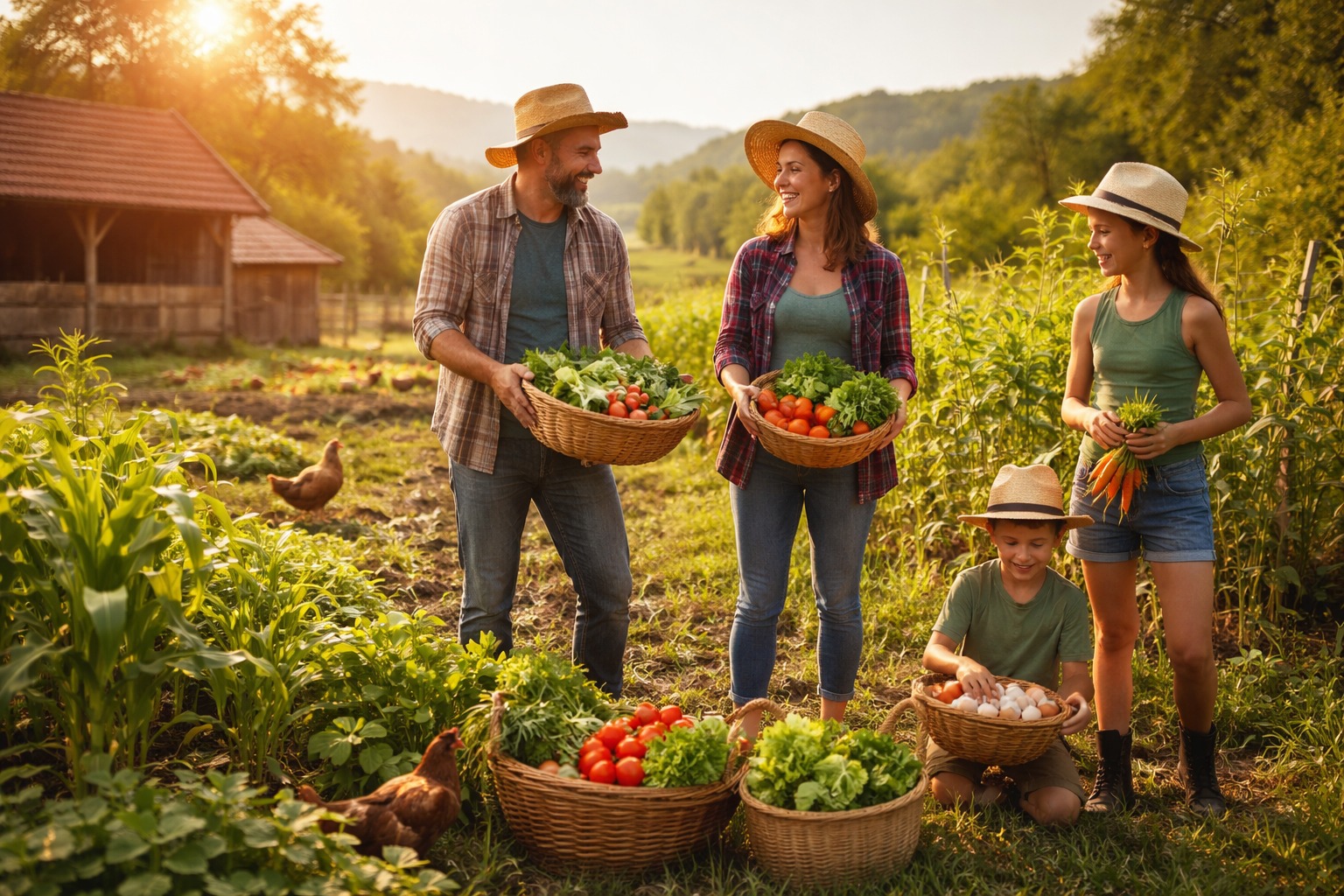
Life in the Country: How Families Organize Their Self-Production and Reduce Dependence on Money in Rural Properties
In different rural areas, families maintain a lifestyle based on self-production of food. In this system, family farming organizes cultivation, animal husbandry, and storage to reduce external purchases and ensure food throughout the year.
Production Focused on Household Consumption
In many rural properties, daily routines revolve around planned production to supply the family itself.
Instead of calculating monthly expenses at the market, planning considers how many plants need to be grown and how many animals will be raised.
-
At 93 years old, Mr. Francisco completes a 5 km run, is cheered as he crosses the finish line, moves the city, and gives an emotional lesson in strength, discipline, and the will to live.

-
With 96 rooms, 37 bathrooms, and five kitchens, the mansion of the heir to Pernambucanas is worth R$ 50 million, featuring a pool and two terraces.
-
An old error in the property registry may force a resident to demolish the kitchen and bathroom and also incur expenses to rebuild everything.
-
A Brazilian thought he was making a good deal, but lost R$ 125,000 while trying to buy a Toyota Hilux on Facebook.


In this model linked to family farming, money does not completely disappear from daily life, but it ceases to be the center of economic organization. Much of the food consumed comes directly from the land itself.
Many families can recite from memory the origin of almost everything that reaches their table. This accumulated knowledge includes cultivation practices, animal husbandry, and management of the environment around the house.
In addition to ensuring food, this way of life preserves local knowledge passed down through generations. Practical experience in the field becomes an essential part of daily organization.
How Food Self-Sufficiency Works
Food self-sufficiency in rural areas does not mean isolation from trade. The main goal is to reduce external purchases and increase the amount of food produced within the property itself.
To achieve this balance, productive areas are organized in a complementary way. Each space performs a different function throughout the year, ensuring food variety.
The productive backyard is often located near the house and includes herbs, medicinal plants, and fruit trees. This space provides fresh food for frequent use and easy access.
Organized gardens focus on short-cycle leaves, vegetables, and roots. These plots allow for constant harvests and help maintain the household’s daily supply.
There are also larger areas designated for planting grains and crops that can be stored. These crops ensure food reserves for longer periods.
Animal husbandry is also part of the system. Chicken coops, pens, or pastures provide protein for the family diet and produce manure used as natural fertilizer.
Additionally, storage spaces like barns, pantries, and shelves hold grains, preserves, and dry foods. These locations allow for surplus to be available throughout the year.
Practices That Sustain the Rural Productive System
To maintain this type of production, families use strategies based on utilizing the natural resources available on the property.
A common practice is composting. Dry leaves, branches, fruit scraps, and vegetable peels are transformed into fertilizer, helping to maintain soil fertility.
Animal manure is also used as natural fertilizer. In this way, waste generated on the property returns to the productive system.
Another strategy is the staggering of plantings. Different crops are planted at varied times, allowing for harvests at distinct times of the year.
It is also common to alternate crops in planting areas. This practice helps preserve soil quality and reduce the need for external inputs.
Many families keep seeds adapted to the local climate. These varieties are saved from one harvest to the next, reinforcing production autonomy.
This set of practices strengthens family farming and helps maintain stable production over time.
Organization of Work Between Generations
Within family farming, work is divided among different generations of the same family. Each member contributes according to experience, age, and physical capacity.
Older individuals usually provide guidance on planting times and signs of weather changes. This knowledge helps organize the agricultural calendar.
Adults take on tasks that require greater physical effort. Among these are land preparation, crop management, and harvesting.
Children and teenagers, when participating in activities, help with age-appropriate tasks. Watering plants, gathering ripe fruits, and feeding small animals are among the most common activities.
The work rhythm does not follow fixed hours. It typically aligns with the seasons of the year and the agricultural calendar.
Simple Life in the Country in 2026
Even with the growing presence of technology in rural areas, the logic of self-production continues to be present in various regions.
Modern tools are incorporated into daily life without altering the basic principle of producing as much as possible within the property.
Examples include solar-powered water pumps and weather forecasting apps. These tools assist work without changing the structure of family production.
Thus, the land remains the foundation of the economic organization of many families. It ensures daily food and keeps work continuous throughout the year.
Where there is access to land, time for dedication, and adequate knowledge, family farming continues to demonstrate the ability to sustain families with low dependence on money, even in 2026.
In some places, this way of life still remains an alternative for economic and social organization. Small-scale rural production continues to function as a basis for food security and the daily routines of families in the countryside.
With information from Tupi.






Seja o primeiro a reagir!