





 Portuguese
  English
  Spanish
  4 min of reading
  1 comment


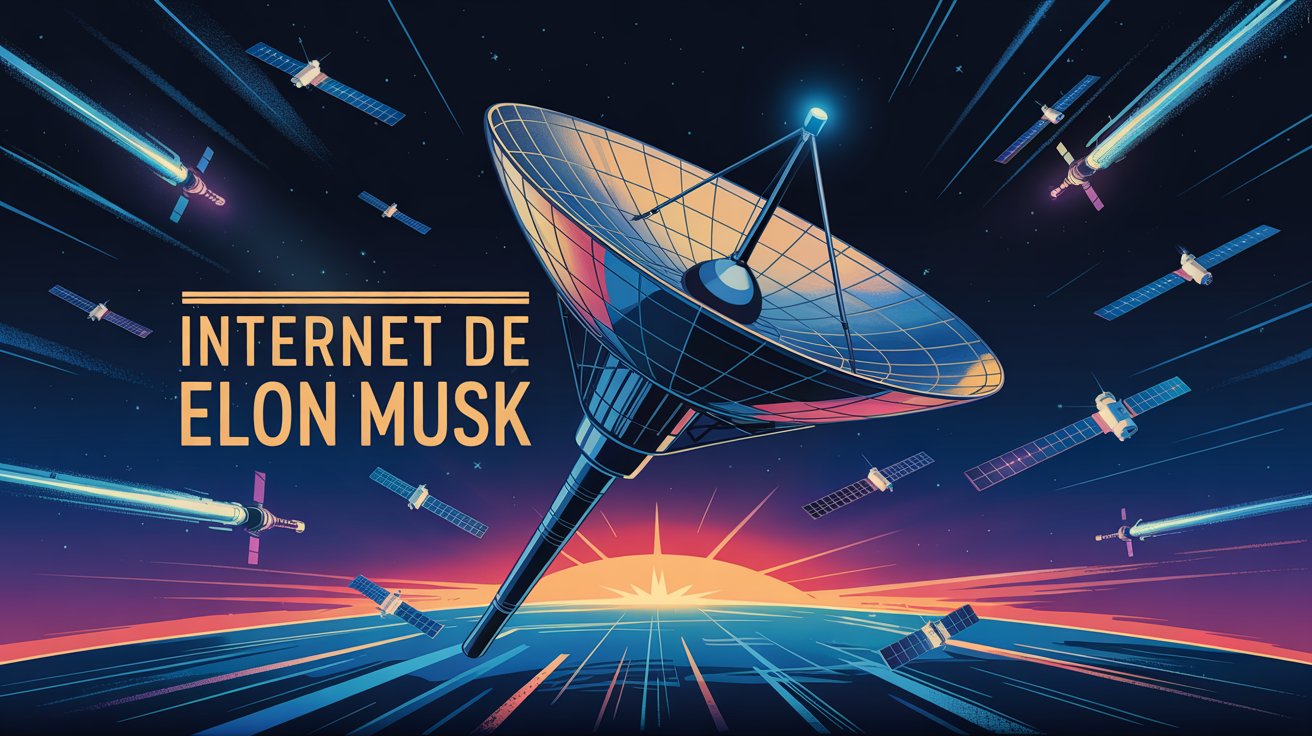

Satellite Connectivity Is Transforming The Way The World Accesses The Internet, Bringing High Speeds To The Most Remote Areas. The Partnership Between Giants Like T-Mobile And Starlink Promises An Unprecedented Revolution In Global Connectivity.
Satellite connectivity has gained increasing prominence, especially with the arrival of Starlink, the internet created by SpaceX, by Elon Musk.
This revolutionary technology aims to bring internet access to remote locations where cable and cell towers cannot reach.
Using low Earth orbit satellites, Starlink sends signals directly to ground antennas, allowing isolated regions to connect to the network in a stable and efficient manner.
-
Brazil is about to inaugurate the largest maritime surveillance system in its history, with radars, infrared cameras, and autonomous sensors installed on Ilha Grande to monitor the entire Brazilian coast in real time.

-
Archaeologists discover in China a 5,000-year-old tomb with over 350 artifacts, nearly 200 jades, and signs of intentional destruction, in a discovery that could be the gateway to a lost prehistoric kingdom.

-
This small town in Germany created its own currency 24 years ago, today it circulates millions per year, is accepted in over 300 stores, and the German government allowed all of this to happen under one condition.

-
A vacuum robot with a five-axis mechanical arm capable of picking up objects from the floor, avoiding obstacles in real time, and continuing to clean on its own inaugurates a new generation of appliances that see, think, and act within the home.


Satellite Internet: The Solution For Remote Locations
The main advantage of this technology is its ability to provide internet in areas where traditional cable and antenna infrastructure do not reach.
In rural areas, forests, and even mountainous zones, where conventional telecommunication operators have no coverage, Starlink emerges as a true connectivity solution.
This is made possible by the use of low-orbit satellites, which ensure wider coverage and faster connections.
In addition, the use of low-orbit satellites offers a significant reduction in latency, meaning that web browsing and the use of real-time communication services, such as video calls, become faster and more efficient.
Starlink, which is already establishing itself as a leader in this sector, has provided users in more remote areas with a high-quality internet experience.
Strategic Partnership Between T-Mobile And Starlink
The integration between giants T-Mobile and Starlink is one of the most anticipated in the telecommunications sector.
The partnership aims to provide a direct satellite connection, allowing T-Mobile users, even in areas without signal tower coverage, to access the internet at high speeds.
This service will be extended until July 2025 for customers of other operators like AT&T and Verizon, further expanding access to this innovative technology.
As a result, millions of people who previously did not have access to stable internet will be able to connect more easily and quickly.
The partnership between T-Mobile and Starlink is a significant milestone for the expansion of the internet to remote areas, representing a substantial advance in connectivity in the country, especially in historically neglected regions.
Benefits Of Connecting With Starlink For Isolated Areas
The arrival of Starlink promises to bring a series of benefits for communities in isolated areas.
Among the main ones are:
Improvement in Access To Education And Health: Internet access allows schools and hospitals, even in remote regions, to utilize digital platforms for distance learning and telemedicine services.
Increase In Remote Job Opportunities: With satellite connectivity, many people will be able to work from home or access jobs that were previously unavailable in their regions.
Digital Inclusion: Starlink can be a game-changer for underserved communities, promoting digital inclusion and connecting people to a myriad of online services.
Reduction In Dependence On Terrestrial Infrastructure: In many places, cable and tower infrastructure is limited or nonexistent. Satellite internet reduces this dependence, making connectivity more accessible.
Emergency Communication: In situations of natural disasters or other emergencies, satellite connectivity can be essential for coordinating quick responses and ensuring communication between rescue teams and victims.
Faster And More Stable Connections: Even in remote areas, Starlink promises a more stable and faster connection, offering an internet experience closer to that of major cities.
Economic Impact Of The New Connections Via Starlink
The internet is not only a communication tool but also an engine for economic development.
When a region gains access to the network, business and innovation opportunities emerge rapidly.
Local commerce benefits from the ability to sell products on digital platforms, which can transform previously isolated markets.
Moreover, the arrival of connectivity attracts investments from companies looking to explore new markets.
The presence of good internet infrastructure facilitates the establishment of new businesses and can generate a range of jobs.
As a result, the internet ceases to be a luxury and becomes an essential tool for the economic growth of areas that were previously disconnected.
The Future Of Global Connectivity: Trends And Innovations
The impact of Starlink goes beyond the simple expansion of internet coverage.
It is part of a broader trend in the telecommunications sector, which includes the creation of hybrid networks between satellites and terrestrial infrastructure.
The combination of these two technologies can result in a more robust and efficient global network.
Other trends arising with the advancement of satellite connectivity include:
Expansion Of The Internet To Disconnected Regions: Starlink and other similar initiatives have the potential to bring internet access to millions of people in places currently without access, contributing to the democratization of information.
Growth Of Distance Learning And Telemedicine: The expansion of connectivity also drives online education and telemedicine, especially in rural areas where in-person services are limited.
Development Of New Connectivity-Based Technologies: With the increasing demand for internet access, new technologies and platforms emerge to leverage the potential of expanded connectivity.
Strategic Partnerships: Telecommunication companies and satellite startups are coming together to develop new connectivity solutions, promising to further accelerate the expansion of internet access globally.
Has The Digital Revolution Come For Everyone?
With Starlink and other similar initiatives, the promise of a more connected world becomes increasingly real.
And you, do you believe that the expansion of satellite internet can truly transform the lives of millions of Brazilians in remote areas? Leave your opinion in the comments!




Quando isso chega aqui no Brasil?