





 Portuguese
  English
  Spanish
  6 min of reading
  0 comments


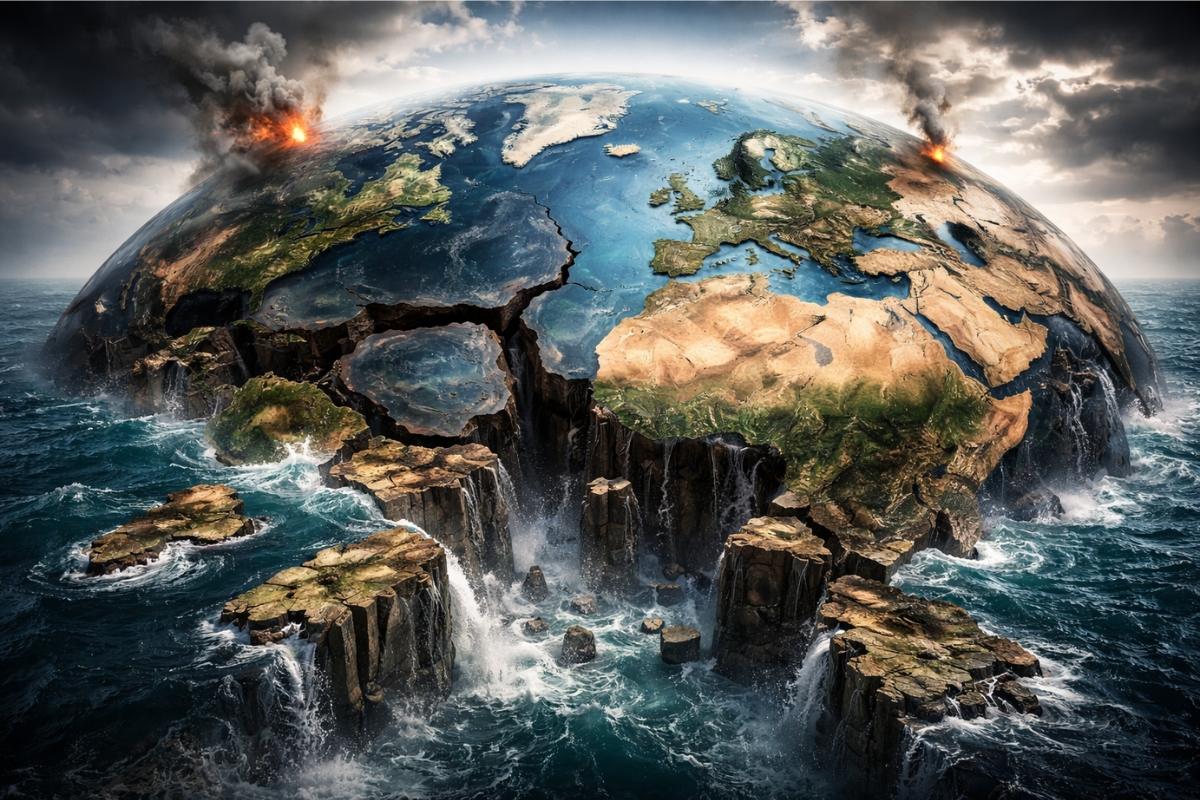
Internal Tensions, Climate Pressure, and Historical Divisions Pose Growing Threat to National Borders
To say that countries could disappear may seem exaggerated at first glance, but it is neither a distant theory nor a movie plot. There are a set of very real factors putting entire nations at risk in the coming decades. And we’re not just talking about environmental impact. Political divisions, internal crises, and territorial disputes also contribute to the equation that projects an uncertain future for various territories.
When observing the global scenario more closely, a pattern emerges. Wealthy regions seeking independence, islands being pressured by the sea, and central governments losing strength to keep everything united. The sum of these elements creates an environment where countries could disappear or simply cease to exist as we know them today.
And this matters much more than it seems. The possible act of disappearing from the map affects the global economy, trade routes, defense, and even mass migration flows.
-
Friends have been building a small “town” for 30 years to grow old together, with compact houses, a common area, nature surrounding it, and a collective life project designed for friendship, coexistence, and simplicity.

-
This small town in Germany created its own currency 24 years ago, today it circulates millions per year, is accepted in over 300 stores, and the German government allowed all of this to happen under one condition.

-
Curitiba is shrinking and is expected to lose 97,000 residents by 2050, while inland cities in Paraná such as Sarandi, Araucária, and Toledo are experiencing accelerated growth that is changing the entire state’s map.

-
Tourists were poisoned on Everest in a million-dollar fraud scheme involving helicopters that diverted over $19 million and shocked international authorities.

Spain Joins the List of Countries That Could Disappear Due to Separatist Pressure
Spain has been unified for centuries, but it faces internal wear that is not new. Regions like Catalonia and the Basque Country maintain their own cultural identity, language, and well-established regional political structures.
In recent years, demonstrations, separatist flags, and regional voting have become part of the political landscape. Barcelona, one of the strongest economic centers in the territory, has become a key player in this autonomy movement.
The risk here is not environmental but political. If these regions advance towards formal independence, the country could lose strategic parts and initiate a process of territorial fragmentation.
Belgium Could Disappear Due to Historical Cultural and Linguistic Division
Belgium is practically a country divided in half. On one side, Flanders; on the other, Wallonia. Each region speaks a different language, has its own distinct culture, and its own economic interests.
This division is evident in politics, in parliament, and even in the way investments are discussed. Governing this balance has become a permanent challenge.
The problem is that both sides advocate for greater autonomy. If a rupture occurs, the country could simply cease to exist as a unified state in the future.

The Netherlands Faces Risk of Physically Disappearing Due to Rising Sea Levels
Here, the danger is territorial indeed. A large part of the Netherlands is below sea level. The country has built a gigantic network of dikes, barriers, and drainage systems over the decades to hold back the water.
These are structures of concrete, movable gates, and channels that operate continuously. An impressive engineering feat that keeps cities and agricultural areas protected.
But the continuous rise in ocean levels puts all of this under pressure. If these barriers lose effectiveness, large areas could be flooded, putting the country on the list of countries that could physically disappear.
China Could Disappear as a Political Unit Due to Environmental Crisis
China is one of the oldest civilizations still in existence, but it faces a heavy internal challenge linked to the environment.
Contaminated rivers, unsafe drinking water, and widespread pollution show visible environmental wear. Half of the watercourses present critical contamination levels.
This scenario could generate social instability. Environmental protests have already been recorded in various regions. If internal pressure rises, there is a risk of political fragmentation similar to what occurred with large blocs in the past.
Iraq Experiences Territorial Fragmentation That Could Lead the Country to Disappear
In Iraq, division is not a distant hypothesis; it is a reality on the ground. Regions are controlled by different groups based on religion and ethnicity.
Kurds in the north, Sunnis in specific areas, and Shiites in the south form separate zones of influence. Armed posts and informal borders already delineate territories.
This division could evolve into three distinct countries. The difficulty of maintaining unified governance puts the territory among those at the greatest risk of disappearing as a single nation.
The Maldives Are Among the Countries That Could Disappear Due to the Sea

The Maldives are made up of low-lying islands surrounded by water in all directions. In many places, the altitude is minimal compared to sea level.
The rise of the sea has already caused loss of land and reduction of habitable areas. Structures near the coast suffer direct impact from tides and erosion.
Former President Mohamed Nasheed even warned in international forums:
“Climate change is an existential threat to our country.”
This statement reinforces the scenario where the territory could literally disappear.
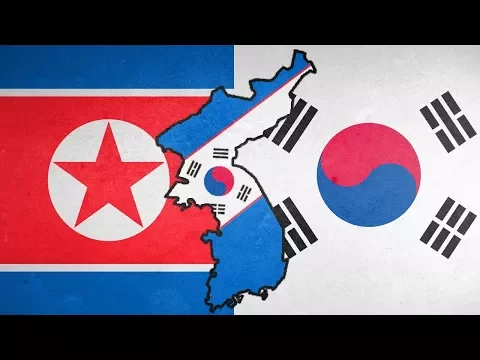
North Korea Could Disappear Due to Regime Collapse
Economic isolation comes at a high price. The limitation of trade, technology, and natural resources creates structural pressure on the country.
Limited industrial infrastructure and shortages of supplies affect production and supply. Economic opening emerges as an inevitable necessity.
If this happens, the current regime may not survive. The scenario paves the way for a possible reunification of the peninsula, causing the country to cease to exist independently in the future.
Kiribati Faces Real Risk of Disappearing from the Map
Kiribati faces a problem similar to that of the Maldives but on an even more vulnerable scale.
The islands are low, narrow, and surrounded by water. The rise of the sea causes saline infiltration into the soil and the loss of habitable land.
President Anote Tong has already declared that the population may need to migrate permanently. The country could, in practice, disappear physically in the coming decades.
The United Kingdom Could Disappear Due to the Exit of Member Nations

The United Kingdom is made up of different countries within one state structure. Scotland, Wales, and Northern Ireland have their own parliaments.
Independence movements have gained recent strength. Referendums and separatist campaigns have become part of the political landscape.
If any of these nations leaves, the current configuration ceases to exist. The bloc could fragment, entering the list of countries that could disappear as a political union.
The United States Also Faces Risk of Fragmentation in the Future
Even as a global power, the United States has deep internal divisions among states and regions.
Political, economic, and cultural differences fuel local separatist movements. Texas, Alaska, and California frequently appear in these debates.
If any of these territories were to move towards independence, the impact would be direct on the federal unity, creating a scenario where the country could fragment.
The Future of Borders May Change Faster Than It Seems
When combining environmental crisis, political division, and economic pressure, the result is an unstable global map. It is not a single factor, but the sum of them that puts so many countries at risk.
The most decisive factor is the ability to adapt. Nations that fail to balance territory, governance, and resources may end up following the path to disappear or divide.
And what do you think? Do you believe that any of these countries could truly disappear by 2100? Leave your opinion in the comments and share the article with others interested in geopolitics and the future of the planet.
This article was based on information from institutions and international reference outlets, such as the UN, NASA, Carnegie Endowment, Real Instituto Elcano, and Exame Brasil.










-

-

2 pessoas reagiram a isso.