





 Portuguese
  English
  Spanish
  5 min of reading
  0 comments


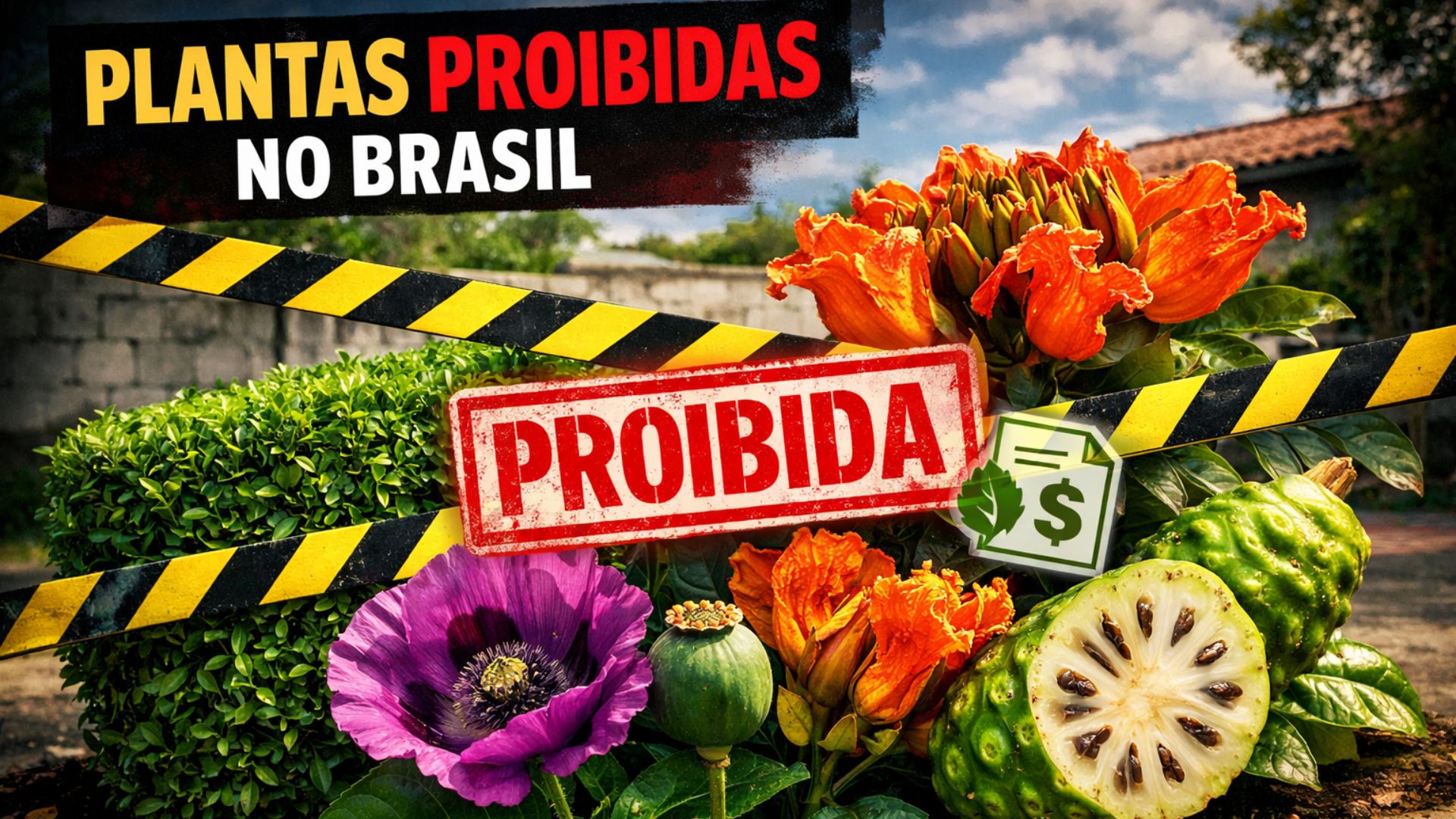
They May Seem Harmless, But Sanitary And Environmental Rules Put Some Popular Species In The Spotlight
Four species that can still be found in Brazilian yards, sidewalks, and gardens can lead to fines and, in specific situations, even liability for environmental, sanitary, or agricultural infractions, as there are formal restrictions on planting, handling, or selling them.
Despite being popular for decoration and household uses, these plants enter control lists for various reasons, ranging from combating pests that threaten crops to preventing health risks and protecting essential pollinators.
Sanitary And Environmental Rules That Determine What Is Prohibited
The definition of prohibition is not unique, as it can arise from federal, state, or municipal acts, with rules varying from total bans, restrictions on specific areas, and only prohibitions on commerce, transportation, or production of seedlings.
-
Friends have been building a small “town” for 30 years to grow old together, with compact houses, a common area, nature surrounding it, and a collective life project designed for friendship, coexistence, and simplicity.

-
This small town in Germany created its own currency 24 years ago, today it circulates millions per year, is accepted in over 300 stores, and the German government allowed all of this to happen under one condition.

-
Curitiba is shrinking and is expected to lose 97,000 residents by 2050, while inland cities in Paraná such as Sarandi, Araucária, and Toledo are experiencing accelerated growth that is changing the entire state’s map.

-
Tourists were poisoned on Everest in a million-dollar fraud scheme involving helicopters that diverted over $19 million and shocked international authorities.


In this scenario, the same specimen may be tolerated in one municipality and targeted for inspection in another, as agricultural defense programs and local environmental regulations often react to regional problems, such as agricultural diseases or invasive species.
As part of these consequences appearing away from the resident’s view, the perception of risk tends to be low, even when the accumulated effect is significant, such as the loss of production in orchards or the compromise of essential ecological services.
Myrtle And Greening: Why The Hedge Has Become A Target
Widely used as a hedge, myrtle or false myrtle has come under the focus of health authorities for serving as a host to the insect vector associated with greening, an incurable disease that compromises orange trees and other citrus in producing areas and causes significant losses to citrus farming.
In São Paulo, measures to combat greening have started to include prohibition of production and planting, along with restrictions on the commerce, transportation, and use of myrtle, within a package of resolutions aimed at controlling the disease in the state.

Other states have also adopted stricter actions, with official reports stating that Mato Grosso do Sul has prohibited myrtle throughout the territory as a strategy to reduce risks in a scenario of local citrus expansion.
The practical rule, therefore, is to treat the plant as a potential sanitary problem in citrus regions, because national and state programs require strict management to contain the spread of the disease near commercial orchards.
Opium Poppy: National Prohibition And Legal Risk
Unlike regional restrictions related to agriculture, the opium poppy has an explicit national prohibition, banning planting, cultivation, harvesting, and exploitation by individuals, as it is a source of narcotic substances.
Even if someone claims ornamental purposes, the existence of a federal regulation that mentions the species by its scientific name makes cultivation illegal, placing the plant in another category of legal risk associated with drug control.

The most well-known reference in the sanitary field is the list of banned plants linked to Portaria SVS/MS nº 344, which undergoes updates but maintains the logic of restricting species capable of producing controlled substances.
Espatodea: Local Restrictions Expanding
The espatodea, a tree with striking flowers and commonly found in urban landscaping, has come under scrutiny for being described by environmental agencies as a species with potential ecological imbalance, which has led to local prohibitions.
In Santa Catarina, the Environmental Institute reported that the African exotic species is prohibited by state law, while encouraging the population to prioritize replacements with native trees in greening projects.

Municipal laws have also emerged in different regions with direct wording prohibiting the production of seedlings and new plantings, as seen in local legislation associating the tree with environmental impacts and urban ecosystem balance.
As planting often occurred decades ago, the presence of old specimens on streets does not mean current permission, and the tendency is for cities to start restricting new seedlings while discussing the management of already established trees in public areas.
Noni: Sale Prohibited And Sanitary Alert
In the case of noni, the controversy does not revolve around agricultural pests or illicit use, but rather around sales for consumption, as Anvisa classified the ingredient as a “novel food” without a history of consumption in Brazil.
In a technical report, the agency stated that the commercialization of any food containing noni would only be allowed after safety verification and registration, which supported the prohibition of the sale of products containing the fruit.

The state sanitary surveillance in Mato Grosso do Sul, upon reflecting this understanding, cited reports of hepatotoxicity after consumption and highlighted that the studies presented were controversial, reinforcing the ban on sales.
In practice, this means that cultivating the plant in the yard does not automatically equate to being able to sell juices, pulps, or capsules, as the restriction affects the food and supplement market containing the ingredient.
How To Avoid Fines When Choosing Plants For The Garden
For those planning to plant or replace species in the garden, the safest guidance is to check the rules of the municipality and state, as the regulations can change from one region to another, especially on agricultural matters.
It is also advisable to observe the type of restriction involved, as some regulations target seedling production, transportation, and commerce, while others target planting in public areas, and there are cases where the ban is national and leaves no room for interpretation.
When species appear in reports or social media, it is worth prioritizing official documents and communications from environmental and health agencies, as the confusion between “prohibited” and “not recommended” is common and can lead to wrong decisions.
If inspections are triggered, the response usually depends on the context, such as proximity to orchards, urban location, and the existence of specific local regulations, which makes it even more important to consult beforehand before planting.
With rules so different from one another, ranging from combating greening to food safety, the question for those caring for their own yard is simple: Do You Know Exactly Which Species Your City Currently Allows To Plant?









-

-

-

-

5 pessoas reagiram a isso.