





 Portuguese
  English
  Spanish
  5 min of reading
  1 comment


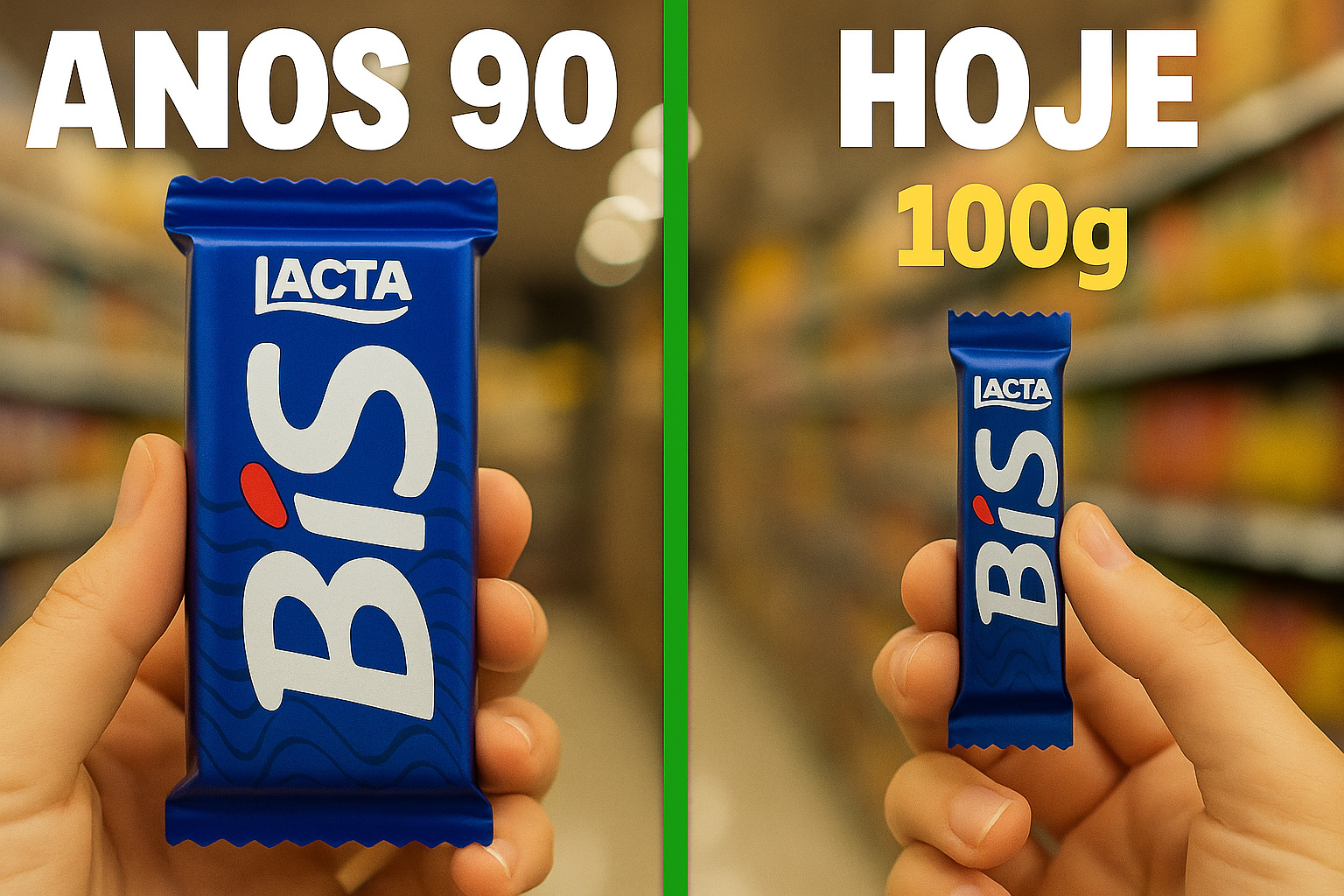


Brands Say It’s “Market Adaptation,” But Consumers Feel It in Their Wallets: Lighter Packaging, Smaller Products, and the Same Price. Have You Noticed These Changes in Your Daily Life?
In recent years, a silent trend has been attracting attention — and causing outrage among the more observant consumers. Various well-known products have shrunk, lost weight, reduced their measurements, or decreased the quantity inside the packaging, but prices remain practically the same. This practice, known as shrinkflation, has become a recurring strategy in the industry to cope with rising costs without overtly increasing the final price on the shelves.
According to information gathered from old advertisements, packaging from the past, and even newspaper ads, traditional brands of food, beverages, and hygiene products have considerably reduced the size of their items. The discovery, which went viral after being detailed in a video by channel 90, reveals that the reduction is much larger than consumers imagine.
Piraquê, Tang, and Panettone: When Tradition Lost Weight

Starting with the classic Piraquê, synonymous with tradition and quality in Brazil. The Piraquê Wafer biscuit, which used to weigh 160 g, now comes with a paltry 100 g, a reduction of 37.5% in content. The maizena biscuit, which weighed 200 g, is now sold with 175 g — representing a loss of about six units per package.
-
From sertanejo star to international investor: Ana Castela invests millions in a mansion in the USA, creates a themed accommodation in Orlando, and shows that the “boiadeira” also wants to grow away from the stage.

-
The 10 most stunning motorhomes in the world: a $3 million trailer with a rooftop nightclub and garage for a Ferrari, “palaces on wheels” with Italian marble, private cinema, and five-star hotel luxury for billionaires.

-
Trump wanted to spend $400 million on the White House, but the courts prohibited the million-dollar construction.

-
How the Egyptians erected giant structures like pyramids, temples, and obelisks without modern technology, cranes, or engines still amazes the world and reveals the power of engineering based on ramps, levers, ropes, and colossal organization.


But the most shocking case is that of Tang juice, one of the most beloved drinks of many Brazilians’ childhood. In the 1990s, the Tang envelope weighed 120 g. Today, the most common version has only 18 g, meaning a reduction of an impressive 85%. In other words, what used to yield an entire pitcher now barely fills a glass.
And it doesn’t stop there: the traditional Visconti panettone, a symbol of Brazilian Christmas, has also “lost weight.” Previously, the holiday sweet bread weighed 1 kg. Currently, the standard found in supermarkets is 400 to 500 g, a loss of 20% or more. The price, however, continues to rise every December.
Washing Powder, Bis, and Soaps: Everyday Products Have Shrunk Too
Not even cleaning items escaped. In the past, washing powder was sold in boxes of 1 kg. Today, large brand standards are 800 g, or even 900 g in “family” sizes. This represents 20% less product — meaning fewer washes and more restocking throughout the month.
The classic IP soap, which also weighed 1 kg, now has only 900 g per package. In practice, the consumer pays the same amount but takes home nearly a bar less.
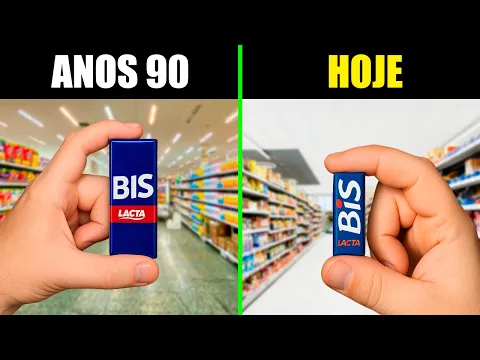
And who remembers Bis from the 90s? The chocolate was more substantial, with large and hefty pieces. Back then, a package with 20 units weighed 150 g. Today, with the same number of units, the total weight is 100.8 g — a drop of 33%.
Even soaps have reduced: the traditional Lux Luxo and Dove bars, which used to weigh 100 g, are now sold with 85 g each. On a yearly scale, this represents 15% less with every wash, which makes a considerable difference over time.

Bread, Cereals, and Chocolate Powder: A Lighter (and More Expensive) Breakfast
The Plusvita bread, a symbol of 90s advertisements, has also made the list. In the past, each package had 600 g. Today, the most common version comes with 480 g, meaning fewer sandwiches and more trips to the grocery store.
Breakfast cereals have also faced the same fate. Kellogg’s Corn Flakes, for instance, reduced weight from 300 g to 240 g. Meanwhile, Moça Flakes dropped from 330 g to 230 g, a decline of over 30%. Ovomaltine, which used to come in 500 g cans, now offers 400 g, and Farinha Láctea has lost even more: from 1 kg to 360 g, a reduction exceeding 60%.
The Neston can has also become slimmer, decreasing from 500 g to 360 g — about 30% less content. According to the channel 90’s research, based on old advertisements and original packaging, all these reductions occurred discreetly over the years, without major announcements to the public.
Snacks, Chips, and Toilet Paper: Cuts Even Where It Doesn’t Seem
Pringles chips, once a symbol of sophistication in the 90s, contained 200 g of product. Today, the modern can has 104 g, almost half the original weight. In addition to the reduction, many consumers complain that the taste and texture have also changed — “more flour, less potato,” some say.
The same happened with Fandangos chips and Elma Chips. In the 1990s, the average pack contained 100 g. Today, most standard versions come with 45 g, an absurd drop of 55%.
And not even toilet paper escaped. In the past, rolls came with 40 meters — and “premium” versions reached up to 80 meters. Nowadays, many traditional brands, such as Personal, sell rolls with only 20 meters. In other words, it’s not that you’re using more: the paper comes half as much.
The Era of Shrinkflation: Less Product, Higher Price
This strategy of “silently reducing size” while keeping price stable is known as shrinkflation (from “reduction” + “inflation”). The phenomenon is not exclusive to Brazil, but here it has become particularly visible in popular products.
According to analysis by consumer economics experts, this practice is a way to offset costs without shocking the consumer with direct increases. However, many believe it violates transparency, as few realize they are getting less than before.
The information was highlighted in a report from channel 90, which analyzed old advertising sources, original packaging, and period documents. According to the channel, this “silent shrinkflation” is a way to disguise the real price increases while the consumer believes they are buying the same product as always.
What Else Can Shrink?
Over the decades, almost everything seems to have shrunk — from chocolates and biscuits to toilet paper and washing powder. Meanwhile, prices continue to rise, and the quality of many products is also questioned.
Have you noticed this reduction in your daily shopping? Do you think companies are being transparent with consumers or just trying to disguise increases? Leave your opinion in the comments and tell us: which product do you think has shrunk the most over the years?






Na realidade estamos vivendo uma nova era de pesos e medidas e qualidade em todos os produtos ,devem estar modificando as fórmulas e receitas,mas o preço continua aumentando como antes,esses nem pensar em mudar.Queria dar um exemplo simples de como a qualidade dos produtos diminuíram, pães de forma além da redução do peso e do tamanho,produtos esses,nem todos,que eram tidos como de alta qualidade,agora ao levar um produto desse prá casa tem que tomar todo cuidado senão eles se desintegram. Fora alguns refrigerantes e cervejas o restantes dos produtos têm alguma anormalidade.Digo quase todos,todos.Ai você como consumidor têm que fazer compras várias vezes ao longo do mês. E o pior de tudo é que o governo diz que a inflação está sobre controle e que a.população é que não vê. Essa inflação deve ser deles que não compram nada e tem altos salários e seus penduricalhos.