





 Portuguese
  English
  Spanish
 6 min of reading
  3 comments


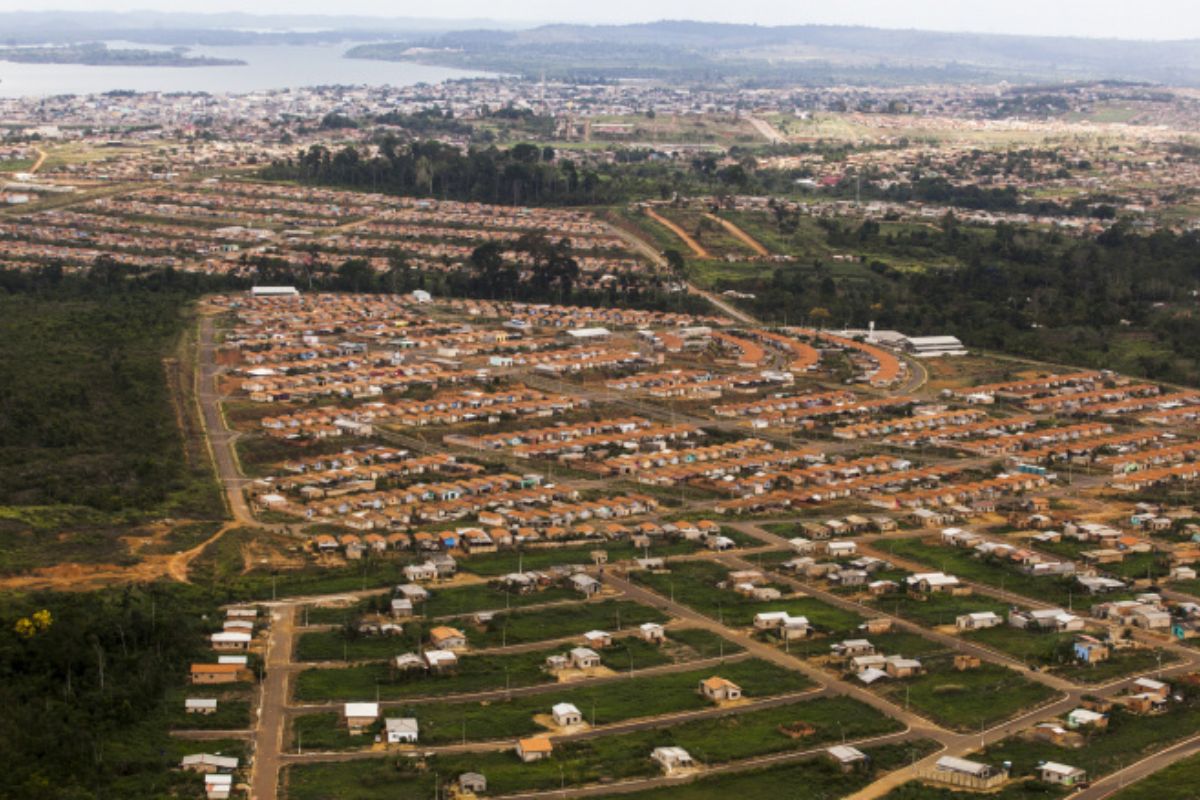


The Brazilian City of Altamira, in the Southwest of Pará, Occupies Almost 13% of the State, Has Over 60 Neighborhoods and Districts More Than 1,000 km Away, With an Estimated Population of 138,749 in 2025, Leads Deforestation in 2019, Emitted 35.2 Million T of CO₂, and Has a Density of One Inhabitant Per km²
The brazilian city of Altamira, in the southwest of Pará, has gained prominence for its impressive contrast: it is the largest municipality in Brazil and the third largest in the world, with 159,533 km², but has only 138,749 inhabitants, according to the IBGE estimate for 2025.
The record size, however, coexists with historical and environmental challenges that have been accumulating over time, from the creation of the municipality in 1911 to the accelerated occupation starting from 1972. In 2019, Altamira recorded 35.2 million tons of CO₂ and led the ranking of the largest deforested area in the Amazon, even with a population nearly 100 times smaller than São Paulo.
Why Altamira is the Third Largest City in the World and the Largest Municipality in Brazil

Altamira is described as a city of colossal proportions, located in the southwest of Pará.
-
Friends have been building a small “town” for 30 years to grow old together, with compact houses, a common area, nature surrounding it, and a collective life project designed for friendship, coexistence, and simplicity.

-
This small town in Germany created its own currency 24 years ago, today it circulates millions per year, is accepted in over 300 stores, and the German government allowed all of this to happen under one condition.

-
Curitiba is shrinking and is expected to lose 97,000 residents by 2050, while inland cities in Paraná such as Sarandi, Araucária, and Toledo are experiencing accelerated growth that is changing the entire state’s map.

-
Tourists were poisoned on Everest in a million-dollar fraud scheme involving helicopters that diverted over $19 million and shocked international authorities.


The most surprising data is the ranking: it appears as the third largest municipality in the world, behind only cities located in desert regions of Australia and China.
This means, in practice, that Altamira is not large only by Brazilian standards, it is large on a global scale.
This dimension explains why the brazilian city appears as a territorial reference in the Xingu Valley, even though much of the country still does not associate the name Altamira with this size.
159,533 km²: The Area That Occupies Almost 13% of Pará and Exceeds Entire Countries
The total area of Altamira is 159,533 km². The base text states that this represents almost 13% of the territory of Pará, a gigantic slice for a single municipality.
Comparisons help to dimension:
larger than Portugal
larger than Ireland
larger than Iceland
larger than Greece
In addition, the base indicates that Altamira surpasses 104 independent countries in size.
In other words, the “municipality” has the scale of a “nation” when it comes to territory, which completely changes the standard of public management, supervision, and state presence.
Few People for Much Ground: 138,749 Inhabitants and Density Below 1 per km²
Despite all the expanse, the brazilian city of Altamira houses around 138,749 inhabitants, according to the IBGE estimate for 2025. The direct consequence is an extremely low population density.
The base text points out that this equates to less than one inhabitant per square kilometer, one of the lowest densities in the country.
It is a scenario of human dispersion across a huge territory, which tends to generate two simultaneous effects:
The presence of public power becomes more difficult because the territory is vast.
The distance between communities increases, raising costs and increasing isolation.
The Spread-Out City: Over 60 Neighborhoods and Districts More Than 1,000 km from the Headquarters
The urban core of Altamira has more than 60 neighborhoods, but the municipality extends far beyond the more well-known perimeter. The base highlights two distant districts:
- Castelo de Sonhos
- Cachoeira da Serra
Both are over 1,000 kilometers from the headquarters. This deep dispersion is presented as the root of historical obstacles, including:
limited access to health and education
long distances between communities
difficulties for the public power to act
uneven urban growth
isolated regions, with a greater presence of cattle than of people
This set helps to understand why the brazilian city of Altamira cannot be analyzed as an ordinary municipality.
Internal logistics is already, in itself, a permanent challenge.
114 Years of Emancipation and Origin in 1911: A Municipality Shaped by the Xingu River
Altamira completed 114 years of political emancipation on November 6.
The base text also records that the municipality was created in 1911 and developed along the banks of the Xingu River, in an environment described with igarapes, abundant fauna and flora.
This origin in the Xingu Valley is part of what made the city a regional reference, but it is also part of what increases the environmental sensitivity of the territory: it is an extensive Amazonian area, with natural networks that connect and make the territorial impact much greater when there is pressure for occupation and land use.
The Cost of Gigantism: Altamira Leads the Deforested Area in the Amazon
The base is straightforward in stating that Altamira leads the ranking of the largest deforested area in the Amazon. This is the point where “size” stops being a curiosity and becomes a problem.
In giant territories, supervision tends to be more complex, and the pressure for opening areas can spread.
Thus, the municipality appears as a symbol of how territorial scale can turn into vulnerability when there are insufficient conditions for environmental control and planning.
CO₂ Emissions in 2019: 35.2 Million Tons with a Population Almost 100 Times Smaller than São Paulo
The more detailed aspect of the base text about environmental impact refers to 2019.
That year, Altamira is said to have emitted 35.2 million tons of CO₂, a number described as more than double that of the city of São Paulo, which appears with 16.6 million tons of CO₂.
The comparison is even harsher because it involves population:
- Altamira: 138,000 inhabitants, 35.2 million t of CO₂
- São Paulo: 12 million inhabitants, 16.6 million t of CO₂
The text translates this contrast with a striking image: it would be as if each inhabitant were responsible for emissions equivalent to 500 cars running daily.
And there is a crucial data point to understand the origin of the problem: according to cited specialists, about 95% of emissions come exclusively from deforestation.
How Altamira Arrived at This Scenario: Decades of Pressure and Disordered Occupation
The base describes a pathway of decades to the current situation, with two major cycles.
Transamazonian and Disordered Occupation from 1972
Between the 1970s and 1980s, territorial pressure is associated with the Transamazonian Highway and disordered occupation.
The base points out that, from 1972, with the inauguration of the highway under Médici’s government, the developmental rhetoric drove:
irregular occupation
accelerated deforestation
expansion of livestock farming
absence of environmental planning
This cycle helps explain the basis of the problem: occupation grows faster than the capacity to organize the territory, and land use begins to advance with little environmental predictability.
Belo Monte and the New Cycle of Territorial Pressure from 2000 to 2010
The second highlighted cycle occurs between 2000 and 2010, with the construction of the Belo Monte Hydroelectric Plant.
The base text states that the project created economic expectations, attracted migrants, and increased indirect pressures on the forest, generating new environmental and social deficits.
Here, the central point is that large projects change the territory even beyond the main construction site.
They alter the flow of people, local economy, housing demand, and area opening, which can increase the pressure on the forest in already vulnerable regions.
The Final Portrait: A Giant City, Empty and Pressured by a Gigantic Environmental Challenge
The brazilian city of Altamira brings together numbers that, together, explain why it draws so much attention:
159,533 km² of area, almost 13% of Pará
larger than Portugal and Greece, and larger than 104 countries in extent
138,749 inhabitants in the estimate of the IBGE for 2025, with density below 1 per km²
districs over 1,000 km from the headquarters, such as Castelo de Sonhos and Cachoeira da Serra
leading in deforested area in the Amazon and emissions in 2019 of 35.2 million t of CO₂, with 95% attributed to deforestation
It is the combination of territorial gigantism, population dispersion, and environmental pressure that defines the case: a huge territory is harder to monitor and more susceptible to long cycles of occupation and deforestation, especially when historical events accelerate the transformation of space.
In your opinion, should this brazilian city giant have even stricter rules and oversight due to its size, or is the main problem the lack of effective public authority presence in the most isolated areas?










Altamira é o maior município,não a cidade maior do país.
O estagiário está sem supervisor, não sabe diferenciar cidade de município.
Corumbá,MS o 2° maior município do Brasil.