





 Portuguese
  English
  Spanish
  4 min of reading
  0 comments


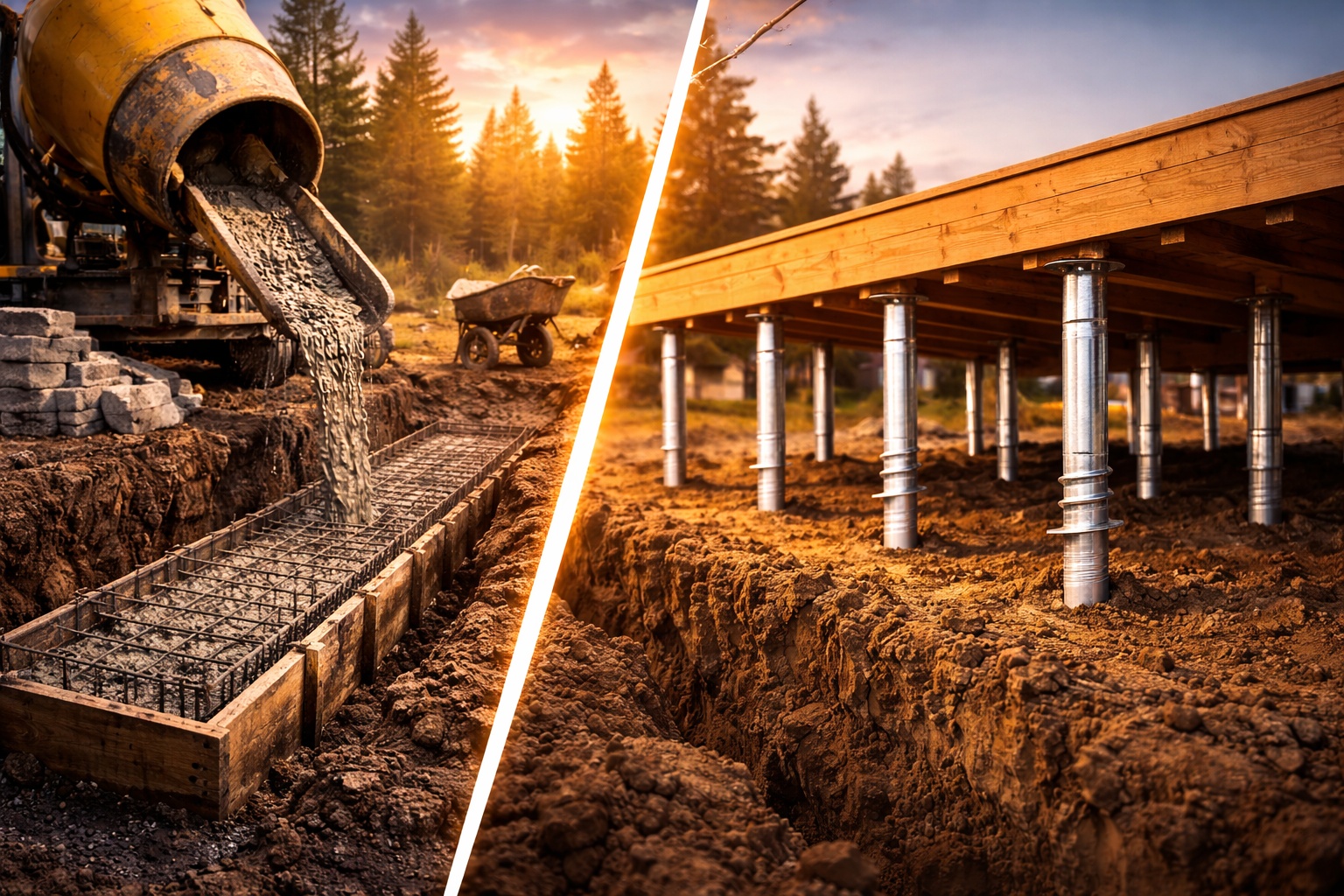
Helical Pile Foundations (Screw Piles) Allow for Structural Base Installation Without Excavation or Concrete, Offering Immediate Support and Reduced Environmental Impact, Accelerating Residential and Commercial Projects
The helical piles, also known as helical piles, screw piles, or ground screws, have been transforming the construction sector in various parts of the world, including Canada and the United States. This technology replaces traditional foundations based on deep excavation and concrete with a system of steel screws that are driven into the ground with controlled torque, creating a solid base in just a few hours.
Unlike conventional footings, which require excavation, steel reinforcement, concreting, and long curing periods, helical piles allow for the structure to be raised as soon as the screws are installed, with minimal impact on the terrain and without waiting for concrete to cure.
What Are Helical Piles
Helical piles consist of steel shafts with helical blades welded along their length. When rotated into the ground using hydraulic equipment, these blades “anchor” the foundation firmly into stable soil layers.
-
The lack of welders, electricians, and operators becomes a structural threat in 2025, with the construction industry and manufacturing already suffering from delays, cost pressures, and labor shortages in Brazil.
-
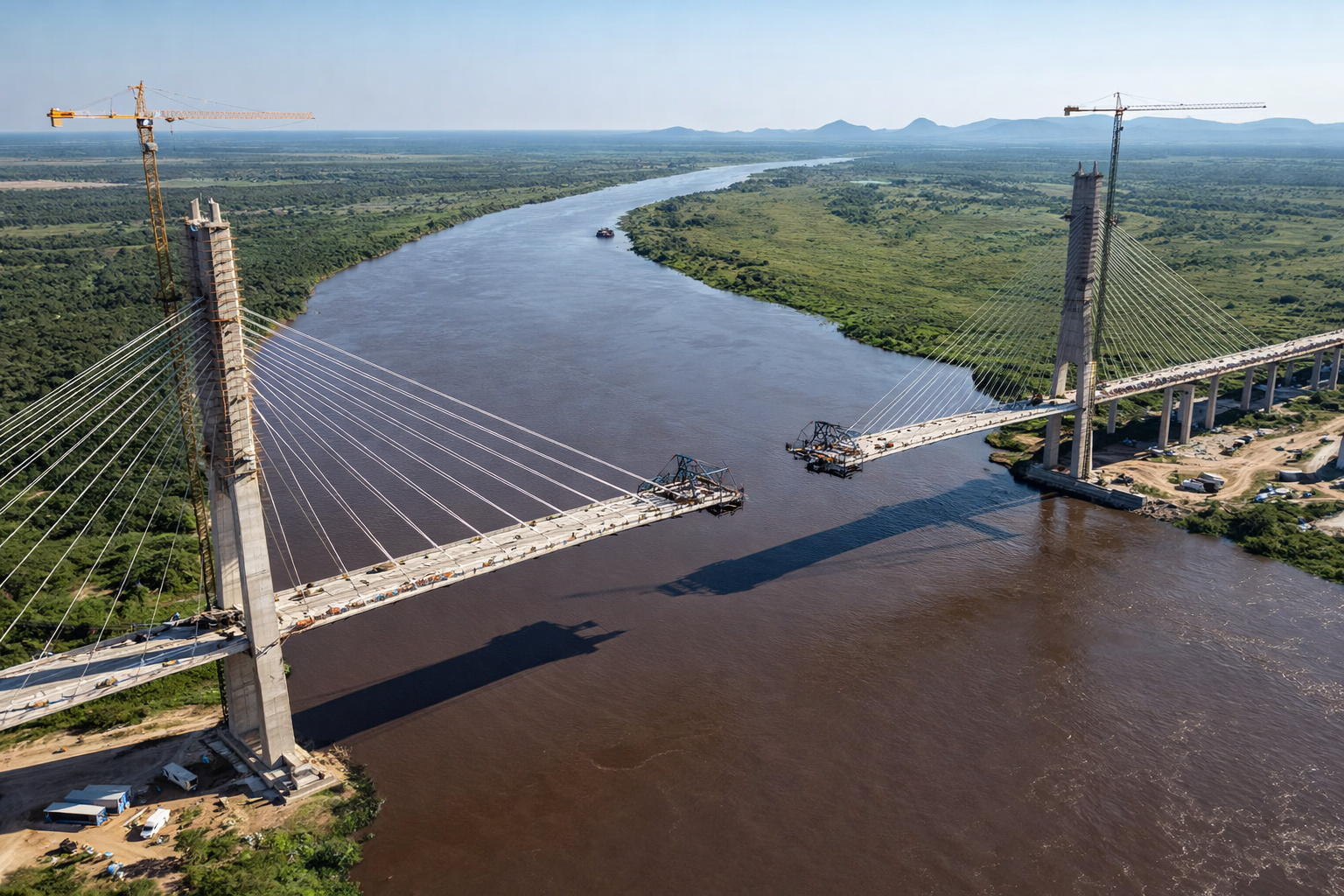
Brazil and Paraguay are just 46 meters away from a historic union on the bioceanic bridge that promises to revolutionize trade between the Atlantic and the Pacific.
-
With 55 km over the sea, a cost of US$ 20 billion, and enough steel to build 60 Eiffel Towers, China’s largest project has connected Hong Kong, Zhuhai, and Macau in a colossal bridge that defies the logic of engineering.

-
A trick with joint compound transforms a Styrofoam ceiling into a plaster-like ceiling: leveled panels, wires and mesh at the joints, sand, paint, and change the environment while spending little today.
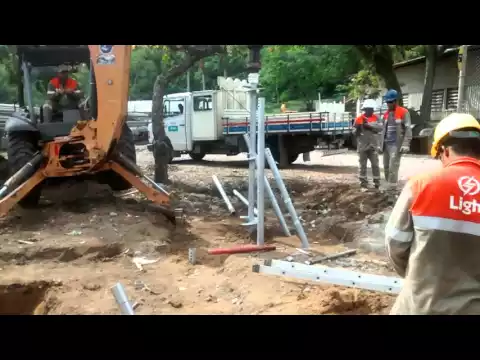

This technology combines aspects of structural engineering and geotechnics and is used to support not only residential homes but also decks, pergolas, light commercial buildings, silos, towers, solar panels, and other structures.
Why This Technology Is Changing the Game
One of the biggest advantages of helical piles is the speed of installation. Projects that would typically take days or weeks with concrete foundations can have their foundations completed in just a few hours, saving time and labor costs.

Unlike concrete, which requires curing periods that can take up to 28 days to reach full strength, helical piles are able to support loads immediately after installation, speeding up the project timeline.
Less Impact on the Terrain and Budget
Helical piles do not require deep excavation or soil removal, significantly reducing the impact on the terrain and the need for material transport. This also means less heavy machinery and lower costs associated with earth moving.
Less Waste and Less Disruption
Since the piles are simply driven into the ground and do not require mixing and pouring concrete, the installation generates virtually no construction waste — a stark contrast to conventional methods that often produce large amounts of debris.
Construction in Any Weather
While concrete foundations are sensitive to weather — with rain or very low temperatures delaying execution and curing — helical piles can be installed virtually year-round, even in rain or extreme cold.
Where This Technology Is Applied
This solution has been adopted in various contexts:
- Residential construction: houses, cabins, extensions, and remodels;
- Light commercial structures: warehouses, sheds, and modular units;
- Infrastructure and telecommunications: supports for antennas, poles, and solar panels;
- Problematic land: soft soils, areas with high water tables, or slopes;
Additionally, in industrial or agricultural projects, helical piles have been used to anchor heavy equipment and elevated structures, providing versatile solutions that would be complex and costly with conventional foundations.
Strength and Structural Reliability
Although the method seems relatively simple, it is backed by solid principles of geotechnical engineering. The helical blades are designed to distribute loads both vertically and laterally, ensuring stability even in soils that would not be ideal for traditional foundations.

The installation process includes monitoring the torque as the screws enter the ground, ensuring that each pile reaches the necessary resistance to support the structure.
Environmental Advantages
When compared to the massive use of concrete, the helical pile technology has a significantly reduced environmental impact:
- Lower consumption of carbon-intensive materials, such as cement;
- Preservation of soil and local vegetation due to minimal excavation;
- The possibility of removal and reuse of the piles in future projects or when relocating structures;
These attributes make the system attractive not only for residential builders but also for projects requiring environmental certification or a focus on sustainability.
Comparison with Traditional Foundations
| Characteristic | Concrete Foundations | Helical Piles |
|---|---|---|
| Execution Time | Days to weeks with curing | Hours, ready for immediate load |
| Excavation Requirement | Extensive | Minimal |
| Construction Waste | High | Low |
| Environmental Impact | High | Reduced |
| Installation Weather | Restricted | Practically any weather |
This comparison highlights why modern architects, engineers, and builders are increasingly adopting this system.
A Future with Smart Foundations
At a time when the construction industry faces pressure to be faster, greener, and more economical, helical piles represent a concrete solution to contemporary demands.
The ability to install robust foundations without excavation, without concrete, and in just a few hours facilitates projects in dense urban areas, difficult terrains, or regions with environmental restrictions.
As the sector absorbs these innovations, this method could transition from being merely a technical alternative to becoming one of the cornerstones of modern construction.









-

-

-

-

-

-

66 pessoas reagiram a isso.